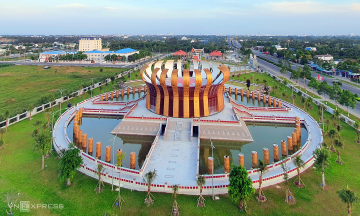
Over 5,000 runners will participate in the VnExpress Marathon Green Paradise Can Gio on the morning of 1/5. Unlike many urban routes, this course traverses open, airy areas, with greenery covering 80% of the path. The Sac forest axis, embraced by dense trees, is considered one of the most pleasant sections for athletes.
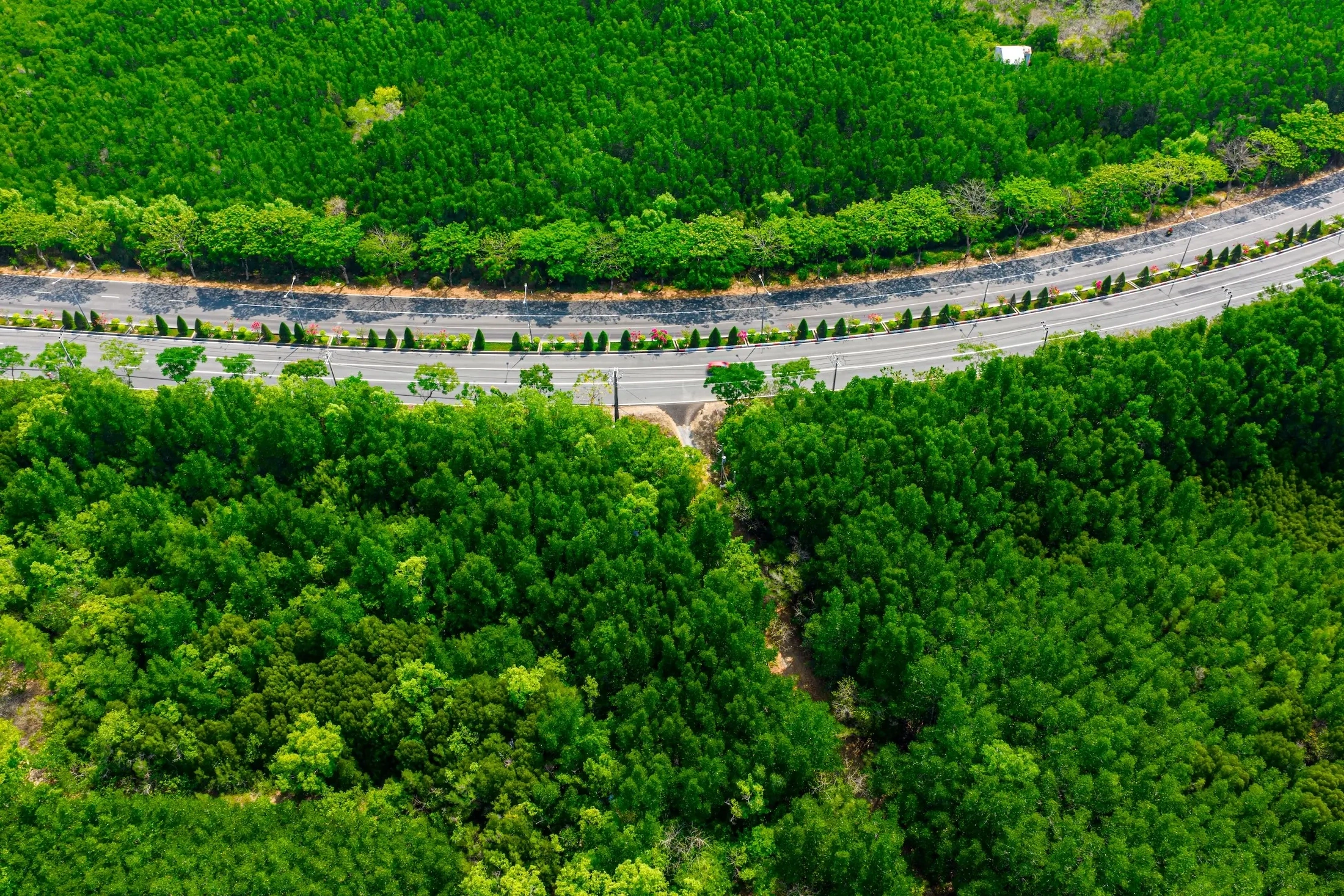 |
The Sac forest route – a highlight of the race. Photo: VnExpress Marathon |
According to doctor Bui Phu Truong, medical team leader for VnExpress Marathon, this factor offers a certain advantage. However, the doctor emphasized that shade or green spaces are only supporting elements, helping to somewhat reduce direct environmental impact, but they do not eliminate the risk of heatstroke on race day. In other words, runners might feel more comfortable when passing through the Sac forest, but their bodies must still continuously regulate temperature under high heat and humidity.
"With a forecasted temperature of about 27-32 degrees Celsius and humidity potentially over 80%, runners still face significant pressure on their ability to regulate body temperature. When humidity is high, sweat evaporates less effectively, making the body's natural cooling mechanism less efficient. This causes body temperature to rise quickly and stamina to deplete early, especially in the two long distances," the doctor explained.
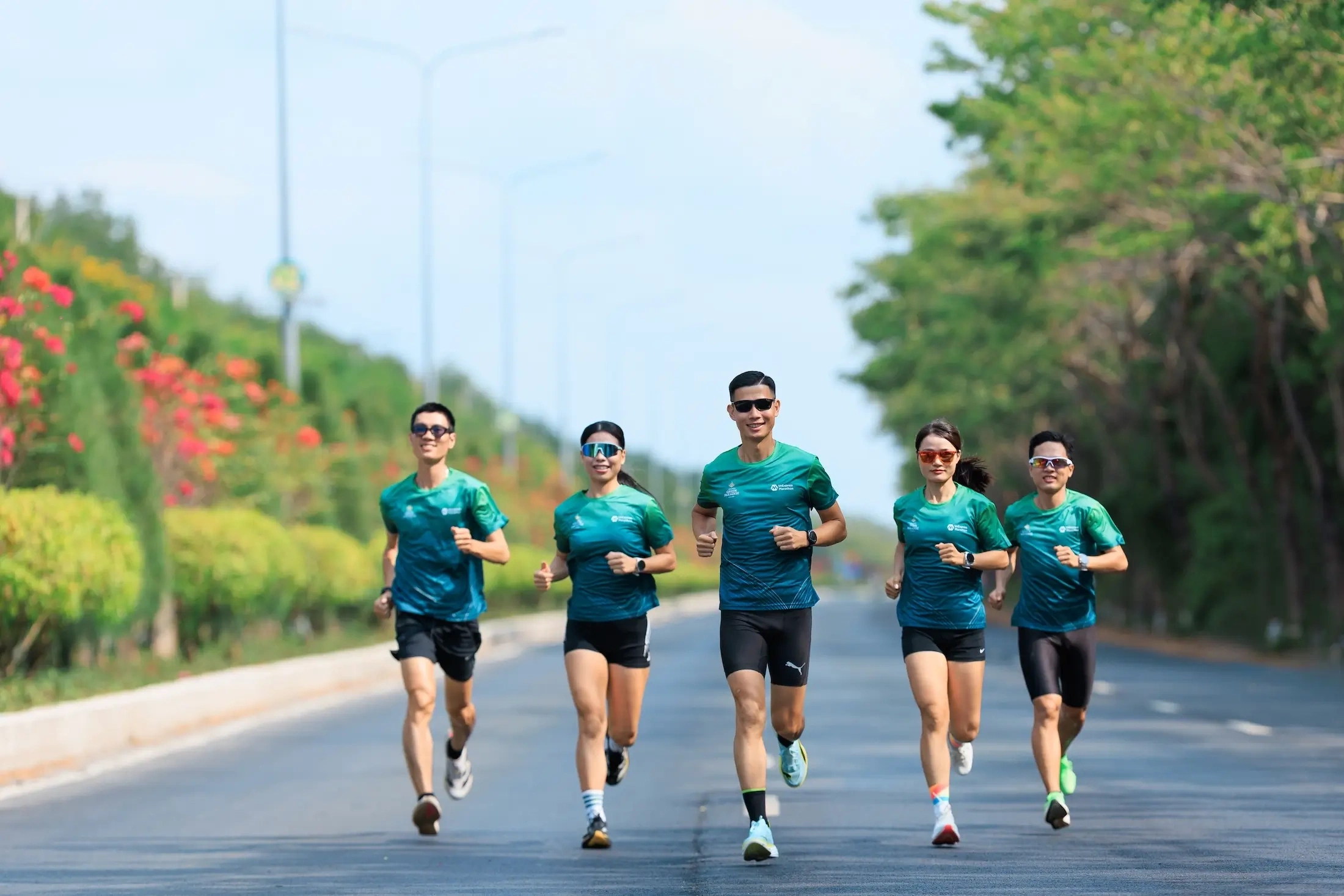 |
Runners stride on the Sac forest route. Photo: VnExpress Marathon |
A common phenomenon when running in hot and humid weather is a gradual increase in heart rate even if runners maintain the same pace. The doctor stated that when the body heats up, the heart has two simultaneous tasks: pumping blood to nourish muscles and circulating blood to the skin for heat dissipation. Therefore, the same running pace can become more challenging after several kilometers, making it difficult for runners to maintain their initial speed.
"This impact is often more pronounced in the second half of the race. The combination of dehydration, electrolyte imbalance, and increased body temperature can lead to exhaustion, cramps, or having to stop in the final kilometers. Therefore, the comfortable feeling from the shade should not be interpreted as a signal to speed up," the doctor advised.
To adapt to hot and humid conditions, runners should view green spaces as a favorable condition for stabilizing the body, not a reason for complacency. In the initial stage, athletes should run cautiously, prioritizing their body's sensations rather than trying to maintain a target pace at all costs. When entering shaded sections like the Sac forest, runners can use this opportunity to stabilize their breathing and heart rate, but still need to control their speed.
In hot and humid conditions, water and electrolytes are paramount. Doctor Truong recommended that runners drink small, regular sips and not skip water stations. For long distances, athletes should combine water with electrolytes, not just plain water. Those accustomed to using energy gels, salt tablets, or electrolyte tablets can continue to follow their tested training plans.
 |
The organizers have arranged 23 water stations along the racecourse. Photo: VnExpress Marathon |
Appropriate attire is also crucial for Can Gio's climate, where weather can change, potentially bringing rain during the race. Runners should choose light, breathable, light-colored clothing that is moisture-wicking and quick-drying to prevent garments from feeling heavy when the body sweats profusely or encounters rain.
New shoes should not be worn on race day due to the risk of blisters, foot pain, or altered running sensation, especially on wet surfaces. Hats, glasses, and sun protection accessories remain essential as the day brightens and temperatures rise.
Despite these precautions, the doctor emphasized that the most crucial factor remains listening to one's body. If symptoms like dizziness, nausea, chills, uncontrollable rapid heartbeat, or persistent cramps appear, athletes should stop competing and seek medical assistance.
"The shade of Sac forest offers runners a more comfortable feeling on the course, but in a prolonged exertion event, athletes still need serious preparation," said doctor Phu Truong.
To support approximately 5,000 runners, the organizers have arranged a total of 16 medical stations along the course, spaced an average of 2,5 km apart. Each station has a medical team on duty, consisting of one doctor and two nurses. The finish line station has two teams, comprising two doctors and four nurses.
In addition to the fixed medical station system, the race also features four ambulances, each accompanied by a team including a doctor, two nurses, and a driver. On the course, six emergency doctors on motorcycles, along with 30 local volunteers, will assist athletes as needed.
Hai Long
 |