FIFA finalized the match kits for 71 group stage games at the 2026 World Cup on 27/5. The organization prioritizes teams wearing their traditional colors. However, in cases of color conflict, FIFA applies a series of principles to achieve acceptable color contrast.
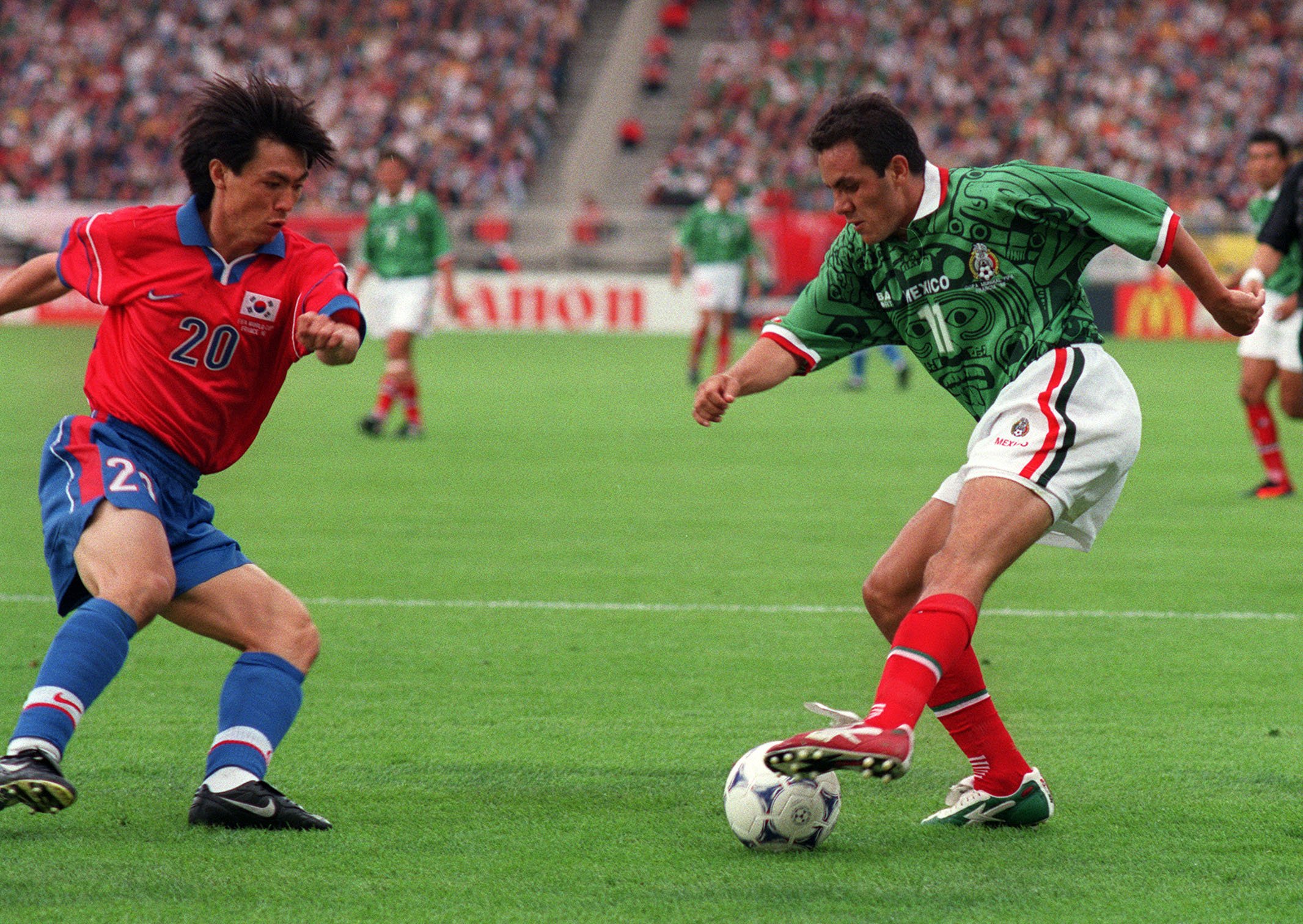 |
Mexico (green jersey) faced South Korea in the 1998 World Cup group stage in France. *AP*
FIFA's process begins by considering the match kits of both teams, including goalkeepers, and the referees. The next step is to ensure sufficient contrast, meaning one team wears a light-colored kit while the other wears a dark one. Additionally, they aim to avoid color pairs that are commonly confused or difficult for most color-blind individuals to distinguish. Notably, these include red and green, yellow and green, or red and blue.
Globally, about 300 million people experience color vision deficiency. This hereditary condition affects one in 12 men and one in 200 women. Major sports organizations such as FIFA, the Union of European Football Associations (UEFA), and The Football Association (FA) have shown increased interest in this community over the past decade.
The new policy has impacted 18 national teams, as FIFA requested them not to use 18 corresponding kit designs in the group stage due to color considerations. The affected teams include South Africa, Australia, Austria, Belgium, Ivory Coast, DR Congo, Curacao, Ecuador, Haiti, Netherlands, Iran, Iraq, Japan, Jordan, Portugal, Senegal, Ghana, and Uzbekistan. This also highlights the commercial aspect of the World Cup, as teams and kit sponsors often want all their kit designs to be utilized.
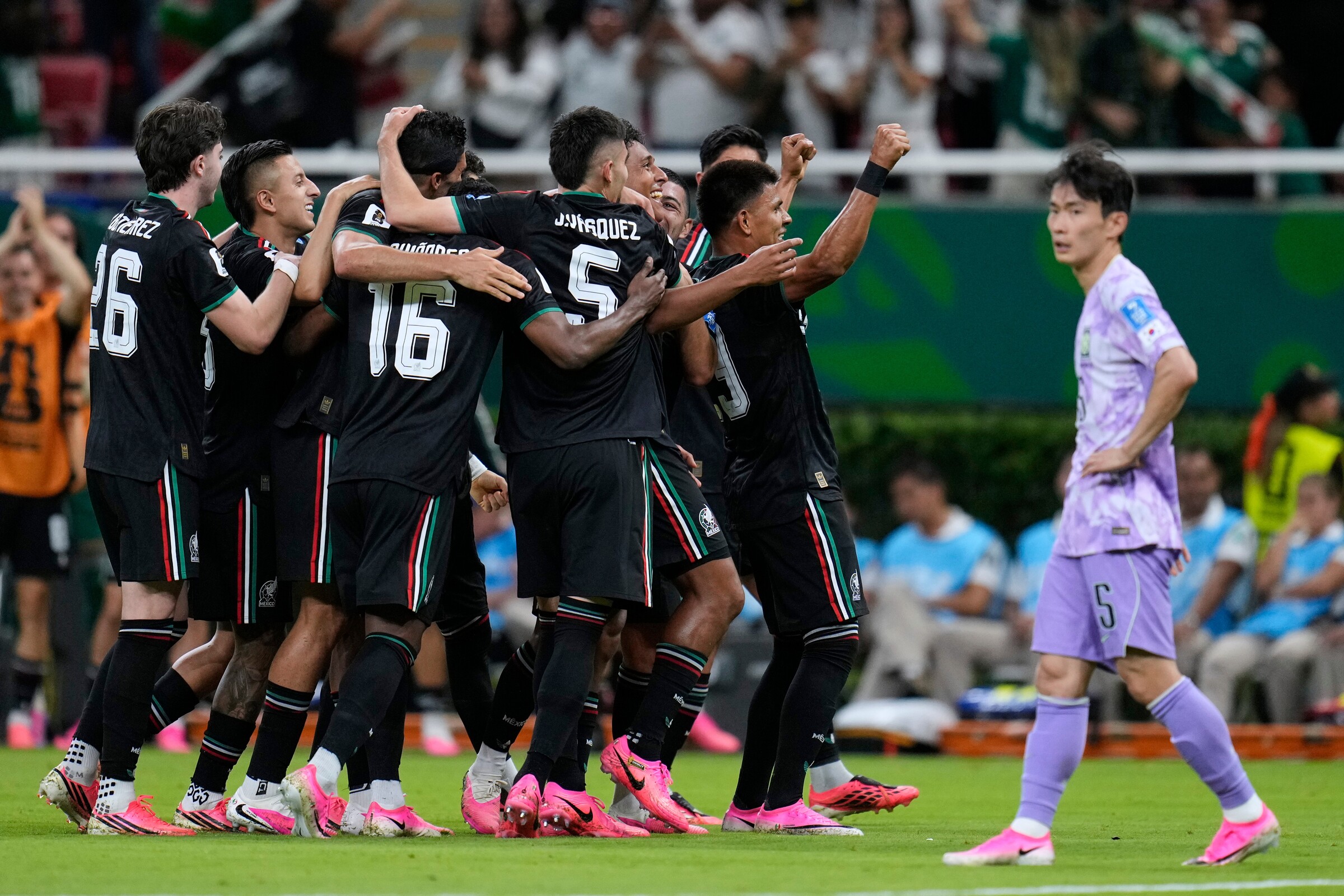 |
Mexico players (black jersey) celebrate Luis Romo's opening goal in the 50th minute during their 1-0 victory over South Korea (purple jersey) in the second match of Group A at the 2026 World Cup, held at Guadalajara stadium in Mexico on 18/6/2026. *AP*
The shift in approach is evident when comparing past tournaments. For example, Mexico and South Korea wore their traditional kits when they faced each other in the 1998 World Cup group stage. However, 20 years later, for the 2026 tournament, Mexico was asked to wear black instead of their traditional green jersey and white shorts in their match against South Korea on 18/6 at the Guadalajara stadium. South Korea, in turn, used a light purple kit, inspired by their national flower, the Mugunghwa (Rose of Sharon), despite their traditional red jersey and black shorts. Black is Mexico's third kit, with white being their second. This consideration extended to their final group match against South Africa, a team known for their green and yellow kits.
 |
Image as seen by a person with normal vision (top) and as seen by a person with color blindness (bottom). *UEFA*
Similar adjustments have been made in other major tournaments. The 2018 World Cup in Russia featured a group stage match between Australia and Denmark where Australia wore their dark green away kit instead of their traditional yellow. Denmark wore a white jersey and red shorts. This change was specifically to support midfielder Thomas Delaney, who has difficulty distinguishing between yellow and white. At Euro 2021, Italy wore white instead of blue when they faced Turkey in their opening group stage match. In the semifinals of that tournament, Spain also changed from red to white when playing Italy. Similarly, in the 2025 UEFA Nations League semifinals, France wore white instead of blue against Spain, who wore red.
By Trung Thu