When Sphephelo Sithole fouled Brian Gutierrez and received a red card in the 49th minute, the 27-year-old midfielder became the first player in 32 years to be sent off in a World Cup opening match.
Late in the second half, another South African player, Themba Zwane, was sent off after just 23 minutes on the field. At 36, Zwane became the oldest player to be dismissed since Fernando Clajivo, 38, at the 1994 World Cup.
That was not all. Captain Cesar Montes' foul also left Mexico a man down in the final minutes of injury time. For the first time, a World Cup opening match saw three red cards. The previous record was set in the Italy 1990 opener, when Cameroon lost two players while trying to hold onto a 1-0 victory against then-reigning champions Argentina.
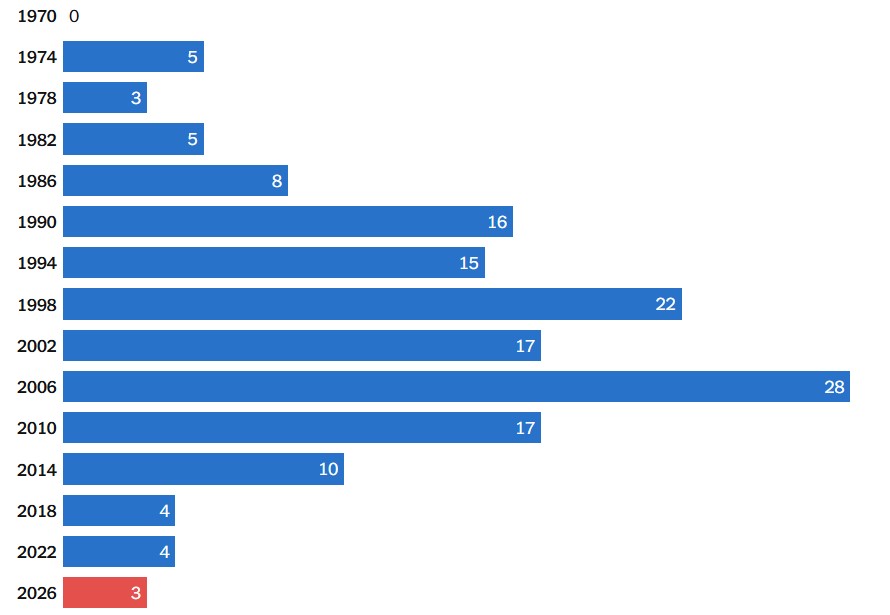 |
Red cards at World Cups over the past 36 years. |
This was also the first time in 20 years that so many players were dismissed in a World Cup match. The 2006 quarter-final clash between Portugal and the Netherlands concluded with 12 yellow cards and four red cards, earning it the nickname "Battle of Nuremberg".
This might label the World Cup 2026 opener as violent. However, players committed only 23 fouls in the match at Azteca Stadium on 11/6. This contrasts sharply with the 1-1 draw between Mexico and Paraguay in 1986, which set a record of 78 fouls and only 42 minutes of active play. Javier Aguirre, who started in that match 40 years ago, is currently the head coach of this year's host team.
Examining each incident, it is difficult to suggest that referees are becoming stricter in North America 2026. Sithole's challenge prevented a clear goal-scoring opportunity for Gutierrez. Zwane's arm swing to an opponent's face aligns with the crackdown on cynical fouls initiated by chief referee Pierluigi Collina.
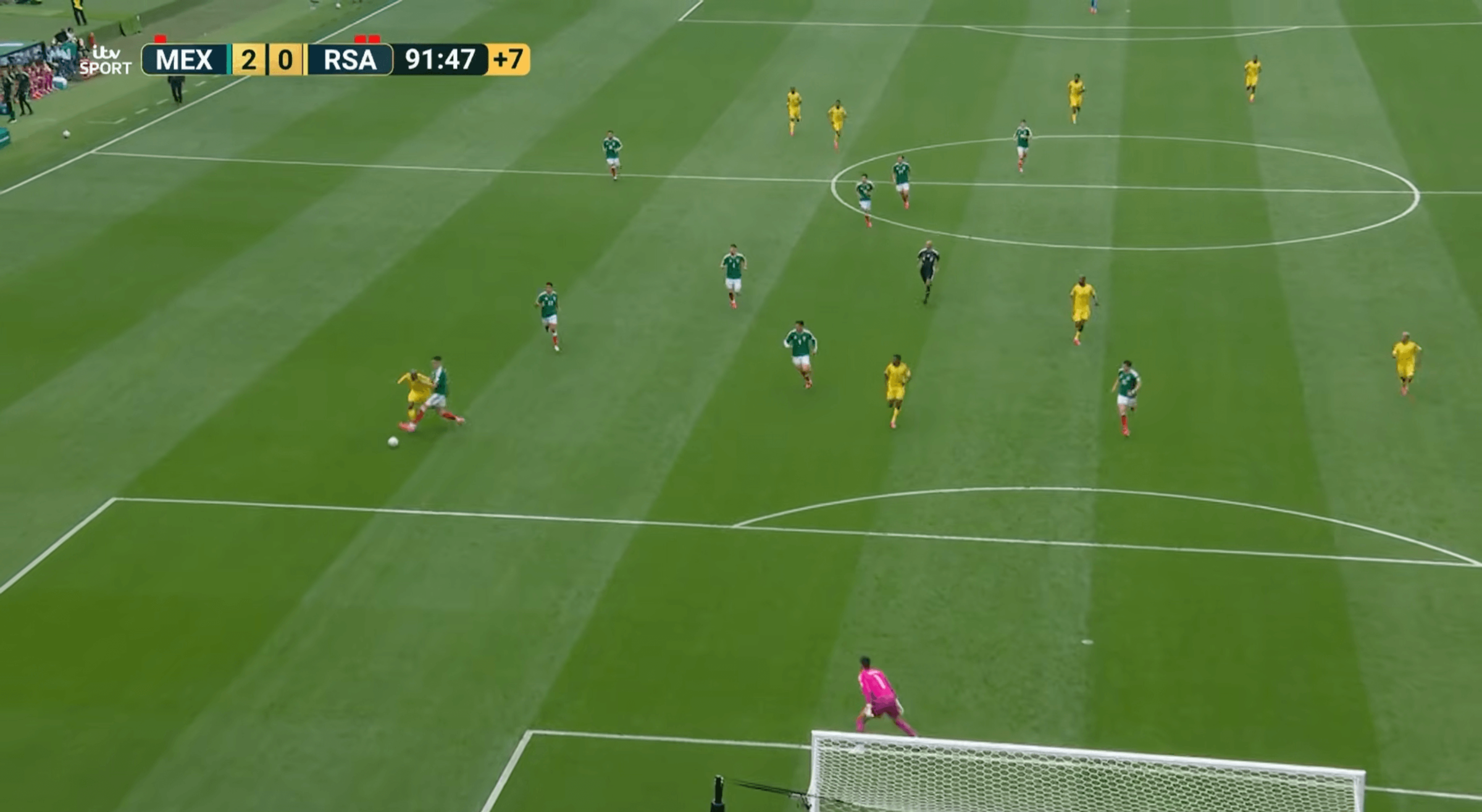 |
The incident that led to Montes' (Mexico) red card in the match against South Africa, at Azteca Stadium, Mexico City, Mexico on 12/6. *Screenshot* |
Montes' red card was arguably the most controversial, as Khuliso Mudau did not appear to be heading towards goal. However, the South African player could have controlled the ball and shot had the foul not occurred, and no other Mexico defender was close enough to intervene.
A similar incident occurred in the Premier League in October. When Marcos Senesi of Bournemouth fouled Ismaila Sarr of Crystal Palace, referee Jarred Gillett issued only a yellow card despite consulting VAR. However, the English referees' body PGMOL later confirmed this was an error.
Since Collina's appointment as head of FIFA's refereeing department, a new era has begun. Rules regarding denying a clear goal-scoring opportunity in the penalty area have been relaxed. This influence was evident at Russia 2018 and Qatar 2022, where each tournament saw only four red cards, the lowest numbers since 1978.
That number is likely to increase at this year's World Cup due to more matches and the three players dismissed on opening day. However, it is unlikely that fans will witness the 28 red card record from Germany 2006 being broken.
Compiled by Vy Anh