At the 5th Expanded Ho Chi Minh City Ophthalmology Conference on 22/8, Dr. Nguyen Viet Giap, a second degree specialist doctor, stated that the pattern of ophthalmic diseases is changing. Previously, the health sector focused on eliminating trachoma and addressing dry eyes due to vitamin A deficiency. However, diabetes, macular degeneration, glaucoma, and myopia are now emerging as new challenges.
The World Health Organization (WHO) projects that by 2050, one-half of the world's population could be myopic, with 10% suffering from severe myopia. Concurrently, the rise in diabetes increases the risk of diabetic retinopathy, a leading cause of vision impairment in working-age individuals.
Despite the changing burden of eye diseases, significant gaps remain in the detection and management of certain conditions. A survey by the Department of Medical Examination and Treatment, Ministry of Health, conducted across 521 healthcare facilities during 2023-2024, identified diabetic retinopathy screening and glaucoma management as the most significant limitations.
Only 29,6% of diabetic patients received eye exams that included retinal photography. Specialized treatment is also inconsistent, with only 17,3% of facilities offering intravitreal injections and 7,3% providing laser photocoagulation for diabetic retinopathy. Optical Coherence Tomography (OCT) machines, crucial tools for diagnosis and monitoring, are available in only 20,3% of facilities. Consequently, patients in many localities must be referred to higher-level facilities for intravitreal injections or laser photocoagulation.
For glaucoma, often called the "silent thief of sight" due to its progression without clear early symptoms, the survey recorded 36.744 detected patients who had not been included in long-term management. Only 62,8% of detected cases were brought under monitoring and management.
Human resources also present a bottleneck. There are 83 facilities without an ophthalmologist, and the entire country has only 218 refractionists, while specialized ophthalmic services are primarily concentrated in higher-level hospitals.
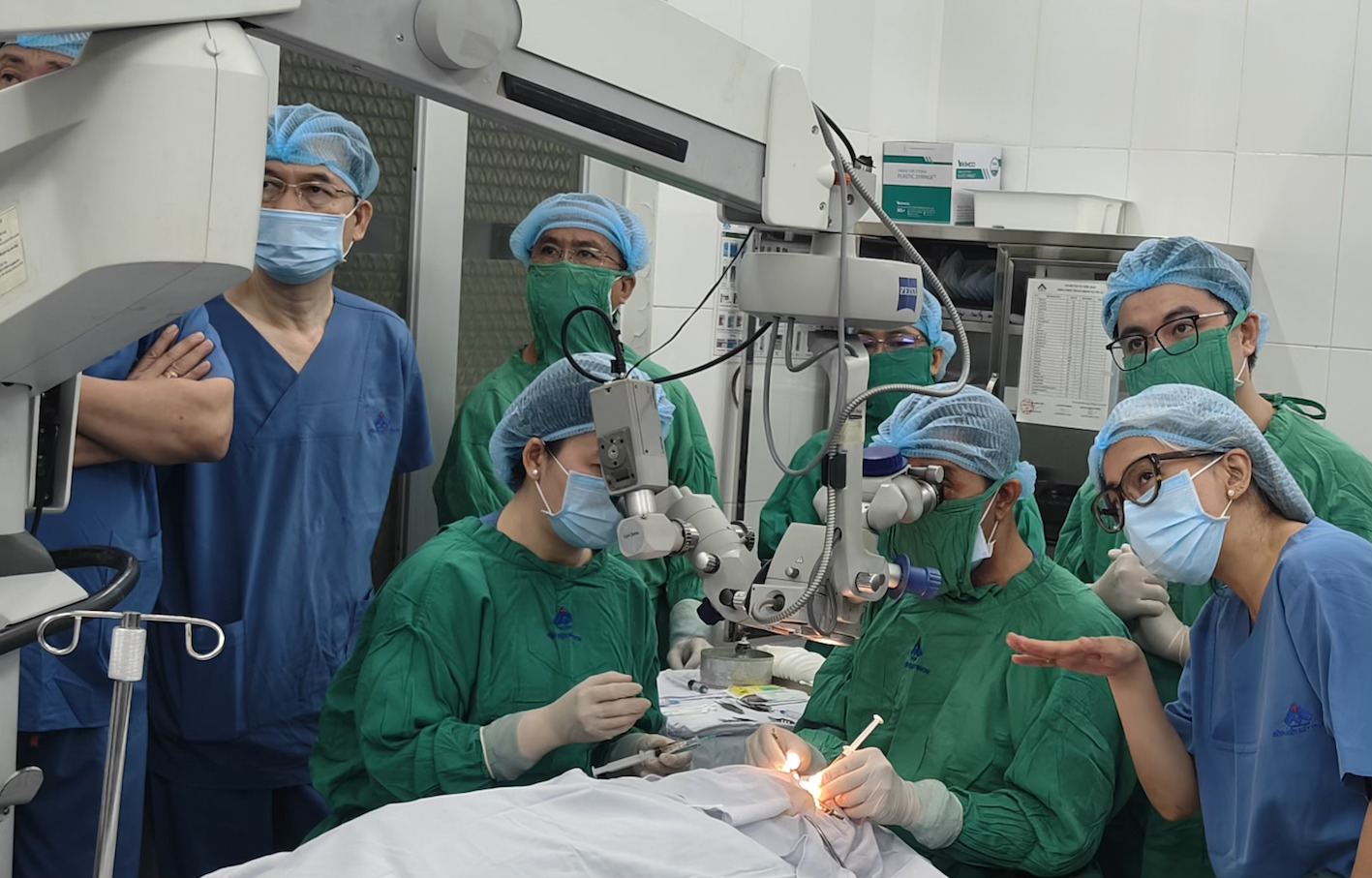 |
Foreign glaucoma experts perform surgery with doctors and nurses at Ho Chi Minh City Eye Hospital. Photo: Hospital provided |
Foreign glaucoma experts perform surgery with doctors and nurses at Ho Chi Minh City Eye Hospital. Photo: Hospital provided
Dr. Duong Huy Luong, Deputy Director of the Department of Medical Examination and Treatment, noted that the ophthalmology sector has achieved many successes, with nearly 370.000 cataract surgeries performed last year, and 83% of patients achieving good vision upon discharge. However, with an aging population and increasing non-communicable diseases, the health sector needs to shift from a "wait for blindness to treat" mindset to one of "prevention and early detection."
"We should not wait until patients experience vision loss," Mr. Luong said, emphasizing that eye care needs to be implemented more broadly at the grassroots level, rather than solely concentrating on central and tertiary hospitals.
To narrow the screening gap, experts propose integrating eye exams as a component of diabetes management. The Ministry of Health is encouraging an Endocrinology - Ophthalmology collaboration model, piloted at 7 hospitals, and also proposes that annual eye exams for outpatient diabetic patients be covered by health insurance.
Furthermore, artificial intelligence (AI) is expected to assist in reading fundus images, screening, and detecting risks at the grassroots level. By combining interconnected data and remote consultations, technology can help expand access to ophthalmic services, especially in areas with a shortage of specialist doctors.
Le Phuong