An examination at the High-Tech Eye Center, Tam Anh General Hospital TP HCM, revealed that Phuong's left eye myopia increased from 5 to 6 diopters, and her right eye from 4 to 4,75 diopters.
Master of Science, Doctor Pham Huy Vu Tung, Deputy Head of the Ophthalmology Department at the High-Tech Eye Center, stated that progressive myopia, like Phuong's case, occurs when the degree of myopia increases rapidly. This is common in children because their eyeballs are still developing, rendering old glasses unsuitable.
Myopia of 6 diopters or more is classified as high myopia, which increases the risk of retinal complications and other eye conditions later in life. The treatment goal is not only to help children see clearly but also to control the rate of myopia progression to reduce the risk of severe myopia.
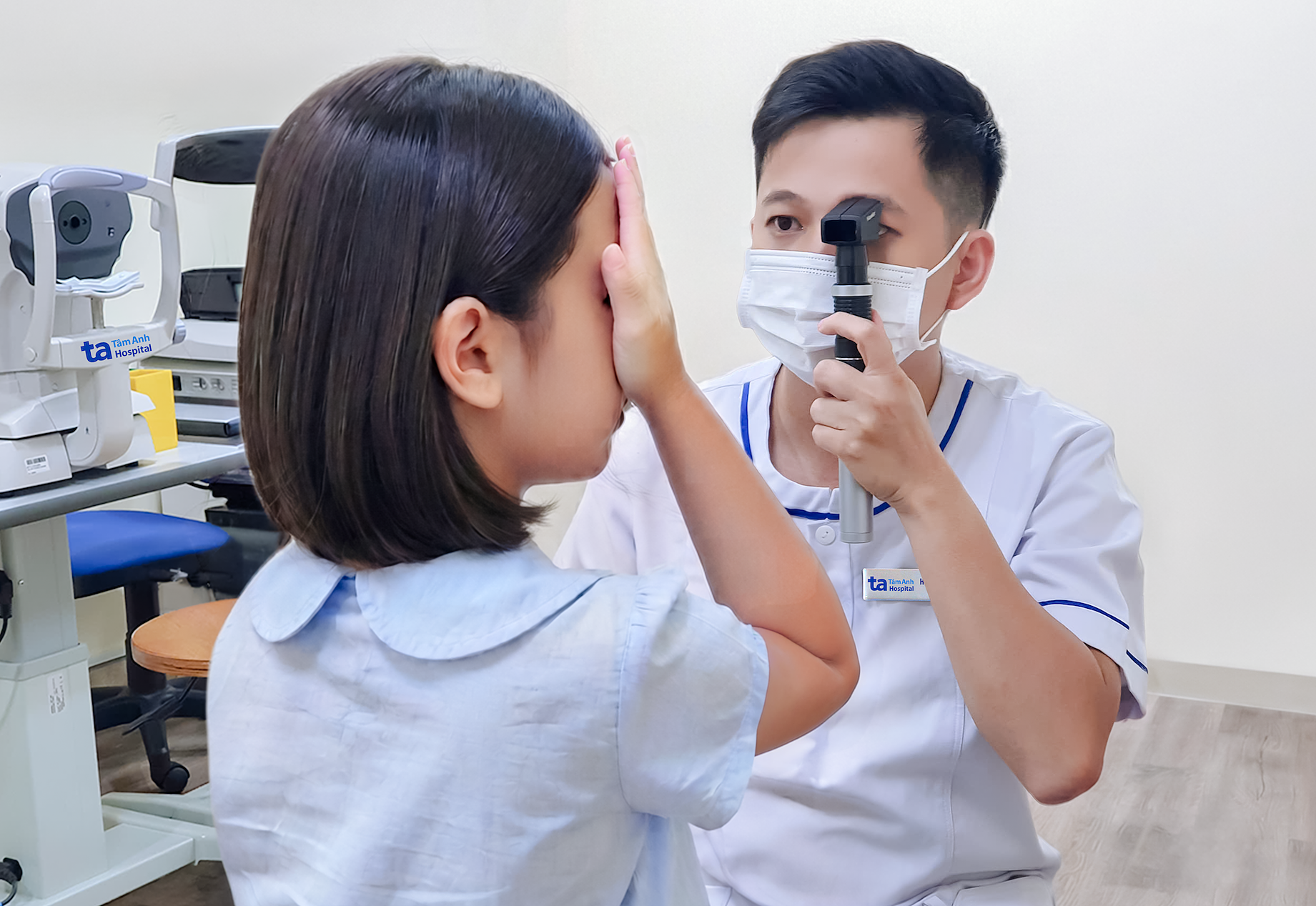 |
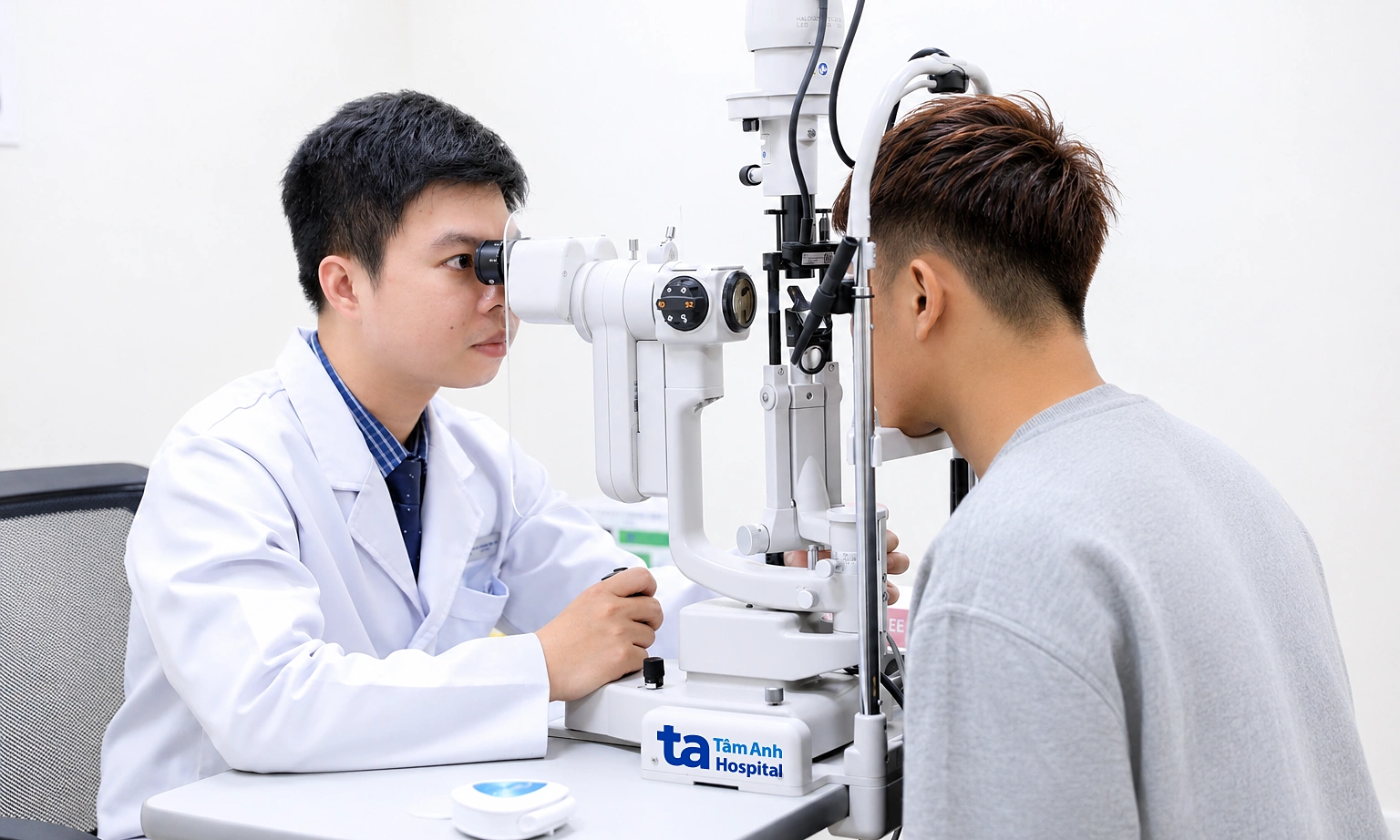
Phuong undergoing a retinoscopy exam to check her eyes. *Photo: Tam Anh General Hospital*
Doctors prescribed new, correctly powered glasses combined with Stellest myopia control lenses to slow down the progression rate. After a mot-week follow-up, Phuong's vision reached 10/10 in both eyes when wearing the correct glasses, and her eye strain significantly improved.
Doctor Tung noted that during the recent summer, the hospital received many cases of rapid myopia progression similar to Phuong's, about 15% higher than usual. Childhood myopia progression stems from factors like genetics, early onset age, and lifestyle habits. Phuong's mother stated that during the summer break, Phuong spent a lot of time on her phone, watching cartoons, and reading stories in a room with insufficient natural light.
Explaining the mechanism, Doctor Hoang Quyet Tien, from the Medical Information Center, Tam Anh General Hospital TP HCM, said that children continuously focusing on near objects at a distance of less than 30-40 cm can increase accommodative stress, which is linked to the elongation of the eyeball's axial length and myopia progression. An increase of about mot mm in axial length can correspond to an increase of approximately 3 diopters. Myopia caused by changes in eyeball structure cannot resolve on its own; children need to wear correctly prescribed glasses and undergo regular check-ups.
Conversely, spending time outdoors and exposure to natural light are believed to limit the elongation of the eyeball's axial length, thereby helping to reduce the risk of myopia onset and slow its progression in children.
Doctor Tien advises parents to limit children's screen time, prevent continuous near vision tasks, and encourage daily outdoor activities. Study areas and play zones should be well-lit, with a preference for natural light.
A diverse diet rich in green vegetables, fruits, and fish also helps provide essential nutrients for eye health. Additionally, supplementing with broccophane (an extract from broccoli rich in sulforaphane) helps increase thioredoxin production, contributing to the protection of retinal pigment epithelial cells and the lens. Children should also undergo regular eye exams approximately once every 6 months to detect refractive errors early, monitor progression rates, and adjust glasses when necessary.
Ngoc Kim Tham
*Character's name has been changed