In Tokyo, many restaurants specialize in serving wild game such as deer, wild boar, and bear. Le Cocotte is renowned for its grilled bear meat, seared to perfection. Diners report the meat has no unpleasant odor and is quite palatable. According to chef Kazuki Fukasawa, the number of customers seeking to try bear meat has increased since last year, amid frequent media reports of bear attacks. Summer bear meat is typically lean and can dry out easily during cooking, so the restaurant only sources it when a suitable supply is available.
Bear meat is not new to Japanese cuisine. In the Tohoku region, particularly Akita, bear meat is deeply intertwined with the culture of the traditional Matagi hunters. These groups have lived in the northern mountains for generations, hunting bears and other wild animals for food. Visitors to the Ani area of Akita prefecture in winter can experience Matagi culture and savor bear meat hot pot—a traditional dish featuring sliced meat cooked with vegetables, mushrooms, and miso broth. This preparation is ideal for the fattier cuts of meat obtained during the colder months, according to the Japan National Tourism Organization.
Today, bear meat is prepared in various ways, including pan-fried until crispy, made into meatballs, pate, or even char siu-style. In Gifu, a wild game restaurant has developed canned bear meat into several hot pot varieties.
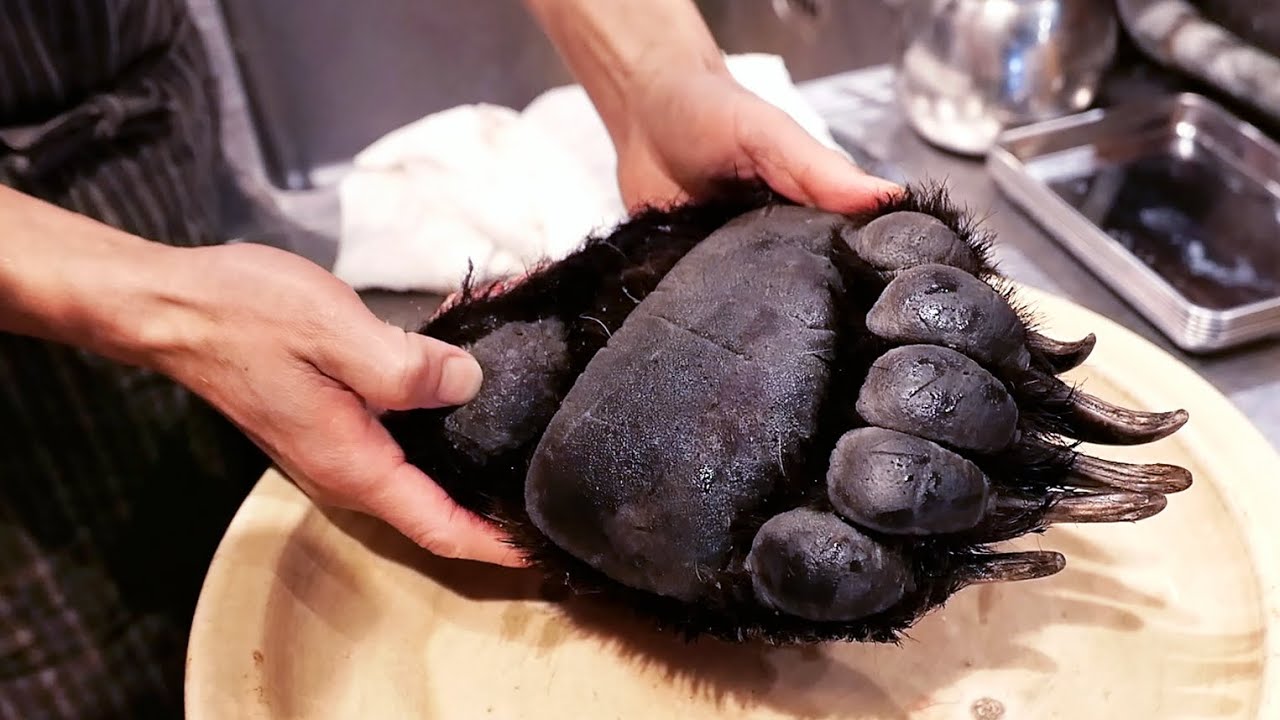 |
Bear paw before being prepared as a dish. *Travel Thirsty*
Interest in bear meat has grown since 2025, coinciding with a continuous rise in reported bear attacks. According to Japan's Ministry of Environment, from 4/2025 to 3/2026, 238 people were injured or killed in bear attacks, nearly three times higher than in 2024. The number of culled bears also increased, exceeding 10,000 animals for the first time in 2025. Some local authorities and businesses view utilizing these culled bears for food as a way to reduce waste.
Despite this, bear meat remains a rare ingredient. In 2024, Japan had 631 facilities processing deer meat but only 72 handling bear meat. This disparity is due to the animal's large size, the remote locations where bears are hunted from slaughterhouses, and stringent hygiene requirements, which result in high costs and an unstable supply. Food safety is another barrier, as wild bears can carry Trichinella parasites, which cause trichinellosis. Japan's Ministry of Health recommends that wild game meat be cooked to an internal temperature of at least 75 degrees C for one minute.
Japan implemented a national certification system in 2018 to standardize hygiene, traceability, and wild game meat processing. However, with few facilities accepting bear meat and quality dependent on the hunting season, it remains a seasonal delicacy rather than a common type of meat on Japanese tables.
Mai Phuong (According to TV Asahi, Unseen Japan)