The "disposable clothing" trend emerged on social media in China this summer. Related hashtags garnered 6.8 million views and 135,000 discussions on one platform alone.
These outfits primarily serve tourists' needs for "Instagrammable" photos. They often feature striking colors, intricate designs, and are less suitable for daily wear. One female tourist stated she bought 5 outfits for a 7-day trip for a total cost not exceeding 200 yuan (700,000 VND), with no intention of keeping them afterward.
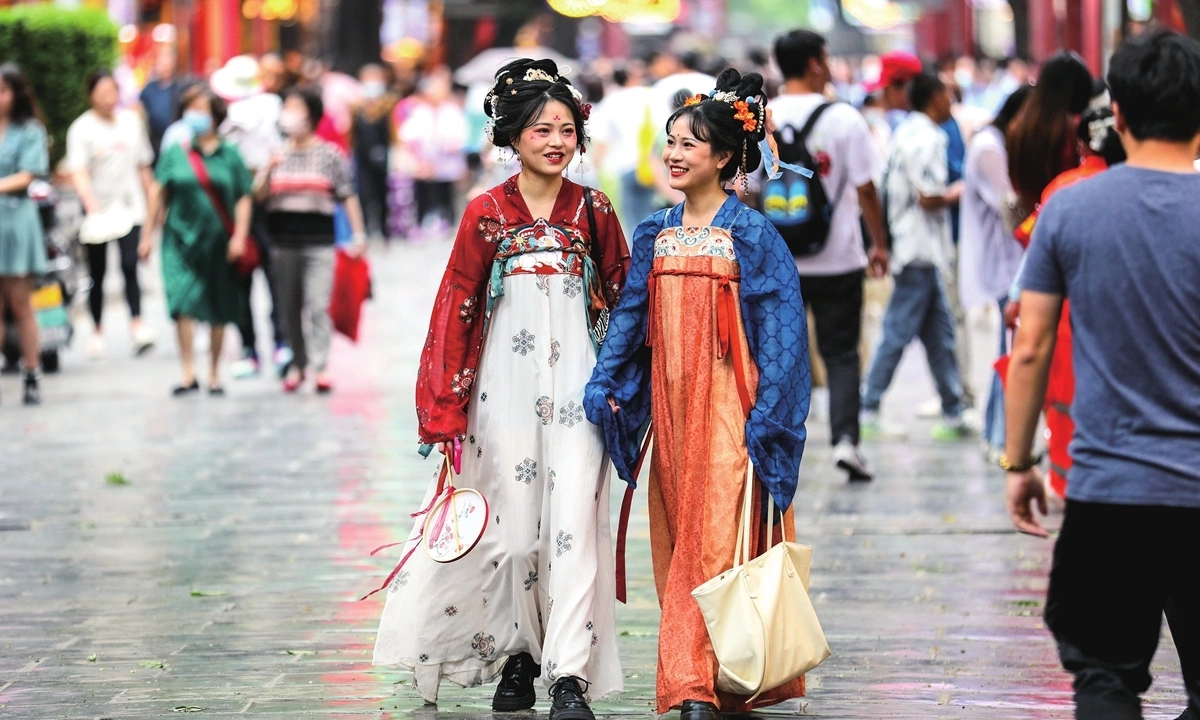 |
Two Chinese tourists wearing traditional costumes take photos at a tourist attraction. Photo: Global Times |
Responding to this demand, fashion stores constantly update products based on destinations and tourist seasons. A female clothing store owner reported selling about 15,000 items monthly, primarily to customers aged 18-30. Popular items are priced at 10-50 yuan, comparable to a budget meal.
The store sells beach photo dresses in May, Hanfu for the Dragon Boat Festival, and exotic-style dresses for tourists visiting Xinjiang. Most customers do not return, but new customers arrive continuously.
After their trips, some people discard the clothes, while others resell them on second-hand e-commerce platforms. Proponents argue this method is more economical than buying expensive items that are rarely used.
However, this trend is also criticized for increasing waste and impacting the environment. According to the United Nations Environment Programme (UNEP), the world generates approximately 92 million tons of textile waste annually. Textile production doubled between 2000-2015, while usage time decreased by 36%. In 2023, only 8% of textile fibers were made from recycled materials, and clothing and textiles accounted for about 11% of plastic waste.
Experts state that disposable clothes are often made from cheap materials, including plastic, which exacerbates the waste problem. Low-quality clothing and items resold on second-hand platforms also pose potential health and hygiene risks.
Anh Minh (via SCMP)