I am planning to travel to Australia this October on a visa 600. I will be traveling independently, with a friend there providing accommodation and guiding me on tours.
I would like advice on the following issues: First, regarding personal device inspections, what criteria do customs officers typically use to request passengers to open their phones or computers? Is this a random occurrence, or does it only happen when passengers show specific unusual signs during an interview?
Second, will my limited English, coupled with a friend in Australia covering all my food, lodging, and travel expenses, be considered a suspicious sign?
Third, what other factors commonly cause security personnel to suspect a traveler's purpose of entry?
Finally, if I am unfortunately taken to an interrogation room and cannot explain myself clearly due to a language barrier, do I have the right to request a direct call to the friend waiting outside to verify information on the spot? What is the usual procedure for this, and what should I be aware of to avoid inadvertently putting myself at a disadvantage?
Reader Hoang Huong
Pham Anh Vu, Deputy General Director of Du Lich Viet Company, responds:
From the perspective of a travel company with many years of experience organizing tours to Australia, I affirm that if you use a visa 600 for its intended purpose of tourism, prepare thoroughly, and answer truthfully, the likelihood of your visa being canceled at the border is very low. The risk of being denied entry primarily stems from misstatements, false declarations, or evidence of violating stay conditions.
Australian law permits immigration officers to search phones if they have suspicion based on specific indicators. This step typically occurs only when customs detects anomalies such as a long history of stays, frequent returns, weak financial standing, hesitant answers, or unreasonable flight and accommodation information.
It is certain that having your phone checked does not automatically lead to visa cancellation. Instead, the device might reveal evidence of violations, such as illegal work, false declarations, or carrying prohibited items.
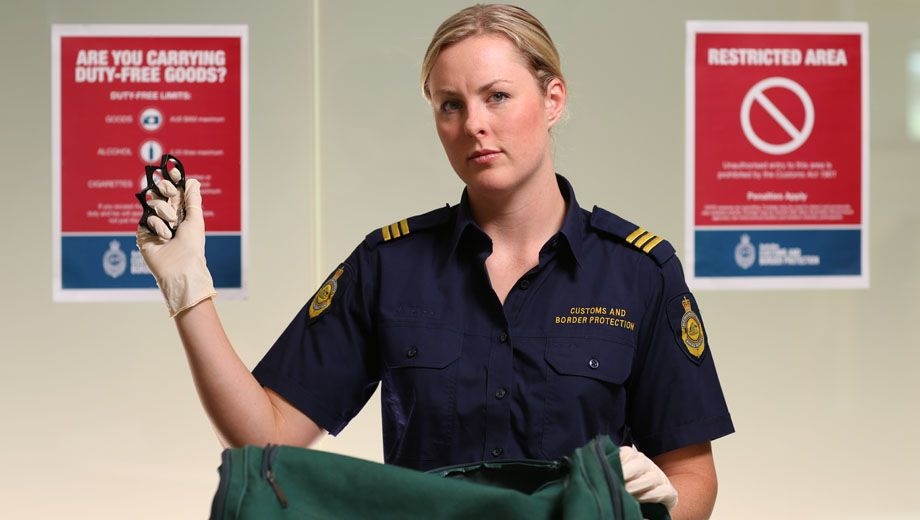 |
_An officer at an airport in Australia. Photo: Vnis_
Additionally, many individuals traveling for legitimate tourism purposes still carry prohibited food items, such as pork or products with disease transmission risks, without declaring them. This also carries the risk of visa cancellation and deportation.
Relying on acquaintances in Australia for accommodation and tours is common within the Vietnamese community. However, customs may become suspicious if a traveler cannot clearly demonstrate their relationship with the sponsor, is vague about their itinerary because friends handled everything, or has very weak finances but plans a long stay at the home of someone operating a farm or restaurant business.
To avoid complications, you should prepare a normal chat history, photos of meetings, an invitation letter clearly stating the address, and a commitment to only assist with food and accommodation, not employment. Include a personal financial statement consistent with your travel plan and a printed basic itinerary in English or Vietnamese, specifying your departure date, return date, and planned attractions.
Travelers may be taken to a private room for further questioning if an officer becomes suspicious. There, the officer will request your passport, ask you to wait, and inquire in detail about your trip's purpose, stay history, acquaintances, finances, and occupation in Vietnam. If they remain suspicious, they may conduct a more thorough baggage search and inspect messages and social media on electronic devices.
You may provide a phone number and ask them to call the person waiting outside for verification, but whether they make the call is entirely at the officer's discretion. Therefore, you should consider this only as an additional support channel. If violations are found, they will issue a notice of visa cancellation consideration, and you have the right to provide an explanation before a final decision is made.
If you are invited to a private room, remain calm, follow instructions, and do not argue. Use short, factual sentences. If your English is not good, state directly that you need them to speak slowly, and use a pen and paper or pre-printed documents to explain, rather than trying to understand and answering incorrectly. As long as your true purpose is tourism and there is no history of illegal work or false declarations, you can confidently pass through customs.