Dining options are limited in Ha Giang during the evening, especially for snacks. However, visitors can find several stalls selling thang den, a characteristic Ha Giang dish typically available only during the cold season.
"Amidst the windy winter mountains, a bowl of thang den for dessert after a meal of smoked meat and pork sausage is a sensible choice," said Minh Huynh, a local driver, as he savored a bowl of colorful thang den, which at first glance resembled small candies.
 |
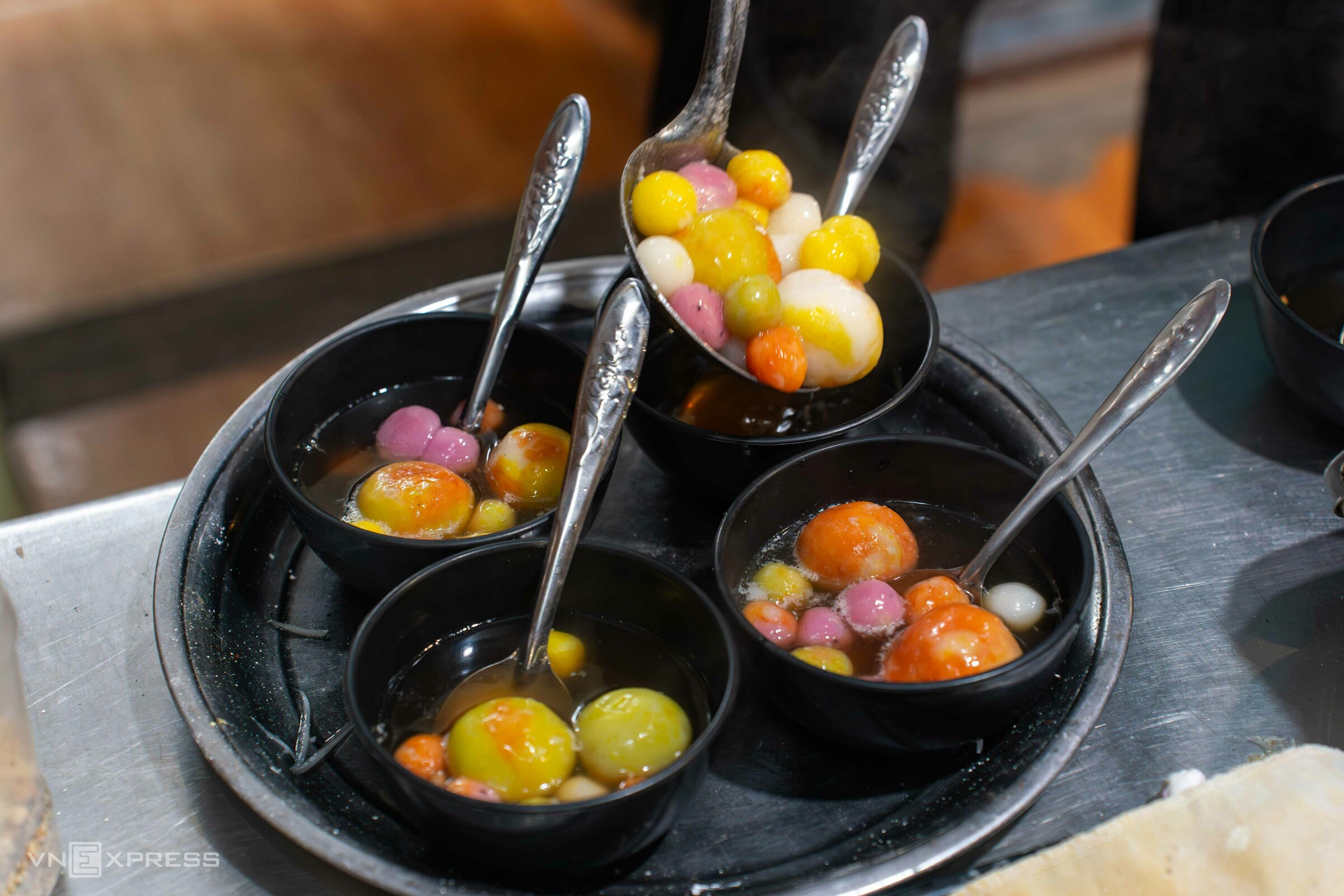
Those bowls of thang den at Ms. Nga's stall, with the larger ones being troi tau cakes filled with mung bean paste. Photo: Hoang Giang
Thang den shares a similar appearance with Hanoi's troi tau cakes or Lang Son's cong phu cakes, made from glutinous rice flour with a vegetarian or bean filling. Dang Thi Ha Nga, who has sold this dish for over 10 years on Tran Hung Dao street, Ha Giang 1 ward, noted that thang den balls are only slightly larger than a fingertip, much smaller than troi tau cakes, so each bowl usually contains more than 10 pieces.
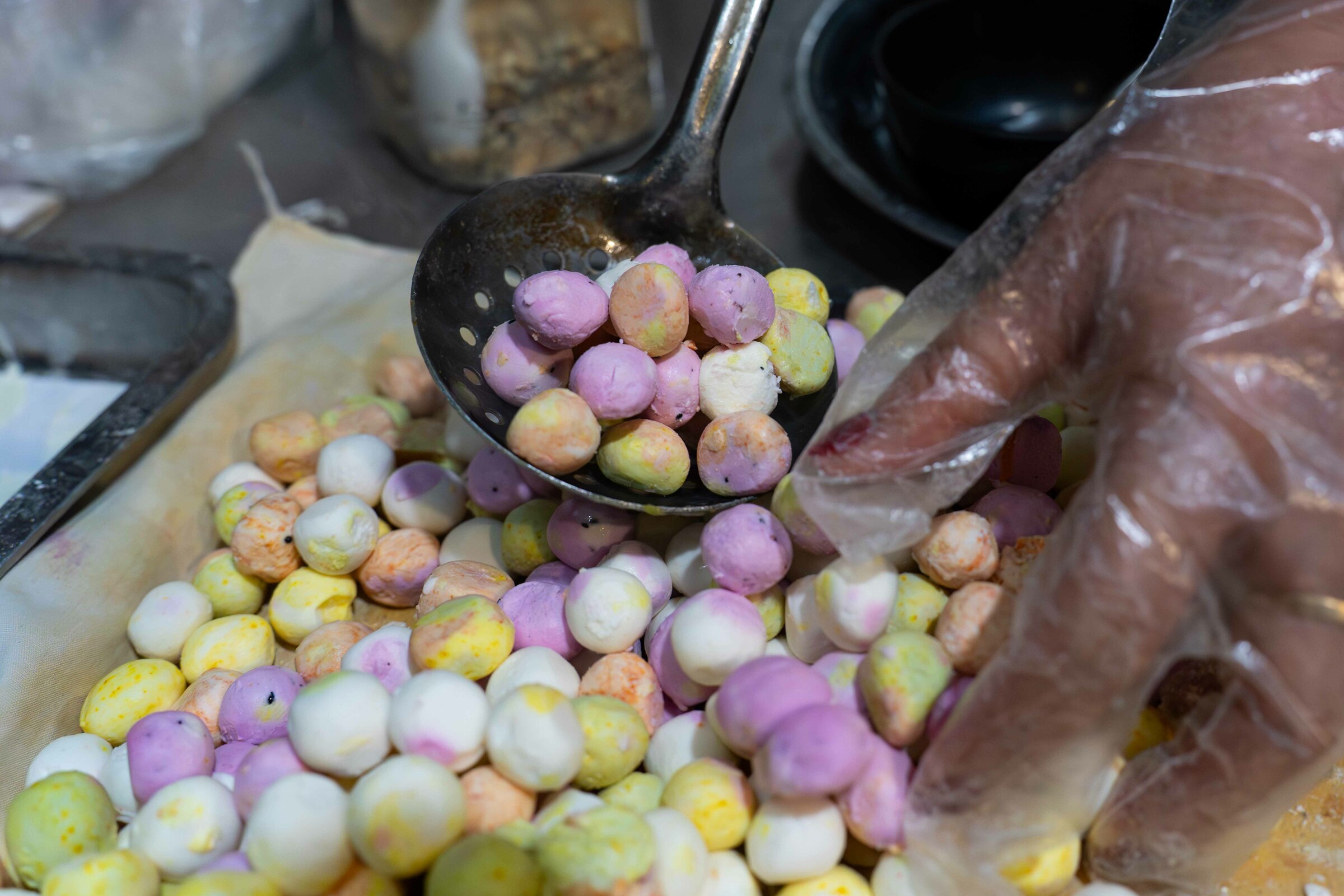
In addition to the traditional white, current stalls also offer colorful thang den to enhance its visual appeal. These colors are derived entirely from natural ingredients such as gac fruit, turmeric, dragon fruit, and butterfly pea flower.
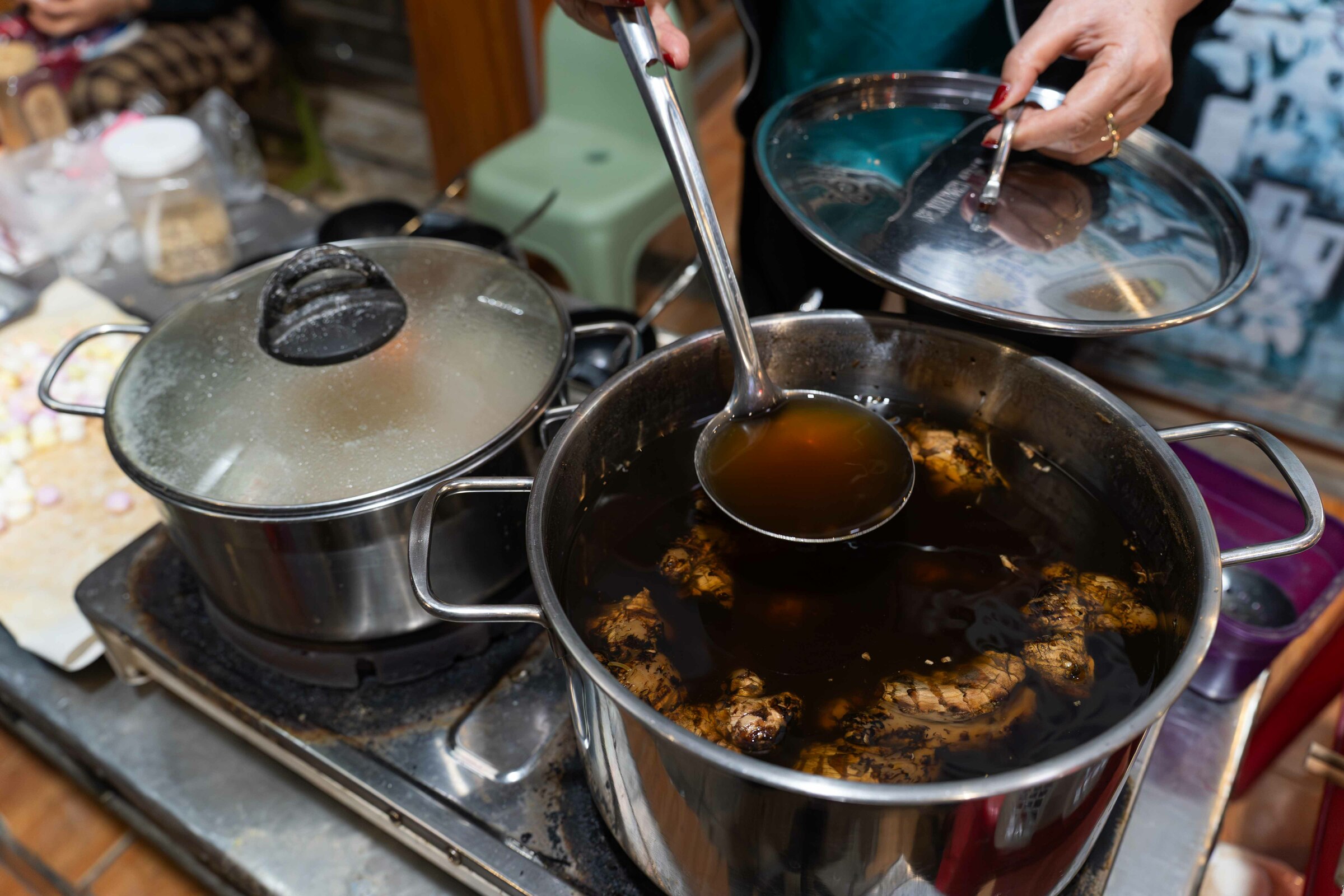
The preparation process for this dish is similar to troi cakes: good glutinous rice is ground into flour, then pounded again to achieve a chewy texture that prevents the outer layer from becoming crumbly. The broth is made from sugar, coconut milk, and heated ginger. Ms. Nga shared that a crucial secret is to roast the ginger until cooked, wash it thoroughly, then crush it before simmering to ensure the broth is fragrant and not "fishy" like raw ginger. At her stall, vendors always prepare two separate pots: one for boiling the cakes and another for cooking the ginger-sugar syrup.
 |
The thang den balls are pre-rolled, awaiting boiling. Photo: Hoang Giang
 |
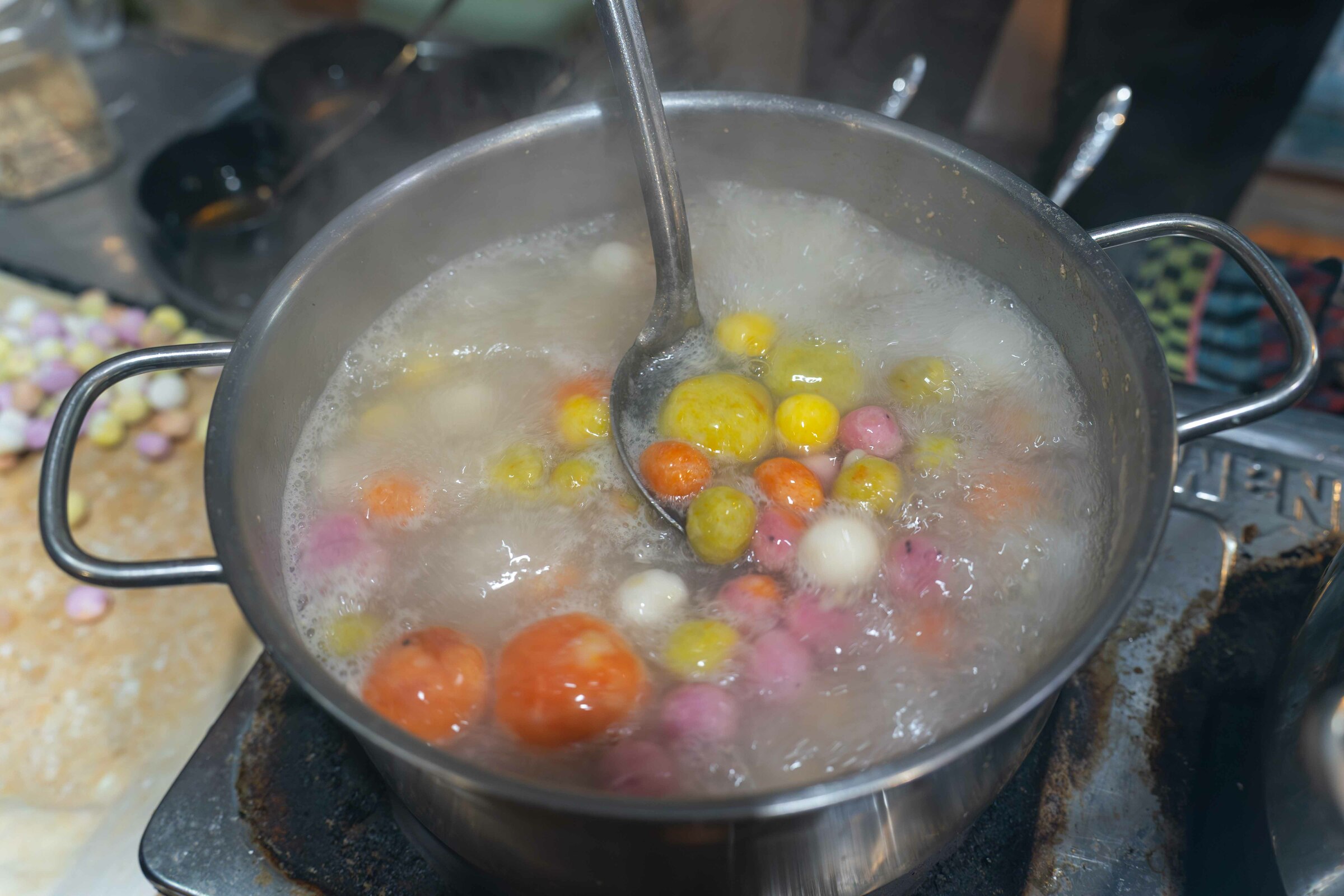
The pot for boiling thang den. Photo: Hoang Giang
 |
The ginger broth pot served with thang den. Photo: Hoang Giang
 |
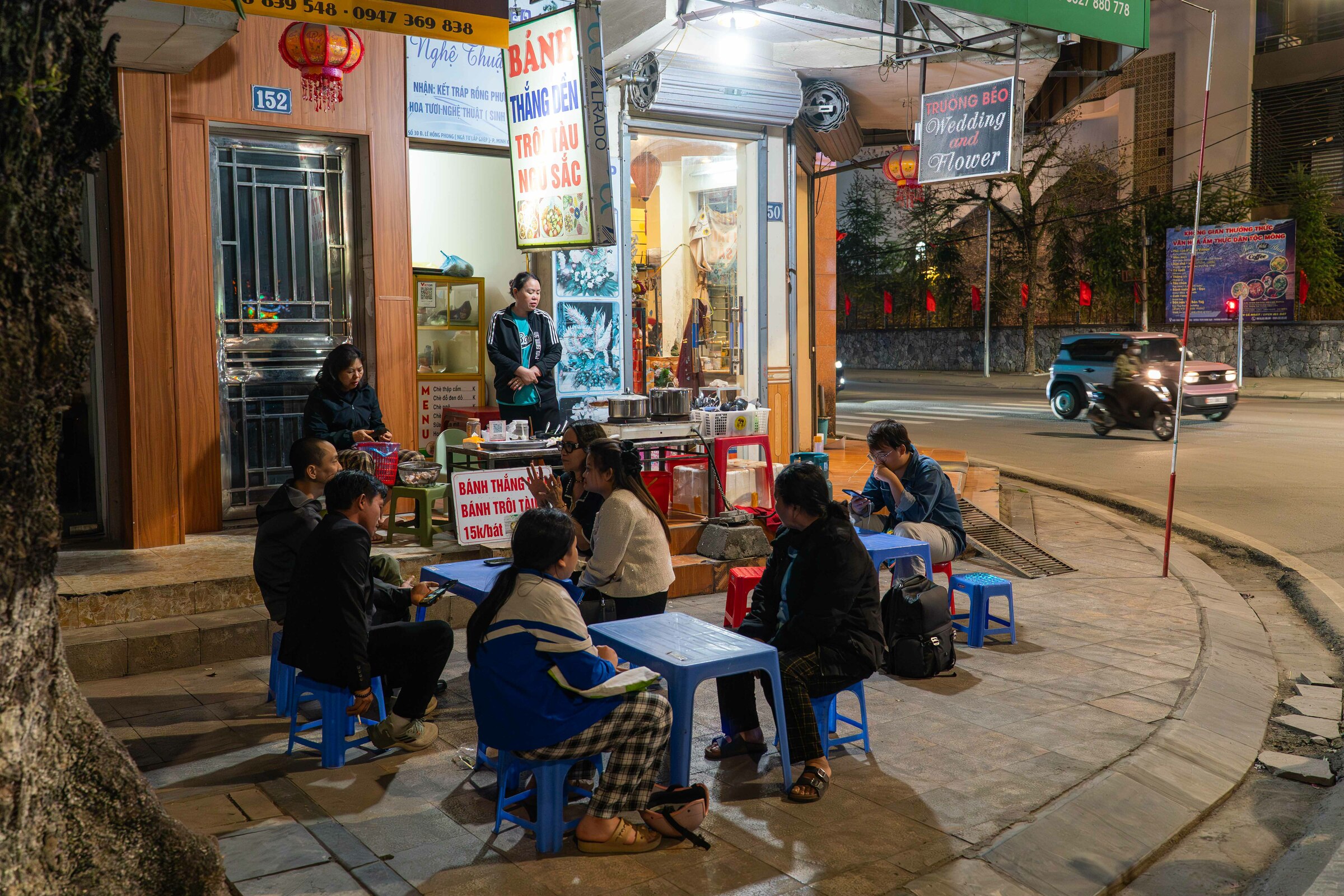
Ms. Nga's thang den stall. Photo: Hoang Giang
When a customer places an order, the vendor drops the flour balls into a pot of boiling water, waiting about 5-7 minutes until they float to the surface. The cooked balls are then scooped into a bowl, topped with hot ginger-sugar syrup, and finally sprinkled with roasted sesame or peanuts.
Diners often let the small cake melt in their mouth to fully experience the sweet, rich taste of the broth, the pungent warmth of roasted ginger, and the nutty flavor of sesame and peanuts.
Selling thang den is a seasonal business, primarily bustling during winter. Ms. Nga stated that her family typically prepares ingredients and rolls the cakes in the morning to open the stall from 18h to 23h. On average, the stall uses about 3 kg of glutinous rice daily, increasing to 5 kg on very cold days.
Around the second lunar month, when the weather begins to warm, thang den stalls close and switch to serving traditional sweet soups like mung bean, black bean, or red bean to meet the demand for cooling desserts.
Tu Nguyen - Hoang Giang