Mettbrotchen, or Mett, is a traditional snack popular in Northern and Eastern Germany. This simple dish features a half-round bread roll (Brotchen) topped with raw minced pork, seasoned with salt, black pepper, and finely chopped onions. While known as Hackepeter in some northern areas, "Mett" is now the most widely used term across the country.
The term "Mett" derives from Old German, meaning "food," and is the etymological root of the English word "meat". Initially, it referred to any minced meat, but from the 19th century, its usage narrowed to specifically denote seasoned raw minced pork.
The most common way to enjoy Mett is spread directly onto bread, forming Mettbrotchen, a popular choice for Germans at breakfast or as a midday snack.
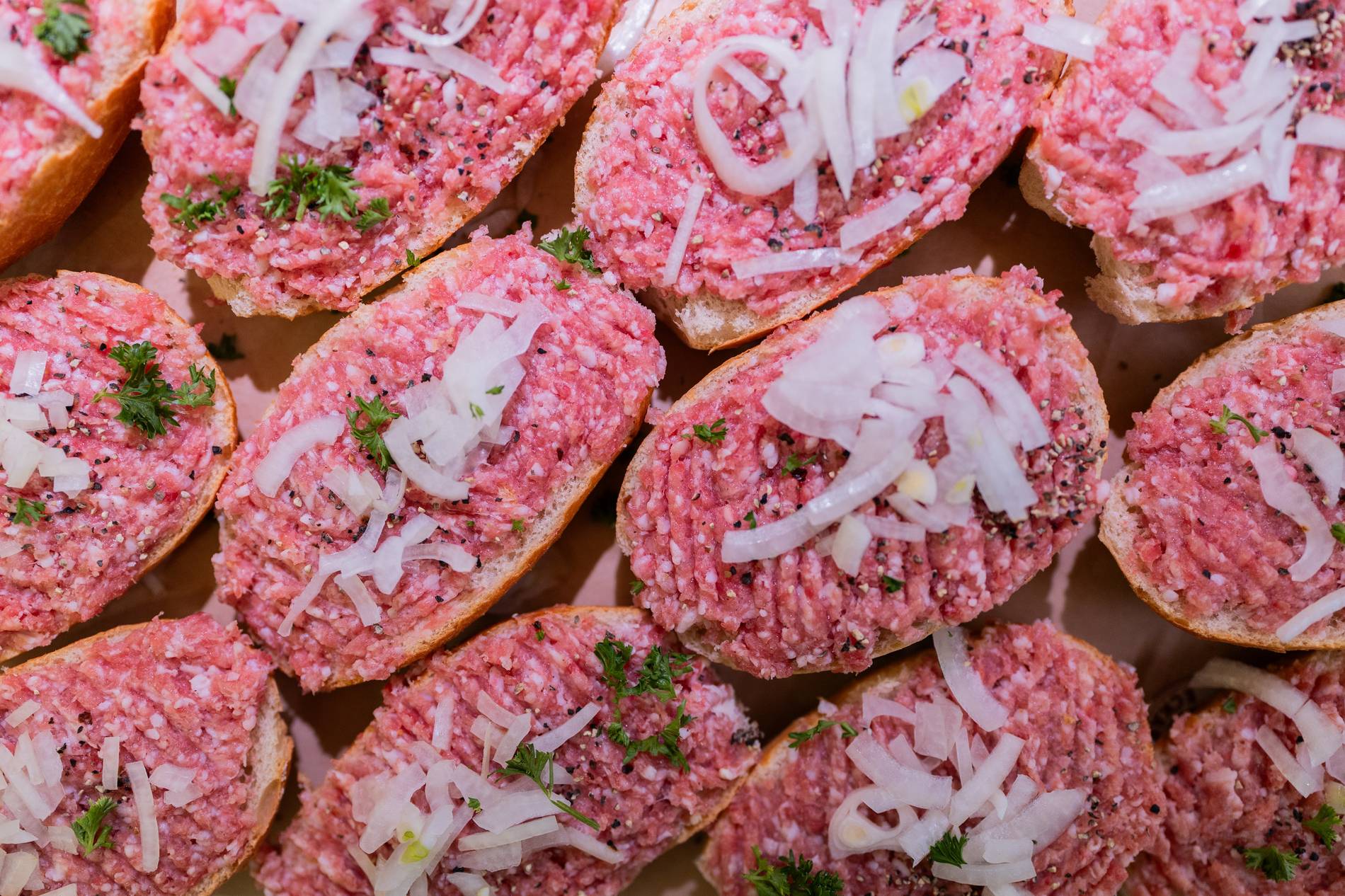 |
Bread slices topped with raw meat to make Mett. *Photo: RP Online* |
Mettbrotchen experienced a golden age from the 1950s to the 1970s, coinciding with Germany's post-World War II "economic miracle" (Wirtschaftswunder). As living standards improved and meat became more accessible, raw pork symbolized newfound prosperity.
Those who have sampled it describe raw pork as more palatable and richer than raw beef, akin to a premium, yet fresher, pate. Paired with crispy bread, a touch of pungent onion, and freshly ground black pepper, the dish delivers a "pure, rustic" experience, showcasing pork's natural flavor. This inherent simplicity has allowed Mettbrotchen to endure for generations.
It was during this era that the famous Mettigel, or "meat hedgehog," emerged, quickly becoming a party centerpiece. Raw minced pork was sculpted into a hedgehog shape, with sliced onions or pretzel sticks serving as spines, and sometimes black olives for eyes and nose. These pink meat hedgehogs, prominently displayed on party tables, became a cherished childhood memory for many Germans born between the 1950s and 1970s.
Today, while perhaps considered dated in modern culinary trends, Mettbrotchen remains widely available, particularly in Berlin and northern cities. Visitors can easily find them at traditional butcher shops, bakeries, and cafes, with rolls prepared fresh each morning.
Regarding food safety, meat for Mett in Germany undergoes some of Europe's most stringent controls. Regulations mandate that raw meat can only be sold and consumed on the day it is minced, requiring constant refrigeration until serving. Any unused meat at day's end must be cooked, never sold raw the following day.
Despite this, Tasting Table writer Smith noted that some stores' control procedures are not as rigorous as often perceived. He purchased Mett and left it at room temperature, fortunately experiencing no digestive issues or food poisoning.
These standards, combined with modern livestock farming's control of trichinella parasites, have significantly reduced risks associated with raw pork in Germany. However, like all raw foods, Mett still carries potential bacterial risks, including salmonella, yersiniosis, and campylobacter, despite a low actual incidence.
By Hoai Anh (Source: Tasting Table, German Culture)