After a long day leading a tour group, Giang Mi Giao, 27, paused at a small eatery in Yen Minh. He quickly checked his vehicle and inquired about the well-being of each tourist. As the team leader for an "easy rider" group at a Ha Giang tourism company, Giao manages all aspects, from coordinating drivers to assisting guests.
This work provides him with a monthly income of 12-13 million VND, not including tips. This sum was unimaginable for him just a few years ago.
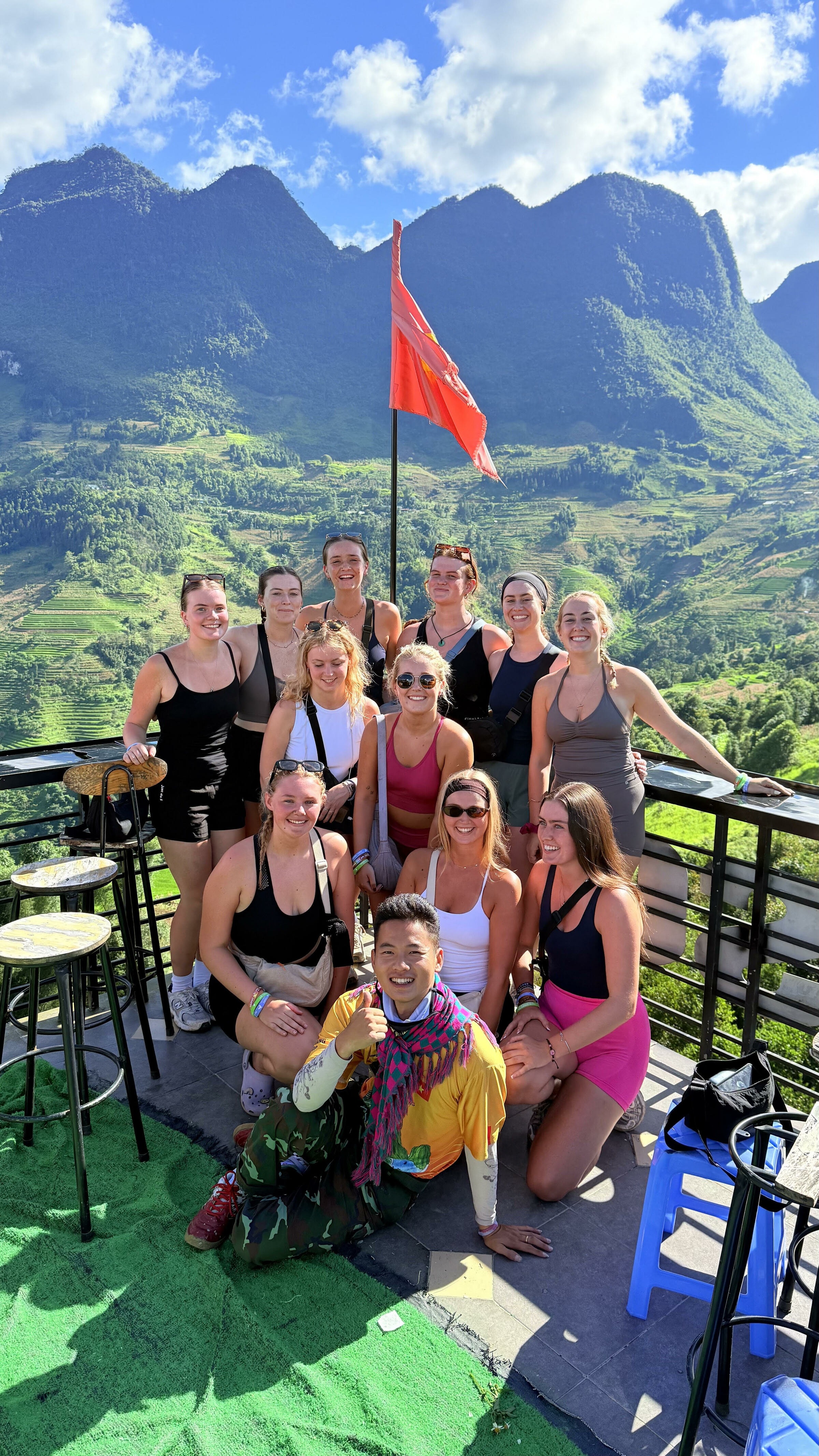 |
Giao poses with a group of foreign tourists in Ha Giang. Photo: Provided |
Giao poses with a group of foreign tourists in Ha Giang. Photo: Provided
The Ha Giang Loop, featuring spectacular mountain passes like Ma Pi Leng, villages nestled in clouds, and distinct local culture, emerged as a must-visit for international tourists post-pandemic. Its treacherous roads, marked by hairpin bends and steep inclines, pose a risk for self-drivers.
This demand fueled the rise of "easy rider" services: local drivers who also act as guides. They transport guests by motorbike and serve as "cultural ambassadors", connecting tourists with the region.
Nguyen Van Tuan, director of Jasmine Ha Giang, stated his priority is hiring ethnic minority residents, even if it means training them "from scratch". This is how Giang Mi Giao began his career.
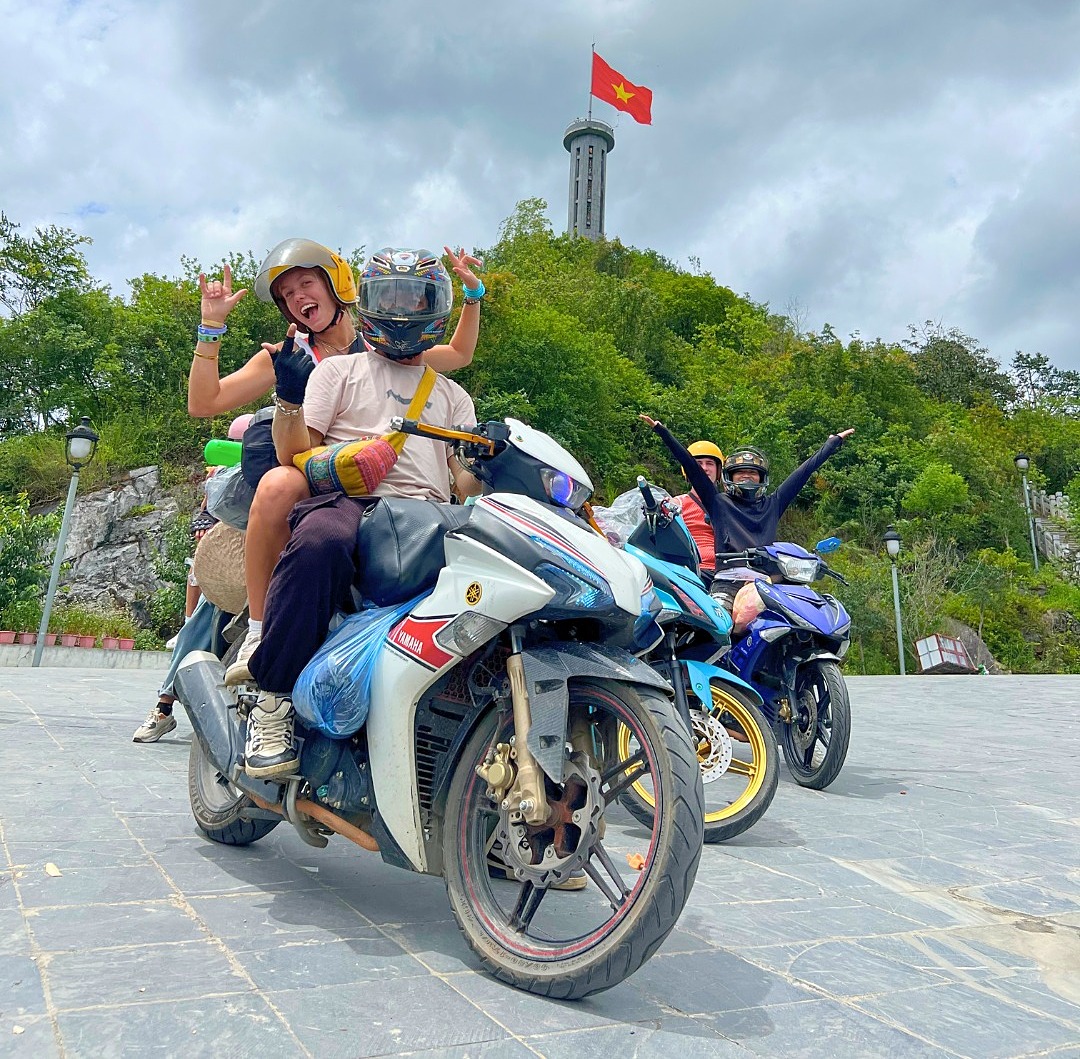 |
Easy riders transport foreign tourists at Lung Cu flagpole. Photo: Jasmine Ha Giang |
Easy riders transport foreign tourists at Lung Cu flagpole. Photo: Jasmine Ha Giang
Giao is the third of seven siblings in an H'Mong family from Quan Ba, in what was once Ha Giang province. His childhood memories are tied to the harshness of the rocky plateau, living in a temporary wooden house with a leaf roof, isolated on the mountain.
"In a place with 'too much rock, not enough land', a sturdy house was a luxury. Our family's main food was corn", Giao recalled.
The greatest struggle was the lack of clean water. In the dry season, he walked 7 km to carry back cans of water. In the rainy season, his family dug large pits to collect rainwater from the road. "We had to wait one or two months for the water to settle before daring to use it", Giao remembered.
After completing 9th grade, he left school and his hometown to work as a miner in Quang Ninh. The job was arduous, requiring 12 hours of work daily, but it paid 9 million VND.
He described leaving for work at dawn and returning home after dark. Though Quang Ninh is a tourist destination, he knew nothing about tourism, focusing only on overtime to send money home. Compared to his village, this was a good income. He explained that many in his village earned only 3-4 million VND a month, as cattle were sold every 3-4 years, and corn crops barely provided enough food.
In 2020, Giao joined the army. Two years later, he was discharged and returned home just as Ha Giang's tourism began to boom.
Unsure what to do next, Giao heard young people in his hamlet discussing "driving foreigners" and "making money". He applied for a job at Nguyen Van Tuan's company.
"I remember the day Giao came to meet me in ragged clothes. I sensed his sincerity and determination, so I hired him immediately", Nguyen Van Tuan recounted.
According to Nguyen Van Tuan, training local residents for tourism presents a significant challenge. Their lives were difficult; many were only accustomed to farming, and some could not even speak standard Vietnamese fluently.
Nguyen Van Tuan mentioned that some drivers initially maintained habits like not bathing due to water scarcity at home. The company had to retrain them on basic hygiene, communication, strict sobriety during work, and safe driving skills.
 |
The necklace Giao received from a female tourist. Photo: Provided |
The necklace Giao received from a female tourist. Photo: Provided
On his first day with guests, Giao felt "completely stiff" with worry. He knew no English, and his communication skills were limited. "For three days, driving guests, I was almost completely silent throughout the trip, just smiling as I was taught", Giao recalled. At the end of the trip, he received a 700,000 VND tip.
That amount surprised Giao, but it also made him realize: "If I want to do well and earn more, I must learn English; I must make guests happy".
Giao began to teach himself. He downloaded a translation app on his phone and diligently learned words. However, his greatest teachers were the tourists themselves. When he didn't understand, he asked them to speak into the app for translation, then memorized the pronunciation. He learned on the road, during meals, and from halting conversations.
"After driving all day, I was exhausted, but I still tried to study at night. In return, foreign guests were very patient; they saw my effort and eagerly guided me", Giao shared.
After about a year, Giao not only became proficient in basic English but was also promoted to tour team leader. He understood that his job was more than just driving.
"Today, easy riders symbolize Ha Giang tourism in the eyes of foreign visitors because of their dedication and kindness throughout the journey", Giao stated.
He proactively checks on guests' health and emotions. He tells them about the scenery, the roads, and especially the culture and people of his homeland. Giao's stories about his difficult childhood often captivate international tourists, with many asking to visit his home.
Recently, a female tourist gave Giao a necklace worth about 300 USD. Giao recounted that he nicknamed the tourist "princess", caring for her meticulously, from helping her with her helmet to protective gear. At the end of the trip, the tourist was very moved and promised to return, booking a private tour led by Giao.
With a monthly income of 12-13 million VND, Giang Mi Giao has become one of the most financially stable young people in his village. He sent money home to help his parents renovate their wooden house, and most importantly, ensures "there is always clean water in the house for use".
Beyond changing his own life, Giao inspires many other young people. He has introduced about 20-30 individuals from his village and commune to become "easy riders". He believes that without tourism, he would likely have returned to unstable factory work, facing an uncertain future.
"I get to stay in my homeland, driving on the very roads I once walked carrying water. On every trip, I share the most interesting stories about where I live with my guests", Giao shared.
Tu Nguyen