On the morning of 27/11, Olivia Mulheim, 25, and her boyfriend Lucas Schindler, 26, both from Switzerland, were attacked by a shark while swimming off Kylies Beach in Crowdy Bay National Park. They had ventured out to film dolphins when the attack occurred.
Schindler sustained severe leg injuries but managed to chase the shark away and pull his girlfriend to shore. On the beach, bystanders used swim shorts to staunch the bleeding from Schindler's leg. Mulheim tragically died. Schindler was airlifted to John Hunter Hospital for emergency treatment and is now in stable condition. An avid marathon runner, Schindler's doctors are concerned he may not regain normal mobility following the attack.
The incident deeply affected the local community. "Everyone is talking about it; it's terrible", a local resident said. Another added, "My children camped and swam here last week. I can't imagine how people are feeling."
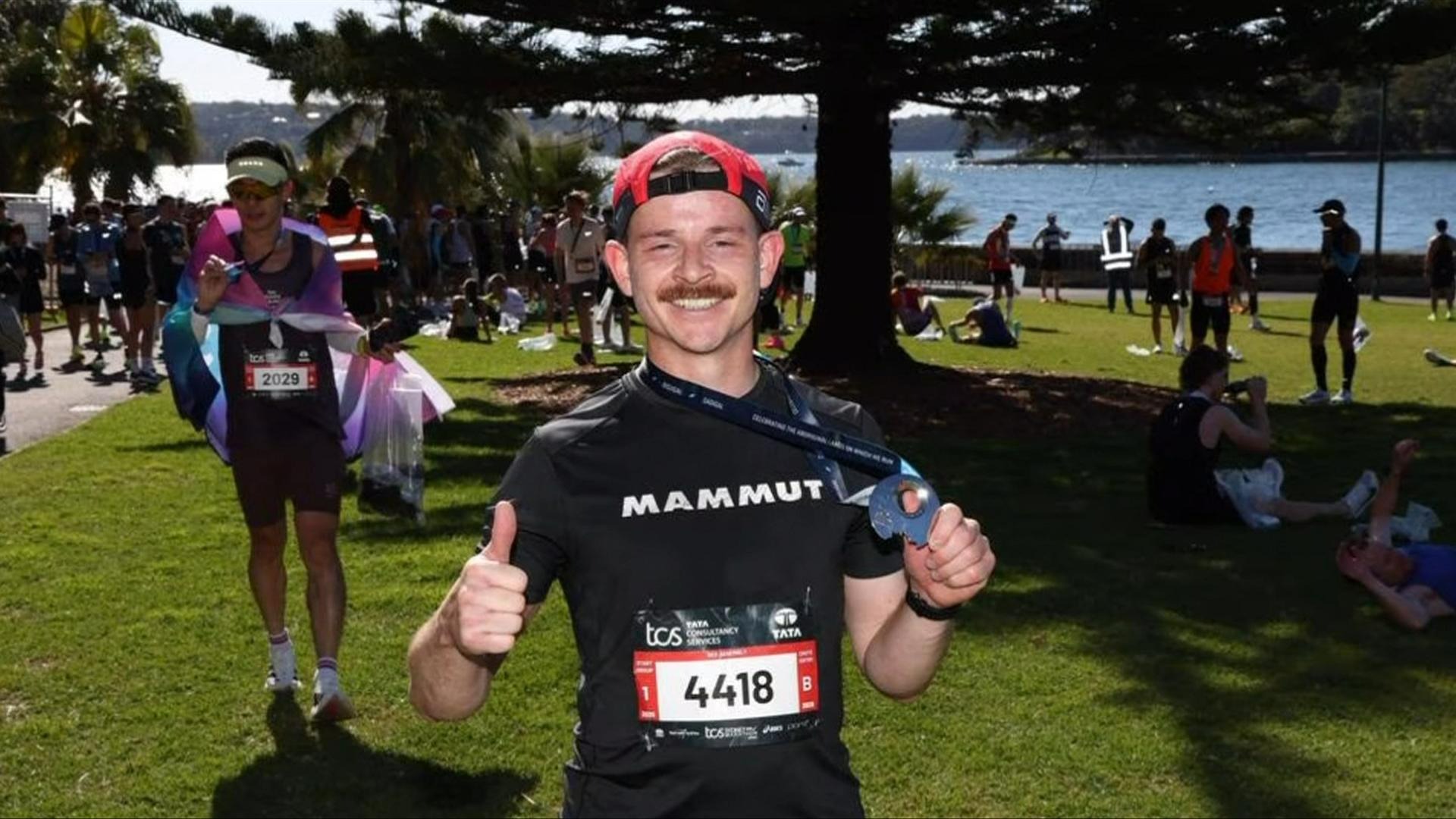 |
Schindler participating in a race. Photo: *Nightly* |
One day after the tragedy, beaches across Crowdy Bay were reopened. Rescue teams conducted drone searches along the coastline but found no sharks. Beach management anticipates a large influx of visitors over the weekend due to rising temperatures.
Experts believe an adult bull shark, approximately 3 meters long, was responsible for the attack on Mulheim and Schindler. Their camera may have recorded the moment of the shark's assault.
Inspector Kirran Mowbray stated that the shark initially attacked Mulheim. Schindler reportedly did everything he could to bring both of them to shore, continuously shouting for help.
Doctor Brianna Le Busque, an environmental science and psychology researcher from the University of South Australia, expressed shock upon hearing about the double attack. She voiced concern that the incident could incite a "Jaws"-like desire for retribution. "It shares many similarities with the film Jaws, and many people believe the shark should be caught immediately", she said. "Perhaps it felt threatened and attacked both individuals at once."
 |
A bull shark. Photo: *7News* |
Rob Harcourt, an Emeritus Professor of Marine Ecology at Macquarie University, noted that double shark attacks are "unusual" but can occur when a shark is hunting or attempting to block prey.
Bull sharks are considered one of the three most dangerous species to humans, alongside great white and tiger sharks. They are known for their aggression and extremely high testosterone levels. Capable of inhabiting both fresh and saltwater, they frequently swim hundreds of kilometers upriver.
Bull sharks are more prone to attacking humans than other species because they prefer to hunt in murky, shallow, near-shore waters. In Australia, bull sharks are responsible for most fatal attacks in warm waters, particularly in Queensland and New South Wales.
By Hoai Anh (According to Guardian, Nightly)