Tanya Nanetti, a coffee expert for Barista magazine, first encountered "dirty coffee" during her stay in Bangkok. Most specialty coffee shops there feature it on their menus, promoting it as a signature beverage. However, each establishment prepares it uniquely. A drink at one shop often bore no resemblance to the one she had tried just half an hour earlier at another.
After piecing together clues from the "dirty coffee" she sampled, Tanya concluded that the drink is always served cold without ice. It is prepared with cold milk (at times), followed by a double shot of strong espresso poured on top to create an appealing visual effect. The similarities ended there, as some "dirty coffee" in Bangkok also included cream, sugar syrup, or even black sesame.
Through her research, she learned that Katsuyuki Tanaka, a Japanese coffee expert based in New York, created the drink. This prompted Tanya to seek him out and experience an original "dirty coffee."
 |
"Dirty coffee" from a shop in Bangkok. *Lifestyle Asia* |
According to Katsuyuki, in the summer of 2010, a customer visited his shop and ordered an iced latte to go. However, upon returning to her shop, she could not drink it immediately due to attending to customers. The melting ice diluted the latte. This story inspired Katsuyuki to create a cold coffee drink that would not become diluted, even if left for a while. He named it "dirty coffee".
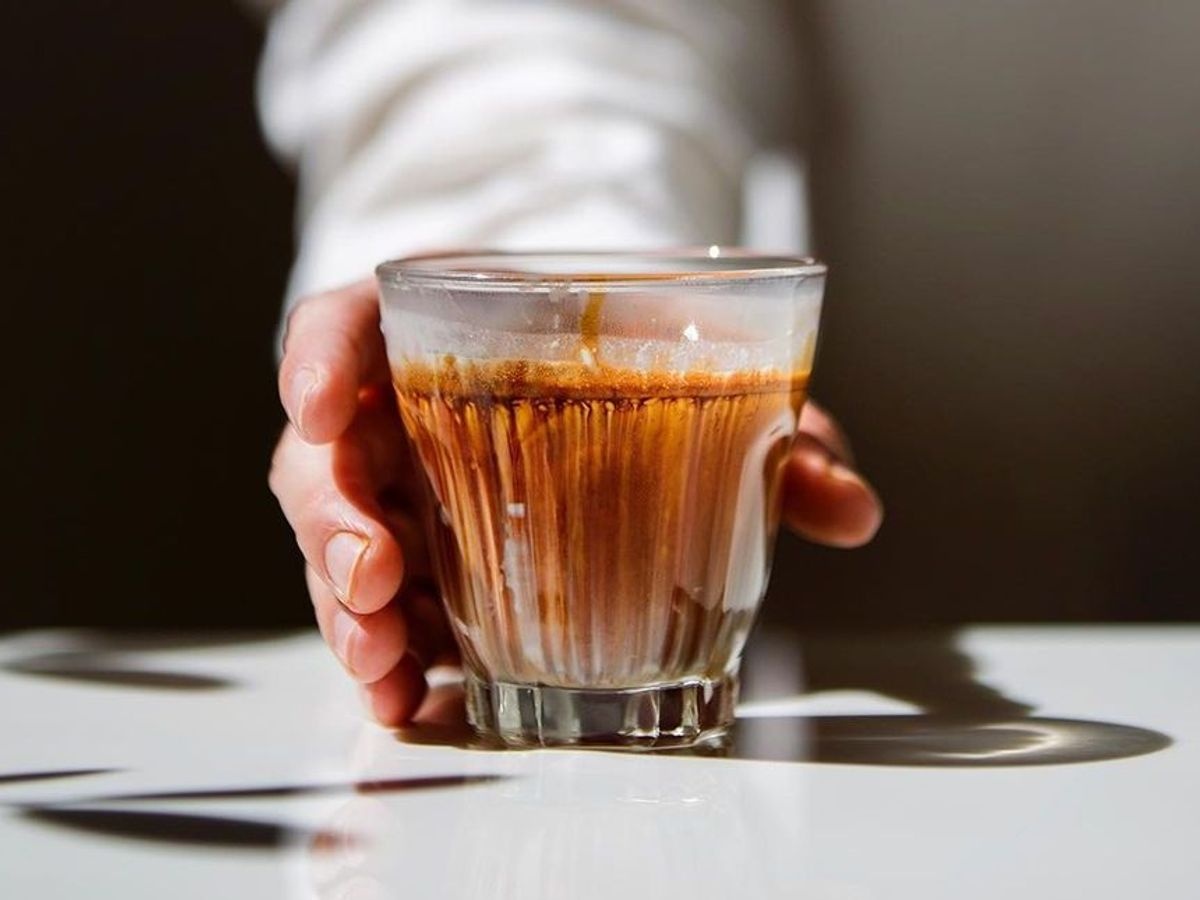
After greeting Tanya, Katsuyuki poured cold whole milk into a small glass jar, filling it halfway. Next, he extracted espresso using finely ground and tightly packed coffee. This process created a thick, viscous espresso layer that flowed directly onto the milk, forming what Katsuyuki called the "first ring." He then added more milk, almost filling the jar over the freshly extracted espresso, and topped it with another thick espresso layer to create the "second ring."
Tanya immediately tasted the "dirty coffee", savoring each distinct flavor layer. The first sip delivered the strongest coffee notes, full-bodied with a chocolate essence. This was followed by the sweeter, richer taste of milk. Finally, after a few minutes, the drink transformed into a perfect blend of espresso and milk. The beverage achieved an absolute balance between the intense espresso, which remained non-bitter despite its dark roast, and the rich, creamy milk.
A unique aspect of this drink is that drinkers can savor it at their own pace. According to Katsuyuki, the first sip from an original "dirty coffee" offers 80% dark chocolate espresso flavor and 20% milk; the second sip provides 20% espresso and 80% milk. If left undisturbed, it will eventually blend into a 50-50 ratio, allowing consumers to experience the evolving flavors of a cold latte without any dilution.
The essence of this beverage lies in its syrup-like, thick espresso layer, whose flavor continuously evolves during the extraction process. Katsuyuki meticulously observes these changes to remove the small cup at the precise moment.
In practice, the coffee flow from the espresso machine spout begins with a smooth, most refined consistency in the initial seconds, then gradually becomes more diluted and bitter towards the end. The "cup pulling" technique involves moving the cup away from the spout precisely when the coffee reaches its peak perfection, decisively cutting off the diluted, excess liquid that follows.
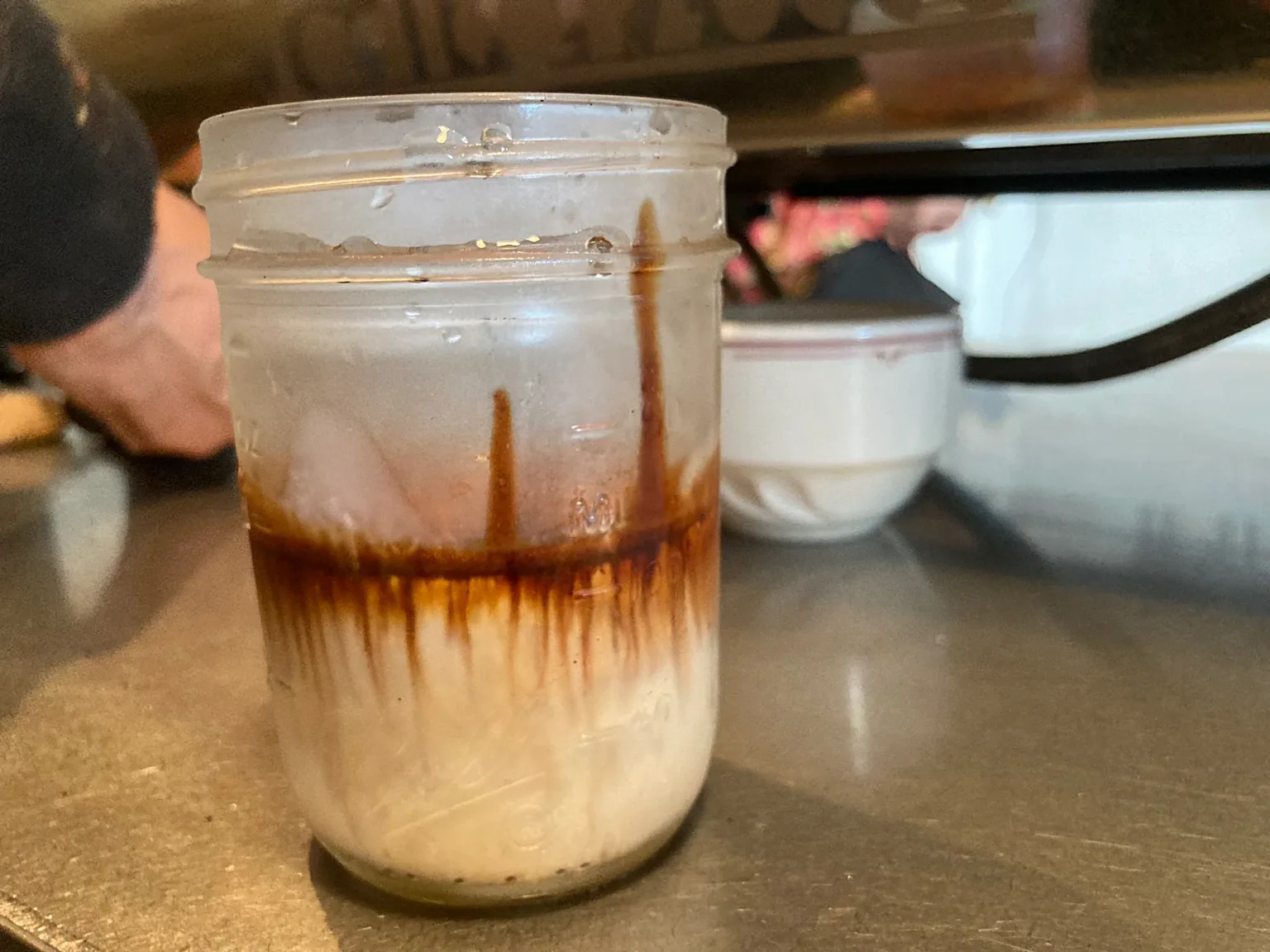 |
"Dirty coffee" made by Katsuyuki. *Barista Magazine* |
Precise pulling helps preserve the rich coffee essence and causes the final drops to cling to the rim, forming a distinctive mark. He believes this is the clearest evidence of the quality and authenticity of a perfectly extracted espresso.
While working in New York, he referred to these marks left on the cup's rim as "angel's streaks." This unique concept quickly garnered attention, becoming a lively topic of discussion within the local coffee community.
Regarding ingredients, Katsuyuki uses high-quality whole milk with a fat content of 3,6% or higher. The espresso beans he uses are Bear Pond Espresso's original Flower Child blend. However, he emphasizes that "dirty coffee" primarily demands the barista's skill, allowing them the freedom to select the milk and coffee beans that yield the best results.
By Hoai Anh (Source: Barista Magazine)
travel | Bangkok | delicious coffee | coffee | Bangkok travel