Ly Son authorities in Quang Ngai issued a warning on the afternoon of 14/4, banning tourists from climbing or standing on the To Vo Arch rock formation. This measure aims to protect the national monument from potential damage and ensure visitor safety, especially ahead of the peak tourist season. Nguyen Van Huy, Chairman of Ly Son Special Administrative Region, emphasized the arch's status as a popular check-in spot, attracting many to the island.
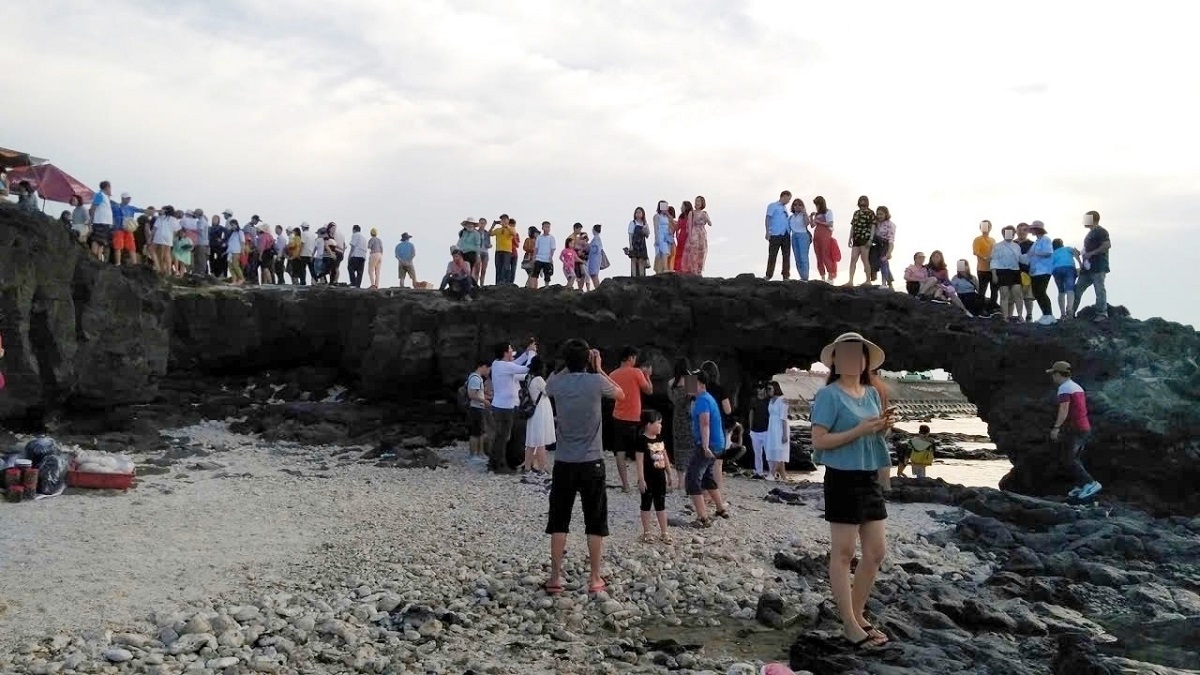 |
Tourists walk on Ly Son's To Vo Arch for photos. Photo: Ly Son Special Administrative Region People's Committee |
Despite warning signs, tourists often disregard the prohibition, climbing and standing on the arch's summit. This poses accident risks due to the slippery, uneven rock surface and directly pressures the natural rock structure, which has existed for millions of years. Small but repeated impacts can weaken, or even destroy, the landscape. "We advise tourists not to trade personal safety and heritage value for photos. Adhering to guidelines, not climbing, and not standing on the arch are essential to protect this scenic spot," Huy said.
To Vo Arch features a natural volcanic rock arch extending into the sea, showcasing a pristine beauty and considered a unique symbol found in few other places. The structure is a basalt rock arch approximately 9 m long and 2,5 m high, located west of Big Island. It was formed by volcanic eruptions and continuous sea erosion, originating from eruptions tens of millions of years ago, combined with sea level fluctuations around 6.000 years ago, creating the distinct hollow resembling a wasp's nest today.
In 2025, the area was designated a national monument, with a total protected area of approximately 26.000 m2; the main arch alone covers over 420 m2. The surrounding space includes basalt rock platforms, rocky beaches, and a rich marine ecosystem featuring coral reefs and hundreds of species. The Quang Ngai Department of Culture, Sports and Tourism considers To Vo Arch an important component of Ly Son's geological-cultural heritage chain, requiring protection from natural and human impacts.
Ly Son Special Administrative Region, located approximately 30 km from the mainland, is an outpost island with a history tied to maritime sovereignty. It boasts nearly 50 relics, including six national monuments and two intangible cultural heritage sites. In recent years, the locality has emerged as a prominent island tourism destination, aiming to become a national tourism hub. During this year's Liberation Day (30/4) and International Labor Day (1/5) holidays, Ly Son continues to attract tourists, with all 119 accommodation facilities fully booked early. Visitor numbers are expected to increase significantly, potentially exceeding 3.000 visits on peak days, leading to a sharp rise in travel demand on the Sa Ky - Ly Son route.
Local authorities have developed plans to serve tourists, control service prices, ensure security, and maintain environmental sanitation. They also increased the frequency of high-speed boats to meet demand and reduce port congestion.
Linh Pham