On 8/12, the Quang Tri Department of Ethnic Minorities and Religion organized a training conference to enhance capabilities for communities in remote areas. This initiative is a core activity under the National Target Program for Socio-economic Development in Ethnic Minority and Mountainous Areas. Rather than providing direct support like distributing seedlings or livestock, the locality is shifting its focus to offering knowledge and management skills, empowering residents to independently pursue livelihoods.
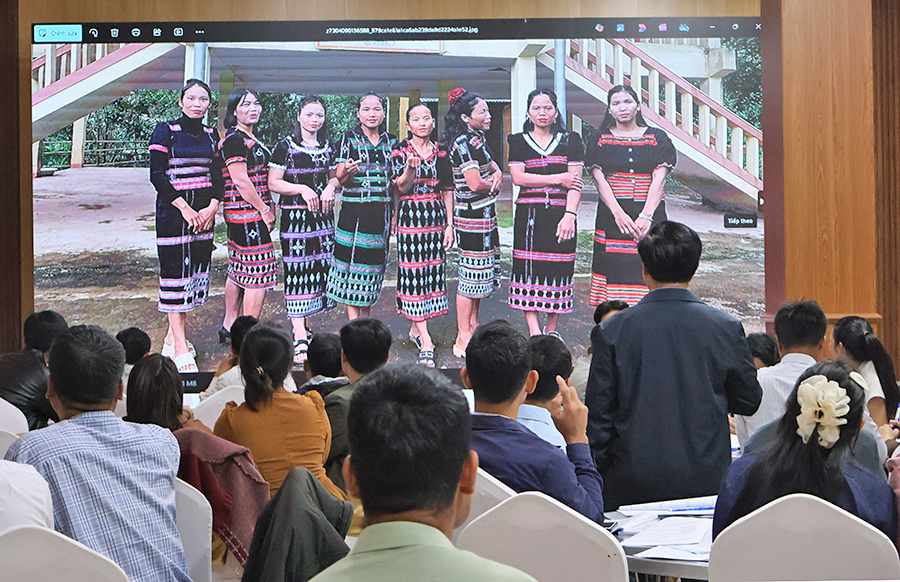 |
A training class enhancing capabilities for communities in Quang Tri's remote areas. Photo: TITC |
Quang Tri’s mountainous districts possess rich cultural and scenic resources, yet the poverty rate remains high due to residents lacking a market economy mindset. Locals primarily engage in small-scale agricultural production, which is vulnerable to weather conditions and fluctuating merchant prices. In this context, community-based tourism is considered a key to solving livelihood challenges. Bringing tourists to villages not only generates direct income from accommodation and dining services but also facilitates the on-site sale of agricultural products with significantly higher added value compared to raw sales.
During the training course, experts emphasized building linked value chains as a core component. The challenge was how a single household, accustomed to traditional farming, could operate a business model. The answer lies in group cooperation. Residents received guidance on organizing production systematically: one group manages homestay services, another handles cuisine, a third supplies clean agricultural products, and a fourth performs cultural acts. This approach leverages individual strengths, creates community power, and ensures economic benefits are shared equitably, thereby motivating collective poverty reduction for the entire village.
Beyond organizational skills, participants also updated their understanding of branding and marketing to suit the digital age. Trainees, particularly ethnic minority women and youth, learned how to apply OCOP (One Commune One Product) labeling to local specialties. More importantly, they acquired skills in using smartphones and social media as powerful economic tools. Knowing how to capture a good photograph, write an engaging product description, or livestream local culture helps bridge geographical distances, directly connecting products from impoverished communities with consumers and tourists.
Pham Van Thuy, Deputy Director of the Vietnam National Authority of Tourism, affirmed that poverty reduction through tourism must position local people as central actors. According to him, sustainable tourism is not about large corporations investing in closed resorts, but about local residents creating products and benefiting directly from their own land. "When locals have stable incomes from hosting guests, they will be self-aware in protecting forests, preserving landscapes, and conserving culture – these 'assets' generate income for them," Thuy explained.
Tourists trekking in Khe Sanh phong forest. Photo: Tuan Anh |
Tourism sector leaders also suggested specific directions for Quang Tri in leveraging local cultural values for economic development. Traditional stilt houses, rustic dishes, brocade weaving, and gong festivals are not just heritage to be preserved; they must become unique marketable products. He encouraged locals to confidently open their homes to guests (homestays) and provide experiential services related to their daily work and production.
According to experts, changes in residents' production mindset and market access form a solid foundation for future poverty reduction efforts.
Thanh Thu