Authentic Hainanese chicken rice must be made from Wenchang chicken, a breed endemic to Hainan Island, China. These small, free-range chickens are fed a unique diet of banyan tree seeds, coconut meat, and peanut bran. This rearing process gives the meat a firm texture, sweet flavor, and distinct aroma compared to commercially farmed chickens.
Hainanese chicken rice originated as a simple meal for poor laborers. They often carried rice and chicken in bamboo baskets to eat along the way. This dish is believed to have entered the mainland during the early Ming Dynasty (1368-1644), then spread across Southeast Asia in the 19th century with migrants from Hainan. Families in Hainan typically used older chickens (culled chickens) for cooking, utilizing chicken fat to cook the rice and make broth.
By the mid-20th century, the supply of Wenchang chicken became scarce due to political upheaval. Instead of disappearing, the dish continued to spread as local cultures adopted it. At each stop, local communities adjusted recipes and changed ingredients, creating variations unique to each region.
Both Malaysia and Singapore claim to be the birthplace of the modern Hainanese chicken rice, featuring Cantonese-style poached chicken served with rice cooked in rich broth and distinct dipping sauces. This debate has continued since Singapore gained independence in 1965.
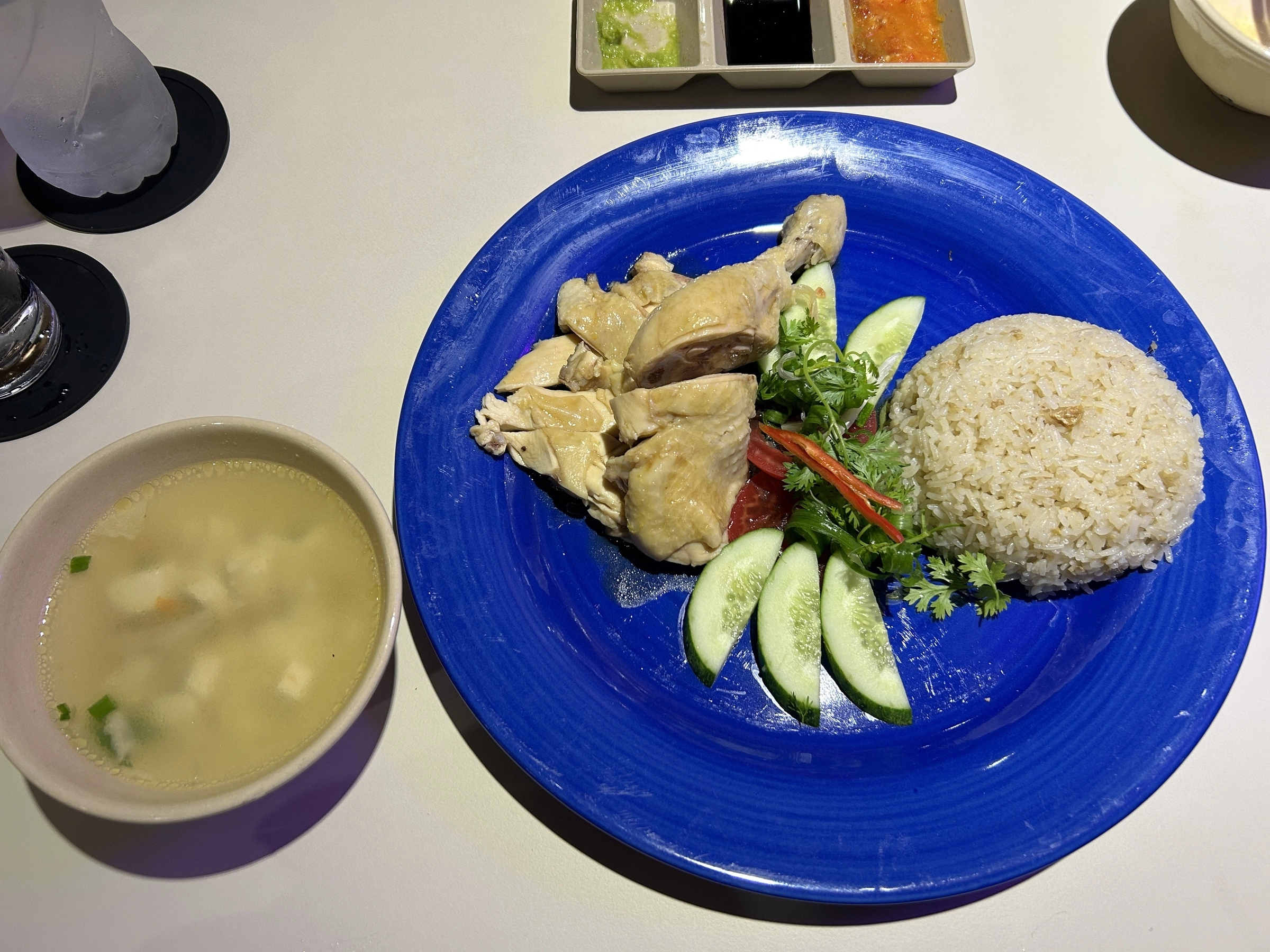 |
Singaporean Hainanese chicken rice. Photo: Bich Phuong |
Singaporean Hainanese chicken rice. Photo: Bich Phuong
Hainanese chicken rice in Singapore is the most popular version. The key difference lies in the Cantonese poaching technique. After cooking, the chicken is immediately plunged into ice water to create crispy skin. The rice is cooked with broth, chicken fat, pandan leaves, and garlic. The accompanying dipping sauces include three types: ground chili sauce, minced ginger, and dark soy sauce.
In Malaysian cities like Malacca and Seremban, the rice is rolled into balls to keep it warm. Besides poached chicken, Malaysians also favor roasted chicken or serve it with hu tieu. In the Ipoh region, the dish is always served with blanched bean sprouts, a local produce known for being plump and crunchy due to the area's mineral water.
Thais call Hainanese chicken rice "Khao Man Gai". A distinctive feature is the dipping sauce made from fermented black bean paste mixed with garlic, ginger, and bird's eye chili. A serving of rice often includes chicken blood curd, offal, and comes with a Tom yum-style soup. In Bangkok, crispy fried chicken rice is also popular.
In Vietnam, a variation similar to Hainanese chicken rice is Hoi An chicken rice. The chicken is often shredded, mixed with onion and Vietnamese coriander, and served with turmeric-infused rice. Unlike other countries in the region, Vietnamese chicken rice emphasizes freshness, served with various fresh herbs, shredded green mango, and sweet and sour fish sauce.
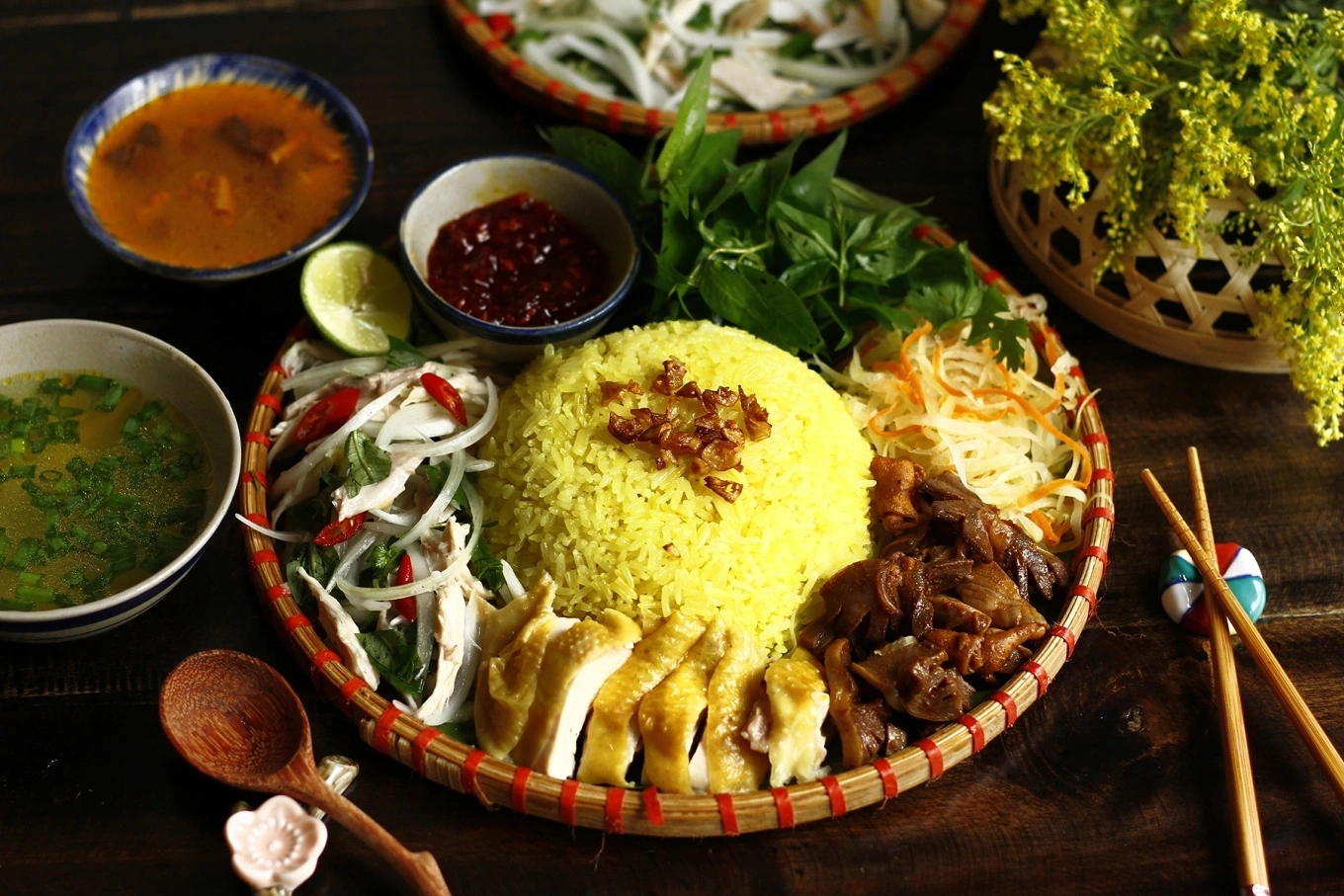 |
Hoi An chicken rice, a variation of Hainanese chicken rice. Photo: Bui Thuy |
Hoi An chicken rice, a variation of Hainanese chicken rice. Photo: Bui Thuy
On Hainan Island, the dish retains its rustic preparation. The chicken meat is chopped into bone-in pieces, offering a chewier and firmer texture than versions in Southeast Asia. The dipping sauce consists only of ginger, garlic, and cilantro, without dark soy sauce or sweet chili sauce. The broth is sometimes simmered with pork bones to enhance its richness.
Experts attribute the dish's widespread popularity to cultural exchange within overseas Chinese communities.
Mai Phuong (According to SCMP)