The term "Waffle House Index" is widely known in the US but does not actually relate to waffles. In 2004, Florida Emergency Management Director Craig Fugate introduced the term as an indirect way to gauge the severity of damage in an area, based on how many Waffle House locations remained open and serving after a hurricane.
The Waffle House Index is an unofficial metric named after the Waffle House restaurant chain. It helps determine the impact of storms and the scale of support needed for post-disaster recovery. This measure relies on Waffle House's reputation for staying open during extreme weather and reopening quickly after severe weather events like tornadoes or hurricanes.
"Many people might think we stay open to make more money. In reality, we lose money, and this is about people, not profit", said Njeri Boss, Vice President of Public Relations at Waffle House. Boss added that over the years, the company has learned what communities need to recover.
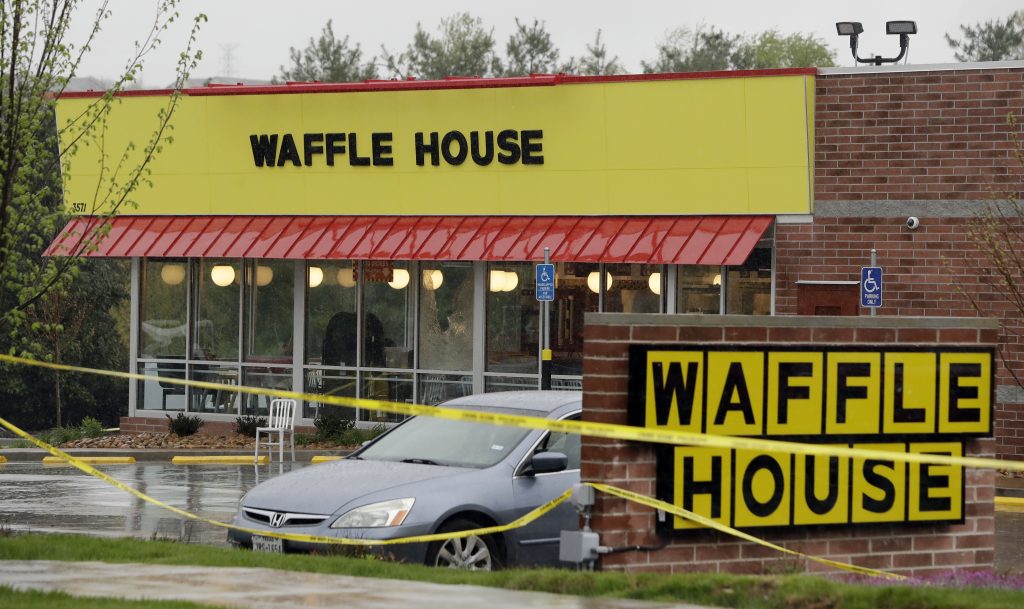 |
A Waffle House location in the US. Photo: AP |
A Waffle House location in the US. Photo: AP
Waffle House conducts much of its business in the South, an area prone to hurricanes. Consequently, they have robust risk management and disaster preparedness systems. Boss stated that each restaurant has a hurricane response plan, updated annually, to guide management teams on actions to take during emergencies.
The restaurants have special menus for times without water, electricity, or even gas. These limited menus do not offer a full range of options, which is why the Waffle House Index rarely reaches the red level.
The Waffle House Index has three levels, based on the service capacity a restaurant can provide immediately after a storm: Green (full menu; little to no damage, full power); Yellow (limited menu; running low on food or experiencing limited power); and Red (Waffle House is completely closed).
The Waffle House Index exists alongside official meteorological measurements like wind speed, rainfall, and other weather data, such as the Saffir–Simpson hurricane wind scale, to indicate a storm's intensity. Boss stated that while the Waffle House Index does not belong to the company, they appreciate its widespread use. People both domestically and internationally are aware of it.
Boss frequently receives calls inquiring about how the index works and often reminds people it is not owned by the company.
If a Waffle House closes before a storm makes landfall, it signals impending severe weather, and residents in the area should evacuate. The Federal Emergency Management Agency (FEMA) monitors Waffle House closures as they help indicate how many people have evacuated a town.
Therefore, Waffle House can serve as a resource, used in conjunction with weather information, to help americans consider necessary actions before, during, and after severe weather events.
Waffle House was founded in 1955 in Atlanta, combining a 24-hour fast-food model with table service. The two founders chose the name because waffles yielded the highest profit on their menu at the time. Today, the chain has expanded to over 2,000 locations across 25 US states, consuming 2% of the nation's total egg supply. This establishment is not just an eatery; it has become a cultural icon of the American South.
By Hoai Anh (Source: Fox, Eater)