Every year, the Hindu New Year, known as Baisakhi, is celebrated across India around mid-April. This festival, while sharing common roots, varies significantly between states and cultures. This year, Baisakhi took place on 14/4.
In Kairuppala village, Kurnool district, Andhra Pradesh, the Hindu New Year is celebrated with unique traditions. Here, the festival is called Ugadi, and its most striking event is the Pidakala Samaram, or "Pidakala war," where villagers throw cow dung cakes at each other. This peculiar tradition is believed to bring good luck, health, and prosperity to the community.
The Pidakala Samaram tradition originates from a Hindu folk tale involving the goddess Bhadrakali and the god Virabhadra. Legend recounts a pre-wedding conflict where Bhadrakali, displeased with Virabhadra's unexpected approach, threatened to throw cow dung at him if he followed her to the village. The next day, when Virabhadra arrived in Kairuppala for the wedding, Bhadrakali instructed the villagers to pelt him with cow dung. This sparked a playful battle between the supporters of both deities. Eventually, village elders intervened, resolving the dispute and allowing the sacred wedding to proceed.
To this day, the people of Kairuppala maintain this annual "cow dung battle" after the Ugadi festival. Beyond the joyful activity, the entire village also commemorates the sacred union of Virabhadra and Bhadrakali. Local belief holds that throwing cow dung helps boost everyone's health, and the annual ritual ensures prosperity and favorable weather for the village.
Beyond the spirited cow dung battle, the Ugadi celebrations in Kairuppala involve other solemn customs. Activities commence with thorough house cleaning, decorating floors with vibrant rangoli patterns, and hanging mango leaf garlands at entrances. Rangoli art, also known as kolam, muggu, or mandana, involves creating designs on flat surfaces using rice powder or colored sand, along with flour and flower petals. This art form symbolizes faith, the worship of Hindu deities, and a warm welcome.
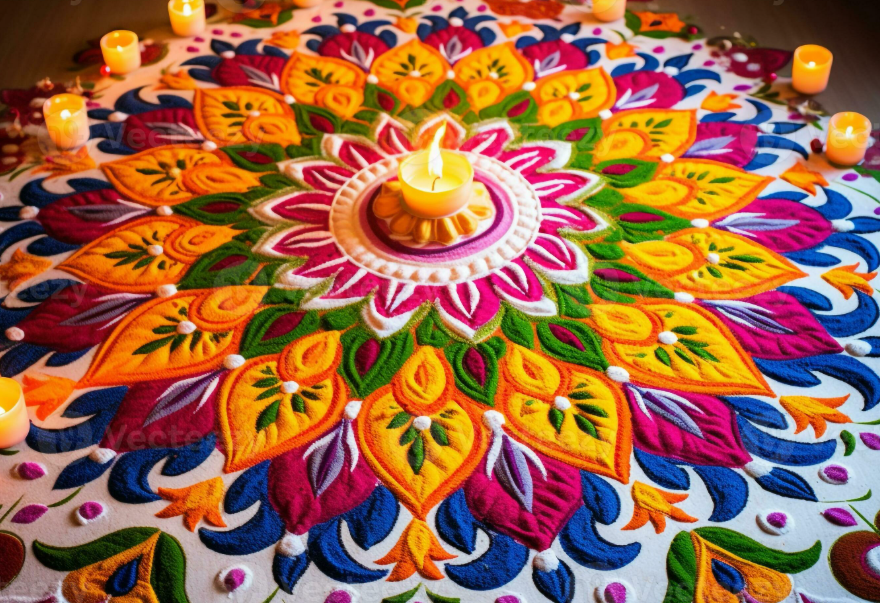 |
An Indian rug decorated with Rangoli patterns. *Photo: Vectyzee* |
Family members perform ritual oil anointing and bathing. Women prepare delicious dishes for everyone to enjoy. Visiting temples, performing charity, and exchanging new clothes with friends are also common customs during this festive period. This tradition is not exclusive to Kairuppala; many other places in India today still preserve the tradition of organizing this festival.
Baisakhi is also widely recognized as a spring harvest festival, marking the completion of the harvest and the abundance of agricultural produce ready for market. During this time, people visit local temples and gurdwaras (Sikh holy temples), participate in fairs, and organize special thanksgiving rituals (puja). It is also an occasion for family reunions, meeting friends, enjoying special dishes, and wearing new clothes.
By Anh Minh (According to Amusing Planet)