The Great Wall of China holds many mysteries. After over 4 years of research, a Tianjin University team found more than 130 remnants of secret gates in 10 provinces and regions, revealing passages hidden for centuries.
These hidden gates are mostly in remote Great Wall sections. Small and low, some passages allow only one person. They were used for reconnaissance, surprise attacks, or trade.
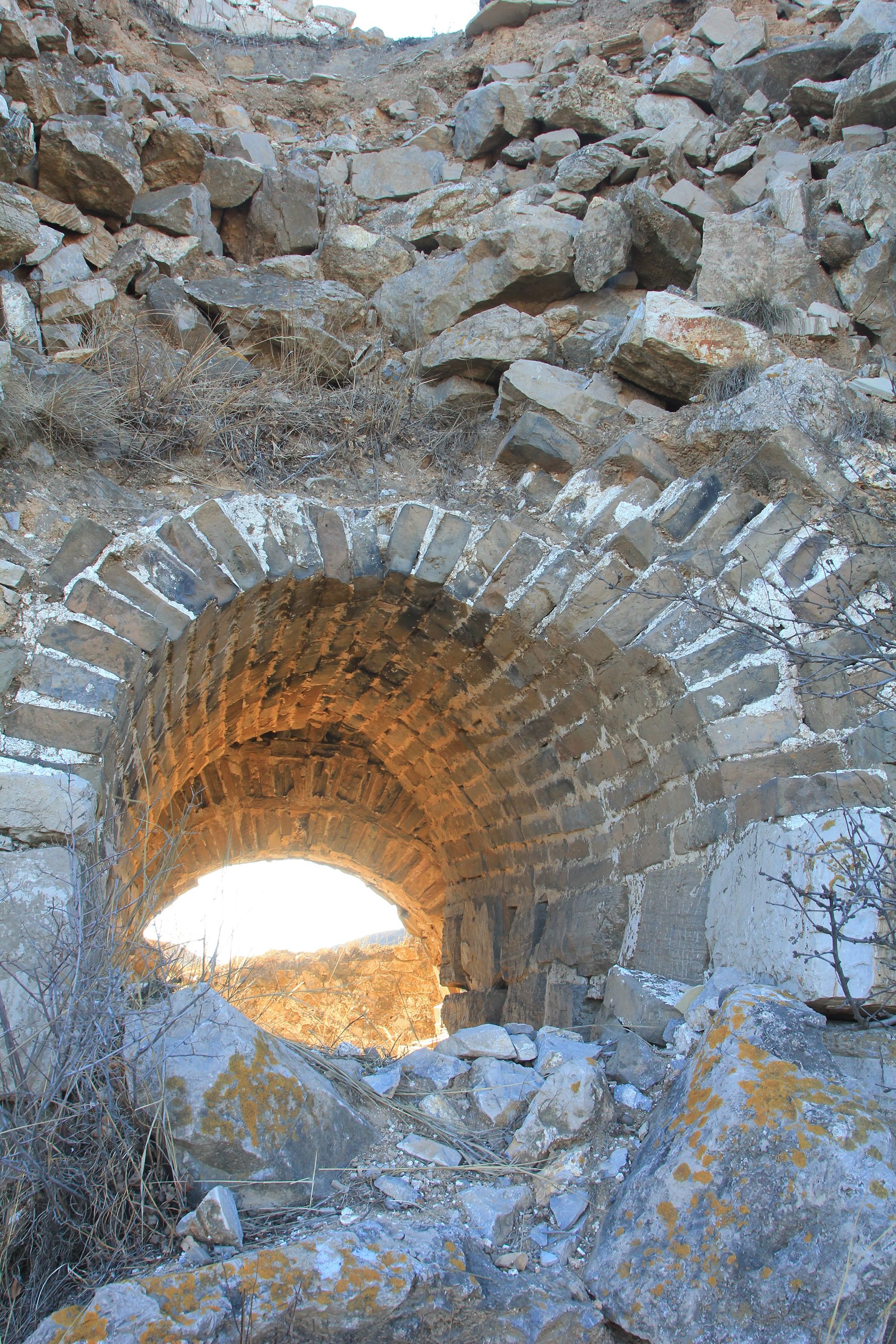 |
A secret gate of the "Ye Buchou" force during the Ming dynasty discovered at the Yangbian - Shuitou section of the Great Wall in Huailai district, Zhangjiakou, Hebei province. *Photo: VCG* |
Among soldiers stationed at the Great Wall during the Ming dynasty (1368-1644), a legendary force existed called "Ye Buchou" (those who do not return at night). Their work was comparable to modern special forces.
This force gathered intelligence and conducted surprise raids. Their name came from missions requiring them to operate outside the wall all night. The passages they used for entry and exit were these secret gates, requiring password confirmation for access.
To accurately identify these passages, the Tianjin University research team cross-referenced ancient maps to confirm secret gate locations. The group used drones and digital technology to photograph over 90% of the Ming dynasty wall sections, collecting more than 2 million images.
This effort created a 3D panoramic imaging platform for the entire Great Wall, achieving centimeter-level accuracy. The research team then discovered physical remnants of over 130 gates, establishing a "genealogy" for this hidden gate system for the first time.
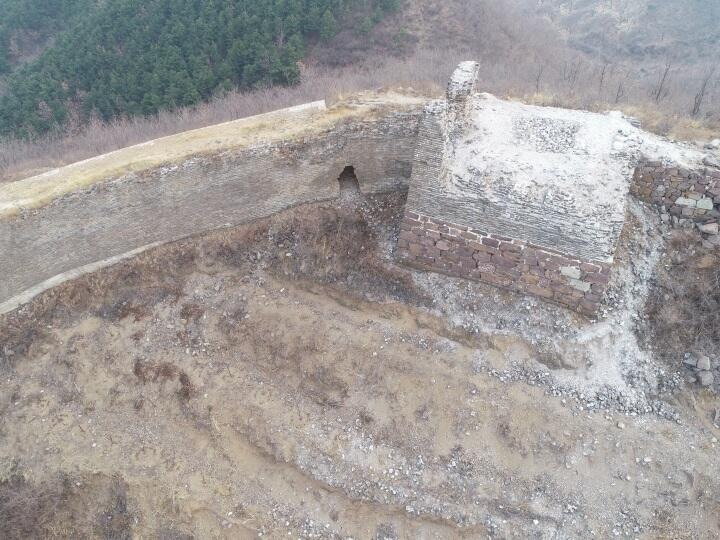 |
A Dumen gate discreetly camouflaged. *Photo: Our China Story* |
The gates typically measure from 1,5 to 2,5 m in height, with narrowest passages for one person and widest for horses. Each gate was designed based on its terrain and function.
The most clandestine secret gate is called "Dumen," primarily for surprise attacks. The enemy-facing side was camouflaged with bricks and stones to appear as a normal wall. The army-facing side was a hollow passage for soldiers to shelter. During battle, enemies could not detect the Dumen's location from outside, but soldiers could breach the camouflaged wall from within to launch an assault.
Ancient texts described the Dumen over 2,000 years ago. However, the first physical evidence was only discovered by the research team in 2019 in Qinhuangdao city, Hebei province. Beyond military use, some secret gates also served for foreign trade or as passages for soldiers and border civilians to farm and graze livestock.
Professor Zhang Yukun from Tianjin University stated this reflects a different perspective on the "open" nature of the Great Wall's defense system. Researcher Li Zhe from the team also highlighted that the secret gates hold Great Wall mysteries and ancient wisdom. In the future, digital technology will continue to restore the true appearance of this wonder and further unravel its remaining secrets.
According to UNESCO, the Great Wall is a military defense system constructed continuously from the 3rd century BCE to the 17th century to protect China's northern border. Spanning over 20.000 km, this wonder extends from Shanhaiguan in the East to Jiayuguan in the West, featuring a massive structure. The heritage system includes walls, watchtowers, fortresses, and beacon towers, demonstrating military architecture's adaptation to challenging natural terrain.
This structure, recognized by UNESCO as a World Heritage Site since 1987, symbolizes ancient China's political power and remarkable advancements in construction technology. This wonder serves as evidence of the interaction between agricultural and nomadic civilizations, and it has played a pivotal role in Chinese culture and art for millennia.
Hoai Anh (According to Our China Story, UNESCO)