Phuong Son, a representative of Jasmine Tours, stated that the company organized the tree planting activity for tourists starting in April. Each month, the company welcomes about 2,000 guests, with each guest receiving one tree to plant. To date, tourists, primarily foreign visitors, have planted over 5,000 samu and mo trees during their Ha Giang tours.
The idea originated from many tourists and drivers observing barren, empty hillsides along the "Ha Giang loop". Erosion is also a common issue during the rainy season.
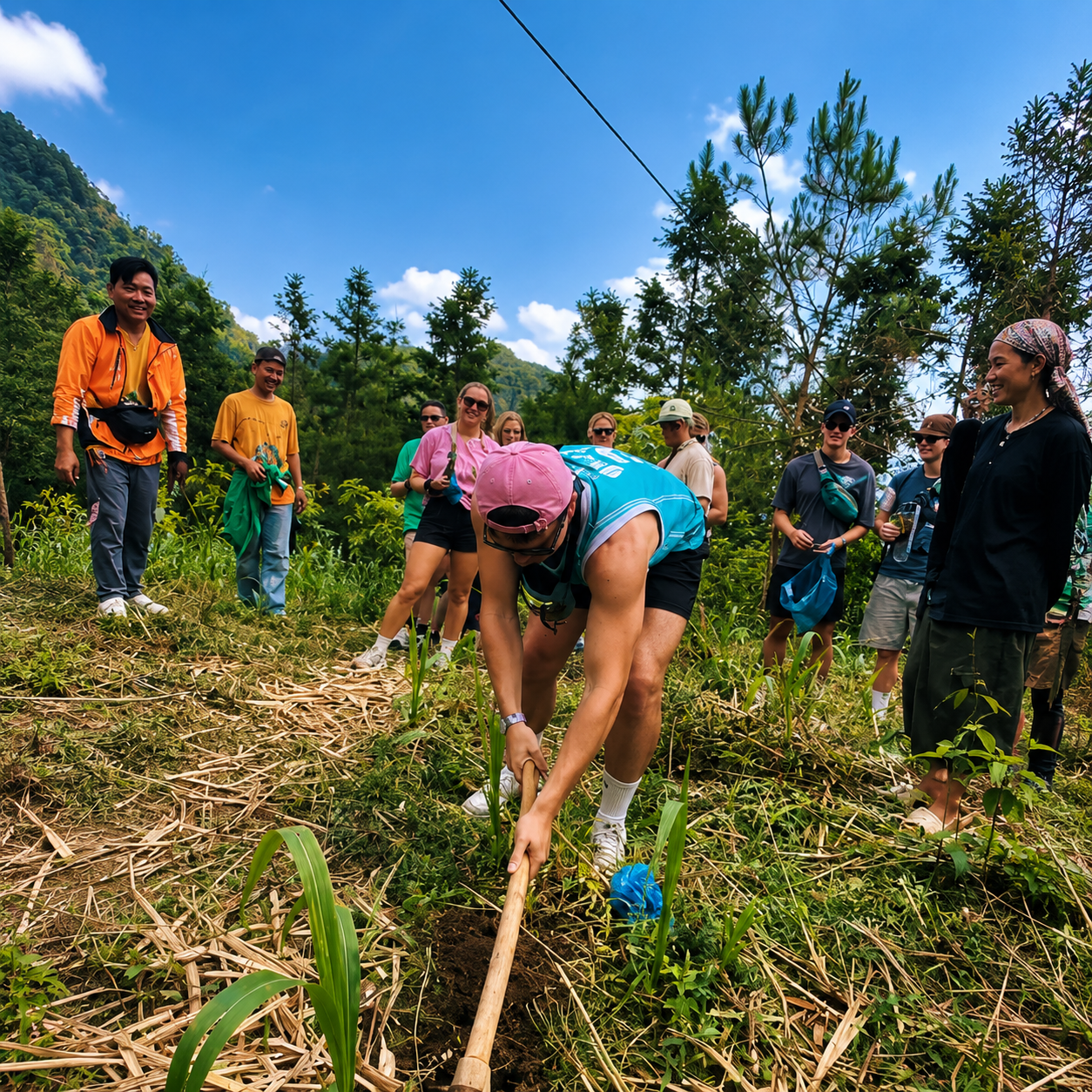 |
A group of foreign tourists preparing soil to plant samu trees in Ha Cho village, Lung Phin commune. *Photo: Courtesy* |
"We hope this project contributes to restoring cultivated areas, increasing forest cover, and limiting erosion," the company representative said.
According to Son, trees are planted in two designated areas managed by local residents: Ha Cho village in Lung Phin commune and Ban Pho village in Minh Tan commune. The choice of tree species is based on the landowners' preferences and the local soil and climate conditions. Many landowners want to plant samu trees because this species is well-suited to Ha Giang's natural environment, capable of robust growth, contributing to soil protection, and offering future economic value.
Vuong Duc Tai, a landowner in Minh Tan commune, stated that the group of foreign tourists planted nearly 2,000 mo and samu trees on his family's fallow land. Hmong people in Ha Giang primarily cultivate corn on steep terrain, making the soil prone to erosion. After many years of poor corn yields, he wants to transition to planting industrial trees for timber.
"This is a very meaningful activity for the highland communities," he said, adding that some neighbors have also expressed interest in receiving free tree planting support. Currently, Tai's family is nurturing nearly 2,000 saplings, which are expected to be ready for harvest in 10 years.
Australian tourists Georgia and Olivia participated in planting samu trees on 2/7, expressing their delight at contributing a small part to nature. "In Australia, we are taught a lot about environmental protection," Olivia shared.
A representative from the Lung Phin commune's Culture and Social Affairs department noted that the tourists' tree planting initiative "creates a positive impact on environmental protection efforts."
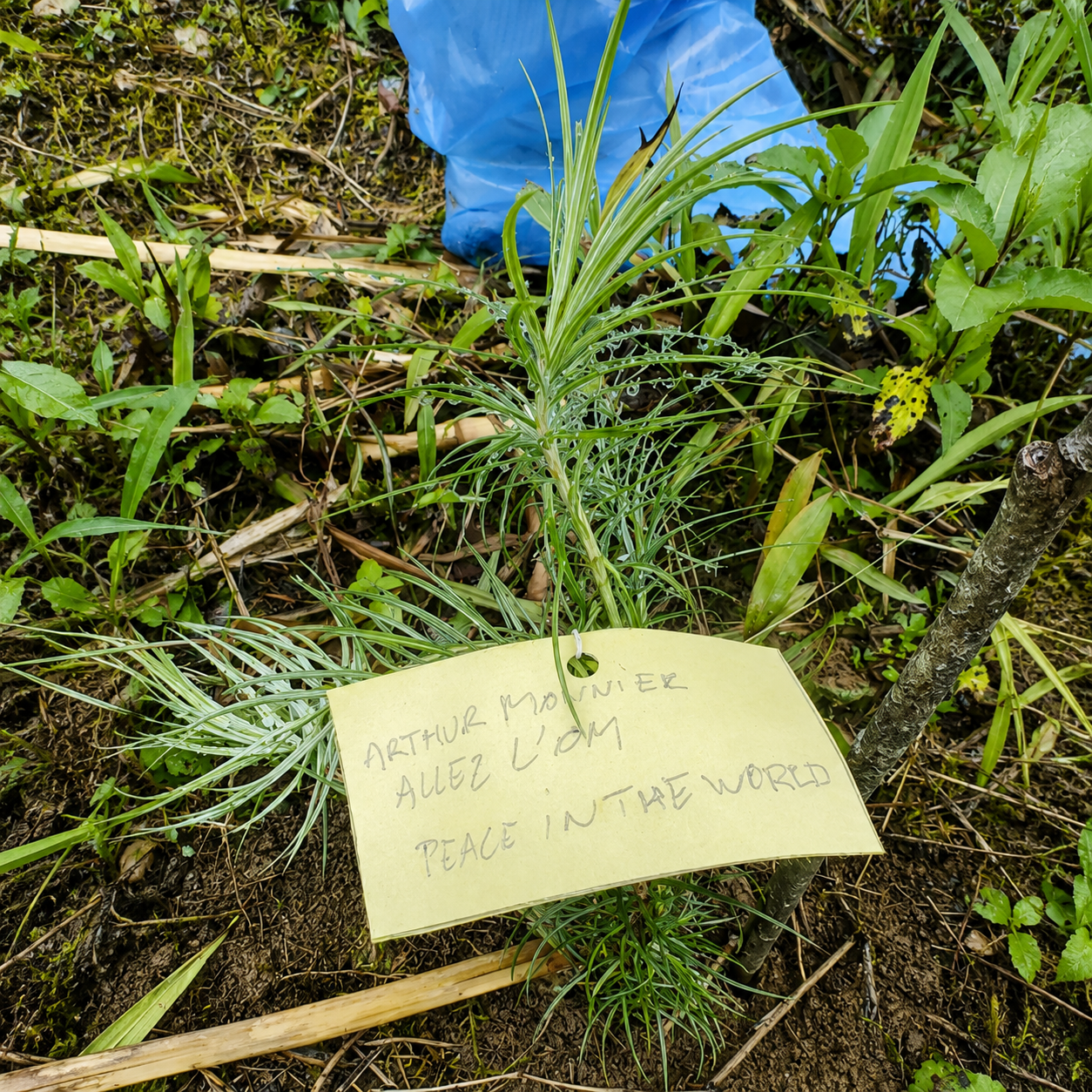 |
The size of samu trees provided to tourists. *Photo: Courtesy* |
Hoang Xuan Don, Head of the Dong Van Karst Plateau Global Geopark Management Board, stated that for centuries, the lives of the plateau's residents have been intertwined with samu trees. Samu is well-suited for agricultural cultivation. The trees have small canopies and grow straight, so they do not occupy much space or block sunlight, thus not affecting crops planted beneath them. Additionally, samu trees are effective at retaining soil and water.
Local authorities have long encouraged residents to plant samu trees for fences, field boundaries, and protective forests. When the trees reach about 20 years of age, their roots and trunks intertwine, forming a robust protective wall.
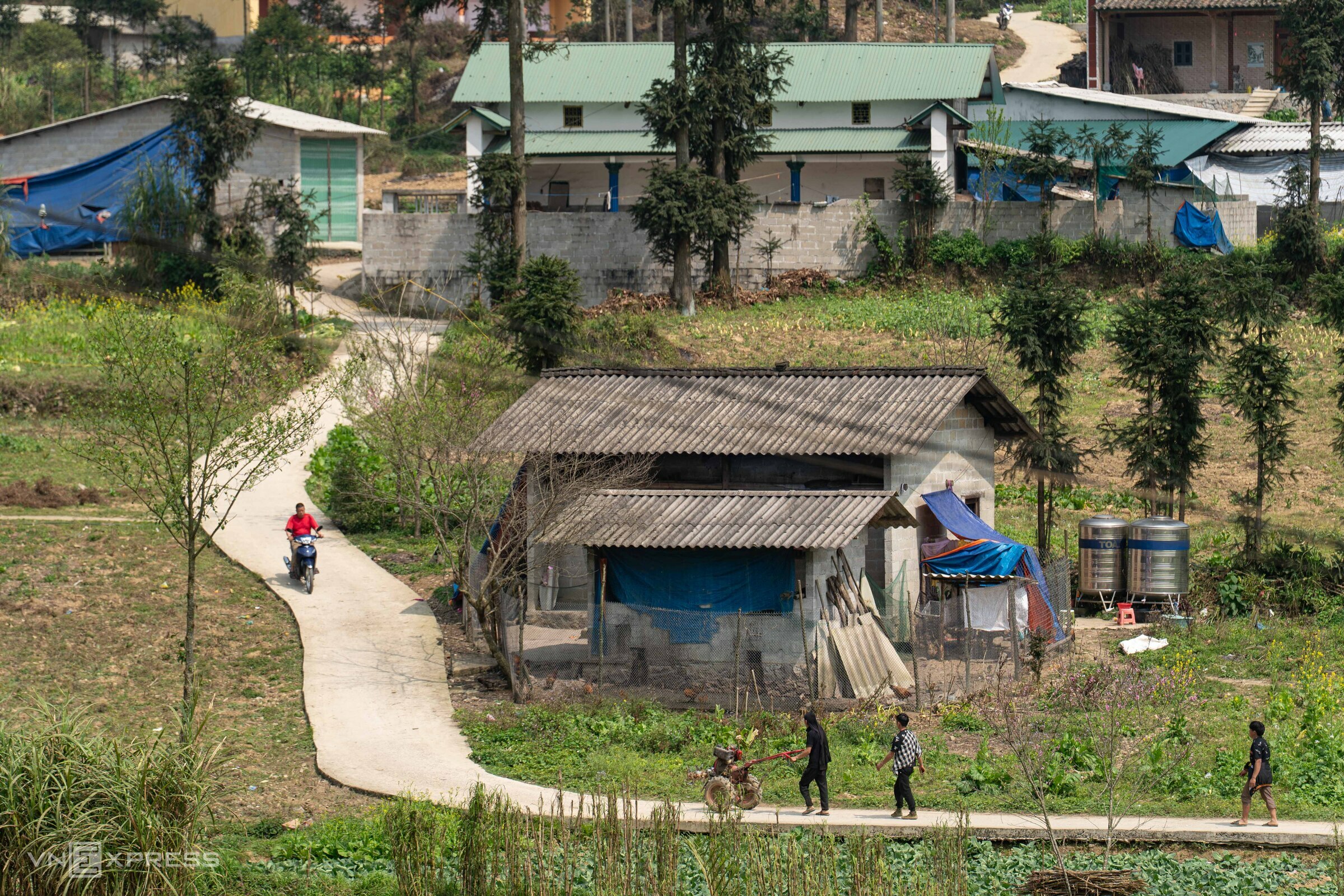 |
Rows of old samu trees in Lan Xi village, Pho Bang commune. *Photo: Hoang Giang* |
A representative from the Dong Van Karst Plateau Geopark emphasized that planting efforts require control and close coordination with authorities.
Recently, tourism operators in Ha Giang have introduced more community-engagement experiences for foreign visitors, such as allowing tourists to assist with masonry or harvest rice. While most of these experiences are spontaneous, many international tourists enjoy immersing themselves in the daily lives of local residents.
Hoai Anh