In the memory of Mark Bowyer, an Australian and operator of Rusty Compass—one of the first tour companies to bring international visitors to Vietnam—Train Street looks vastly different from his last visit in 2024. He had visited many times before, in an era when Instagram and TikTok were not yet prevalent. Back then, Train Street featured dilapidated houses where residents sold simple meals, a stark contrast to the bustling cafes that now draw crowds nightly.
"I was shocked when I returned to Train Street in 2019; it was vastly different from what I had seen two years prior," he said. In 2017, Mark walked along Train Street with a camera, drawing curious glances from locals.
On the tracks, a young woman plucked gray hairs for an older woman, while nearby, a grandmother held her grandchild, about one year old. People cycling to sell votive papers moved along the path, less than one meter wide, separating homes from the railway. Children played happily as if the tracks were a safe playground.
Mark likened the traffic density in Hanoi's Old Quarter to such an extent that walking along the train tracks felt safer than navigating the city streets.
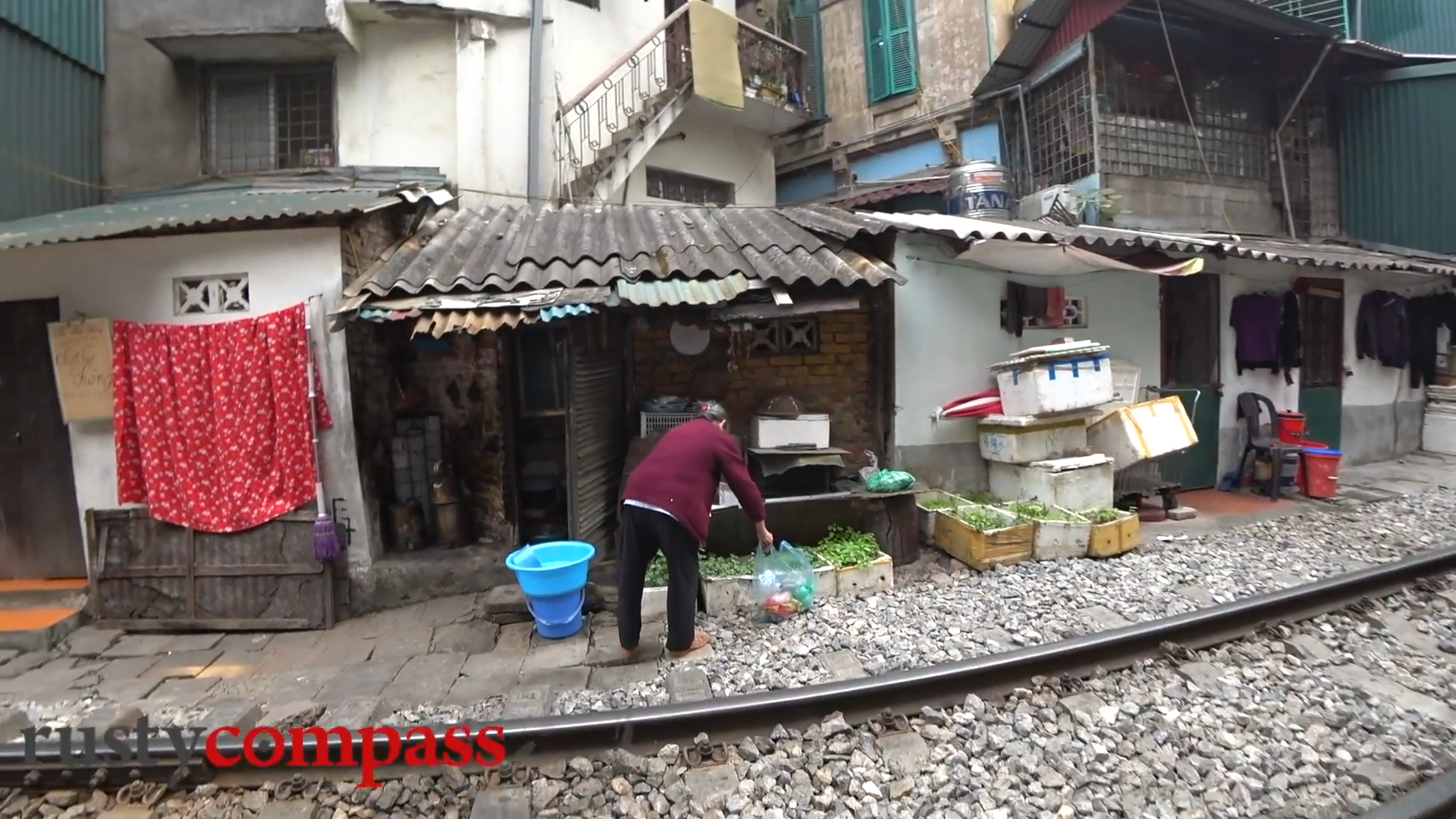 |
A group of people on the train tracks in 2017. Photo: Rusty Compass |
"Hey, speak Vietnamese! We don't understand foreign languages," the woman said, smiling and waving at Mark as he filmed. He replied in Vietnamese, "Oh, so you don't speak foreign languages?". Mark's response drew laughter and surprise. He now believes the residents there must have become proficient in English after six to seven years of welcoming Western visitors.
The children were also excited by the sole foreign visitor on the street at the time. They repeatedly asked, "What’s your name?" and communicated with Mark in broken English. In another corner of Train Street along Phung Hung, residents cooked on charcoal stoves and were shy when Mark asked, "What are you cooking?". He recalled an elderly woman who, instead of answering, asked him, "How many children do you have?".
"That's a question you get asked frequently in Vietnam," Mark noted.
According to him, the strong family ties in Vietnam, especially in rural areas, make questions about children and relatives a common point of interest in any encounter, even with strangers. It is often seen as a friendly gesture.
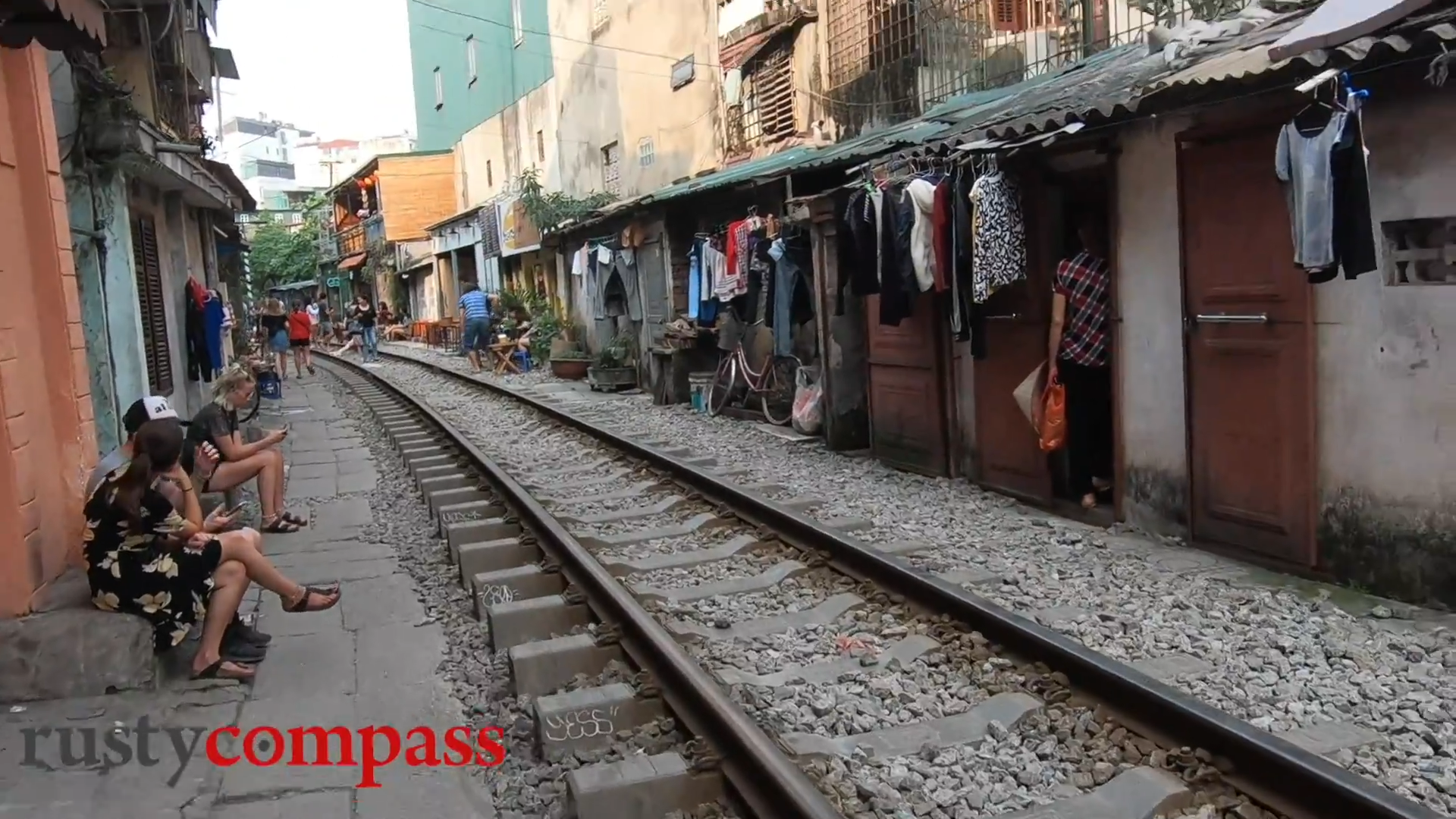 |
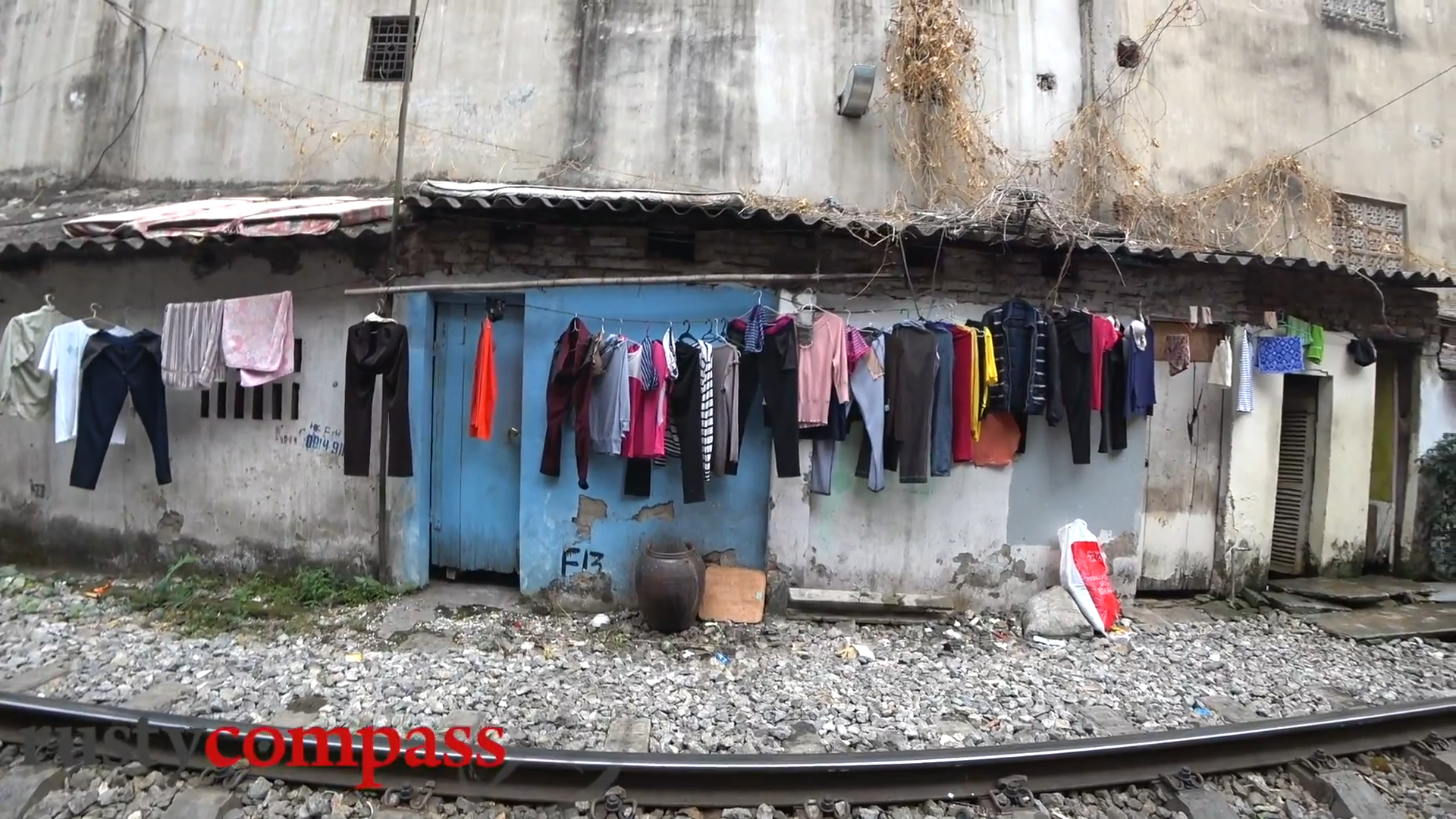
Clothes hung along the street in 2017. Photo: Rusty Compass |
Venturing further towards Tran Phu Street, Mark observed dilapidated houses with corrugated iron roofs. Clotheslines were strung outside each home, drying various garments and blankets.
Mark found the less than one meter gap between houses and the tracks unsettling for outsiders. However, when no trains were passing, life there was quiet. From an optimistic perspective, he thought residents in this area had more peace than many other parts of the capital.
Two years later, the street had taken on a different character.
While not yet as crowded as today, cafes gradually replaced the dilapidated houses. Residents utilized wall spaces for decorations and signs to attract customers.
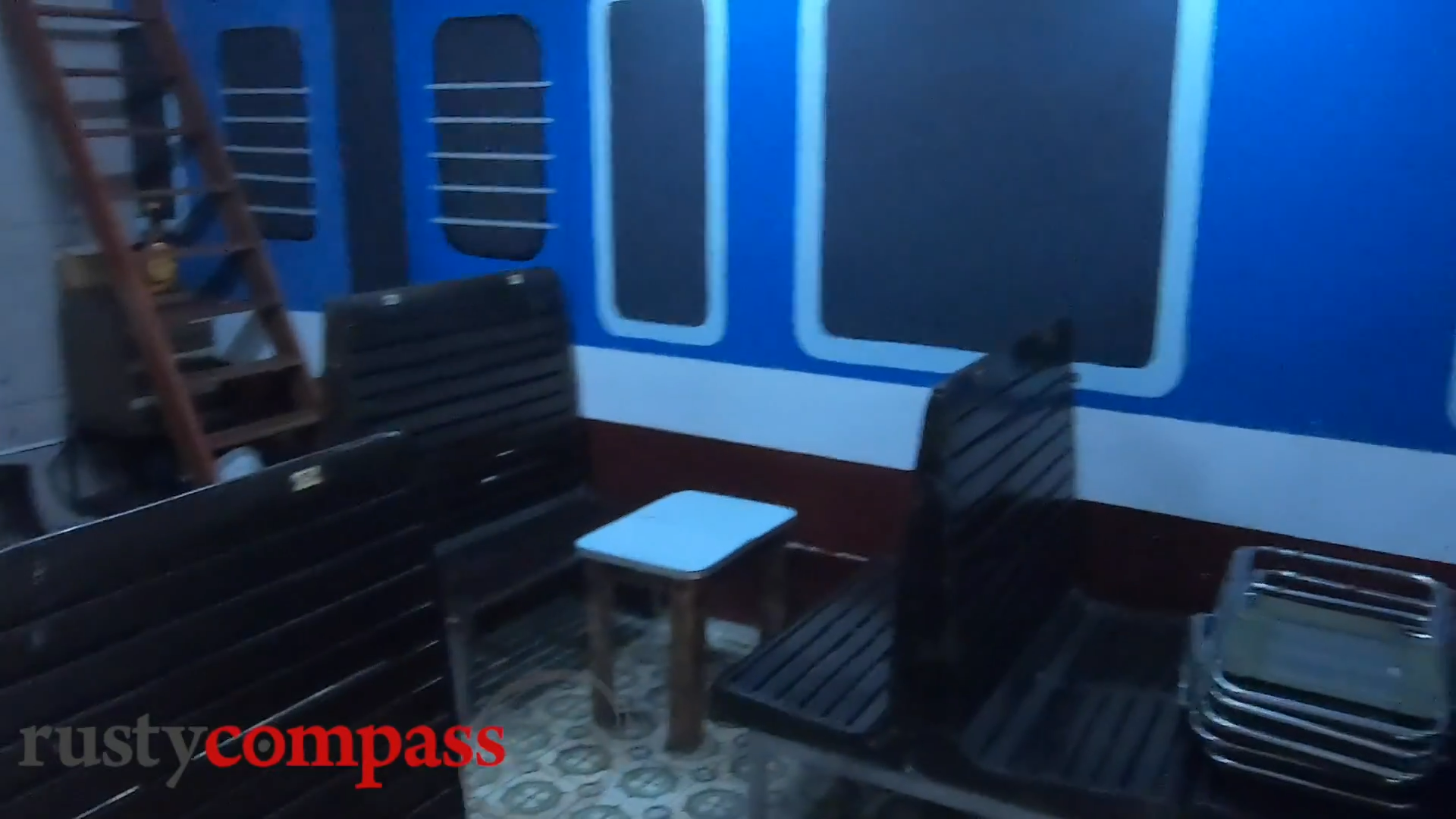
"The entrepreneurial spirit of the Vietnamese people is consistently impressive," he said. One such entrepreneur is Dung, who opened a cafe offering craft beer in 2018, designed with a railway theme. She told Mark that all the chairs in her cafe were previously used by the railway industry to serve passengers for 50 years. For her, these were "rare items" that created the cafe's unique character.
Through longer conversations with locals, Mark learned that most residents on the street were former railway employees.
"They are proud of their time serving the railway industry and living closely with their neighbors," Mark said. According to him, it is difficult to describe the strong bond within this community, and perhaps that unique quality—their synchronicity, cohesion, and business acumen in all circumstances—is what led to the street's success.
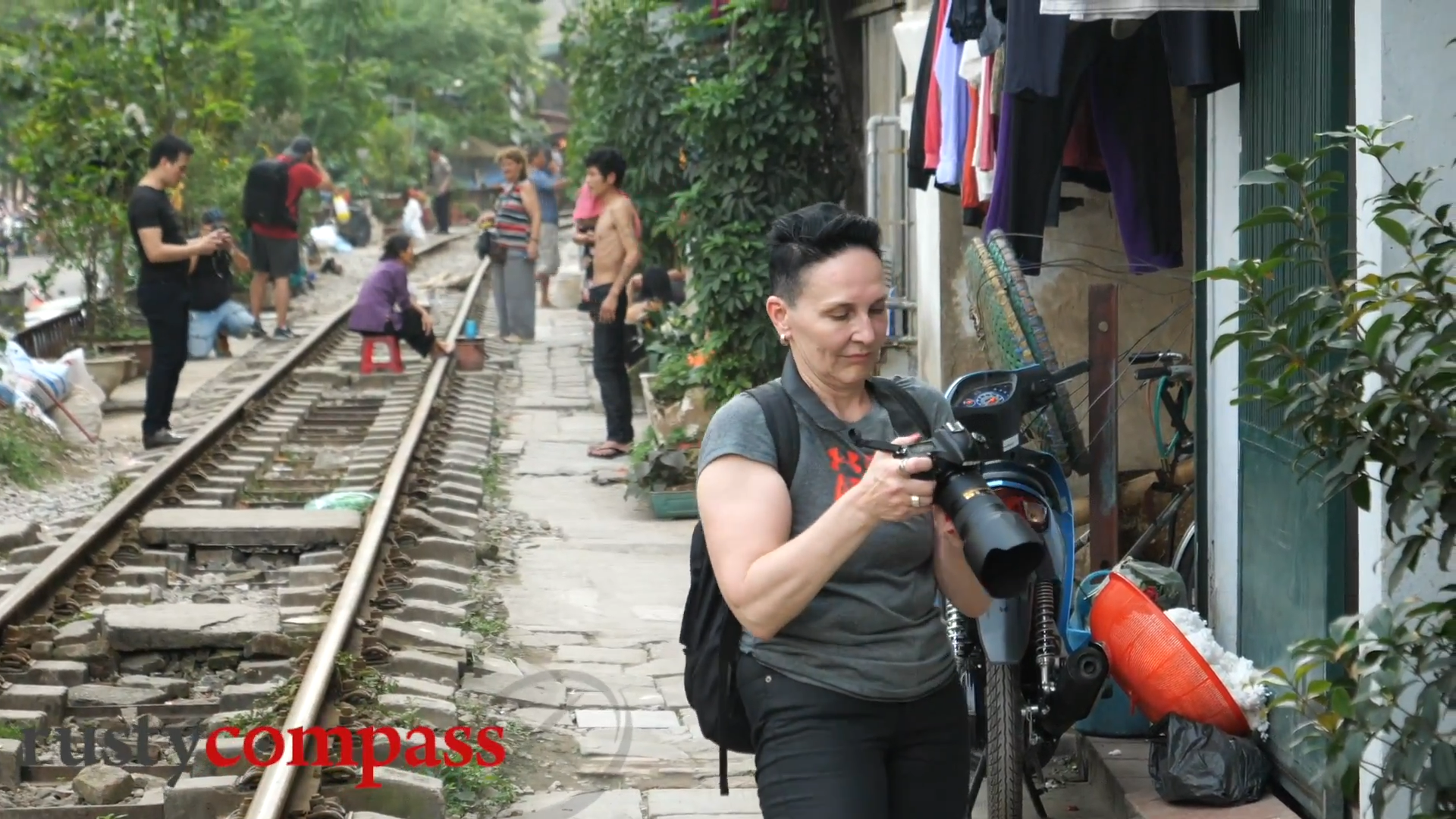 |
A woman displays personal items on Train Street in 2017. Photo: Rusty Compass
 |
The first international visitors on Train Street in 2018. Photo: Rusty Compass
 |
International visitors on Train Street in 2019. Photo: Rusty Compass
 |
Inside Dung's cafe in 2019. Photo: Rusty Compass
Mark believes Train Street became a phenomenon largely due to Instagram and YouTube. International visitors shared numerous images of the area, creating a sensation that drew thousands more. Most visitors came out of curiosity, eager to experience a train passing closely. Meanwhile, residents benefited from the street's popularity.
However, the street also offers an interesting lesson in tourism. Mark noted that Hanoi invested for years in official tourism experiences, yet this street, popularized by social media, emerged as a top destination.
According to him, Vietnam sometimes creates "staged tourism experiences," overlooking the demand for authentic, natural encounters. In many places that should have been preserved, cable cars and resorts were built instead. Train Street is a peculiar, famous tourist spot that gained popularity without intervention from the tourism industry.
"A decade ago, accident risks were individual concerns. With its current scale of development, however, these risks now affect the entire city," he shared. Therefore, from a management perspective, authorities constantly face the challenge of ensuring safety in this area.
Tu Nguyen