American critic Ann Coulter once complained on X about a seat change on a Delta flight. Her case illustrates inappropriate behavior, stemming from a misunderstanding of passenger and airline authority.
This highlights the need for passengers to understand airline regulations better when traveling by air.
When purchasing an airline ticket, passengers secure one seat on a specified flight and must agree to the airline's contract of carriage. This legally binding agreement between the passenger and the airline is typically confirmed by checking a box next to "I agree to the terms and conditions of the contract" or similar phrasing.
Delta's contract of carriage explicitly states: "The airline reserves the right to change carriers or aircraft, alter schedules, delay or cancel flights, change seat assignments, or omit stops listed on the ticket, based on operational needs and Delta's sole discretion."
In reality, when passengers buy an airline ticket, the airline's primary obligation is to transport them from point A to point B. All accompanying elements, such as pre-booked seats, overhead bin space, baggage allowance, and meal services, fall under the airline's discretion. Passengers purchase a transportation service, not a specific seat.
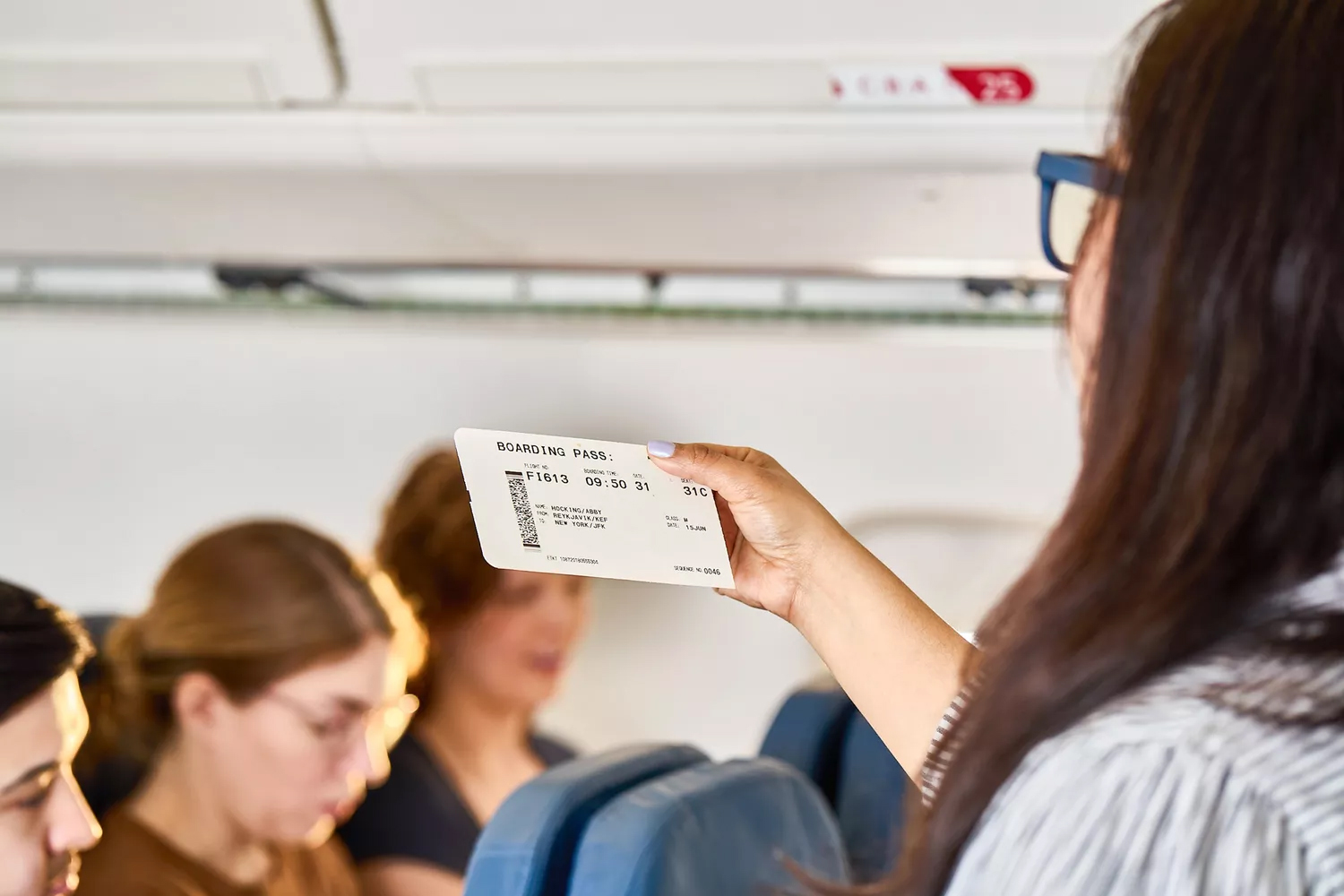 |
Passengers may have their seats changed on a flight for various reasons. Photo: T+L
The seat number printed on a boarding pass indicates the passenger's assigned position before departure. However, if a gate agent issues a new boarding pass, that is the seat the passenger must occupy, regardless of the ticket price or services purchased. Gate agents possess ultimate authority in assigning seats for each flight and determining who sits where. Passengers must comply if asked to move.
When flight attendants or gate agents request a seat change, it is often to facilitate families sitting together, accommodate caregivers, or prioritize air marshals and airline staff. They might also ask passengers to move for safety reasons or to balance the aircraft's center of gravity, especially on smaller planes.
In such situations, passengers should respond politely and kindly. Many who have been asked to change seats comply without complaint. Flight attendants may thank them with a complimentary bottle of wine or a snack.
If a seat change occurs, passengers may be eligible for a refund. If downgraded from a seat with extra legroom to a standard economy seat, the airline will refund the fare difference. In Coulter's case, Delta refunded her 30 USD for the Delta Comfort+ seat, which had been reassigned to another passenger.
If passengers believe they are entitled to a refund due to a seat change, they should proactively contact the airline's customer service department to submit a request. Avoid arguing at the airport or on the plane, as staff typically lack the authority to process immediate refunds.
Other airlines, such as American Airlines, have refund policies for specific scenarios: passengers who must rebook due to a missed connection; those moved from a preferred seat to a non-preferred seat; or those transferred from an aisle/window preferred seat to a middle preferred seat.
Note that "preferred seats" are typically located at the front of the economy cabin or in emergency exit rows, and passengers usually pay an additional fee for them.
Tam Anh (according to Travel + Leisure)