American travel expert and writer Rick Steves notes that when traveling and encountering new customs, small gestures like leaving loose change on a table can be misunderstood.
"Travelers are inadvertently creating an expectation for tips among staff and disrupting local income balance. It is an insensitive way to behave. Furthermore, in crowded places, unrelated individuals might pocket that loose change", Steves wrote on his blog.
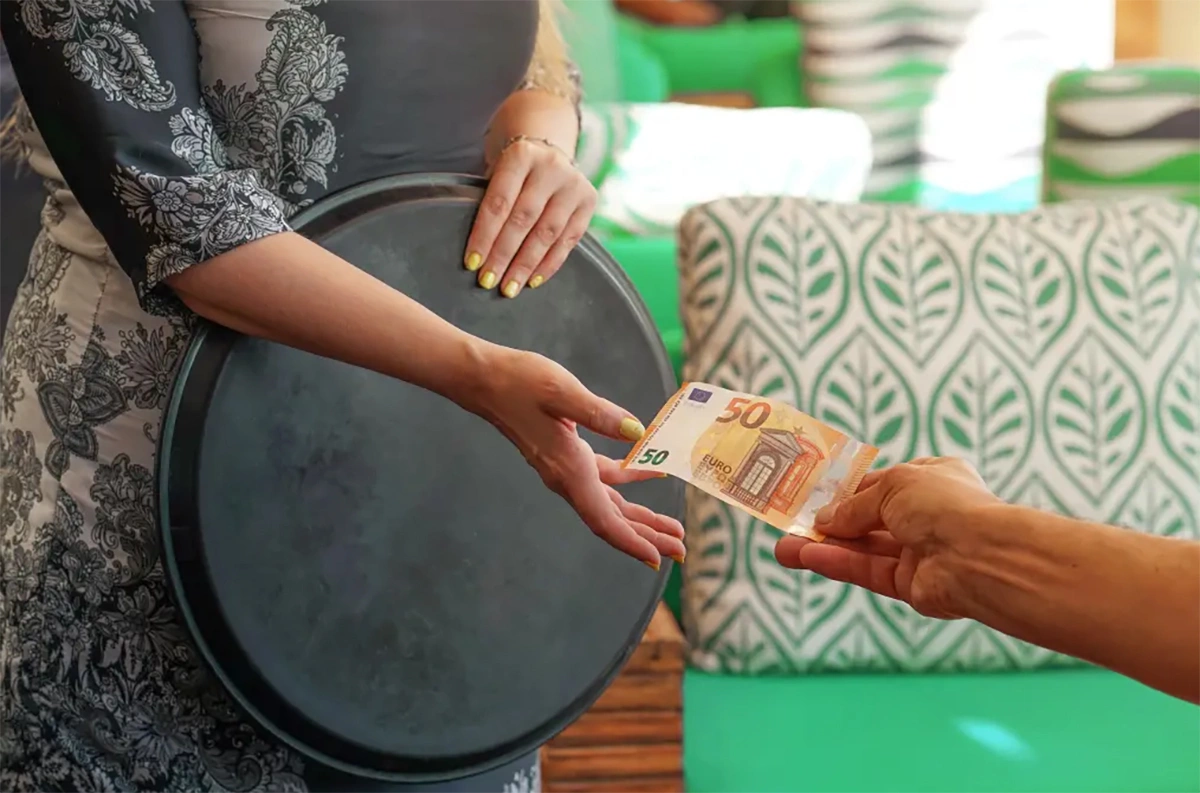 |
Improper tipping can sometimes be counterproductive. Photo: NYP |
Improper tipping can sometimes be counterproductive. Photo: NYP
In Europe, where service workers are paid a living wage, tipping is not a mandatory obligation. In countries like Germany, Austria, Belgium, or Luxembourg, along with some regions in Switzerland and Liechtenstein, using coins for a tip is even considered impolite and disrespectful to staff.
Steve Schwab, CEO of Casago, an Arizona-based property management and vacation rental company, emphasizes the importance of remembering that in Europe, there is no one-size-fits-all approach that applies to all countries.
"Each country is different, so we cannot generalize all of Europe's tipping culture. Nordic countries are where tipping is least expected, largely because they are known for paying high wages to employees or already include a service charge in the bill", Schwab states.
However, this does not mean travelers should completely abandon tipping. Steves advises a direct approach, which is suitable in German-speaking countries where leaving coins on the table is not well-received.
"When paying a 10 euro bill with a 20 euro note, you can say 'Eleven, please'. This signals to the server to keep 1 euro as a tip and return the remaining change", Steves explains.
In the US, however, service staff often rely on tips to supplement low base wages. Tipping amounts in the US are also quite high. About 5% is considered adequate, 10% is generous, and in many places, it can go up to 15% to 20%, according to Steves.
This reality, coupled with the frequent appearance of tip requests on electronic apps, has led to growing frustration. Nearly 90% of Americans believe tipping culture "is getting out of control". In Europe, such tip amounts are considered excessive. "Resist the urge to tip the American way", Steves adds.
LaDell Carter, founding partner of Royal Expression Travels in Maryland, notes that the amount of the tip is not always the determining factor. The manner of giving and the intention behind it are important. Carter adds that, especially in luxury settings, scattered coins on a table can feel like a handout or a casual gesture.
Steves also recommends that travelers can skip tipping at self-service counters, simply round up taxi fares, and give small tips to tour guides or hotel staff.
The payment method is also a crucial factor. Card payments are common, but tips are best given in cash to ensure the money goes directly to the service person. Some establishments may not fully pass on these gratuities if customers pay by card.
Experts also advise travelers to carefully check if the bill already includes a service charge. They should also observe local customs before deciding to tip. If in doubt, do not hesitate to ask locals about specific standards in that country.