Passengers should never attempt to retrieve dropped electronic devices, especially those powered by lithium-ion batteries. In premium cabins, seats are complex mechanical systems with numerous electric motors that facilitate reclining and leg support. Any device using a lithium-ion battery—such as phones, tablets, or power banks—if caught in these mechanisms, risks being punctured or deformed when a passenger unintentionally adjusts their seat. This can trigger a dangerous chain reaction.
Paul Christensen, an expert in lithium battery safety, explains that when a battery is crushed, the risk of "thermal runaway" increases sharply. In this state, the battery generates a series of intense heat-producing chemical reactions and releases a large amount of gas. As the temperature rises, the reaction accelerates. This self-sustaining process continues until the battery violently ignites, posing a severe threat in a confined, oxygen-rich environment like an airplane cabin. This danger is why the Federal Aviation Administration (FAA) requires passengers to carry batteries and power banks in carry-on luggage, not checked baggage.
Incidents involving lithium-ion batteries on flights are not uncommon. On 25/3, a passenger's lithium-ion battery began smoking on a United Express flight en route to Houston. The pilot was forced to declare an emergency and divert to San Antonio. Previously, on 22/2, an overheating phone caught fire on an Alaska Airlines flight, filling the cabin with smoke and causing burns to one passenger. The aircraft had to return to Wichita for safety.
 |
Phone batteries can cause fires and explosions on planes. *Illustration: Metador* |
Travel expert Aaron Rasmussen experienced this firsthand a few years ago during an international business class flight. Everything was perfect until the plane encountered turbulence, causing his phone to slip from his hand and fall into a seat crevice. "I reached down to find it but immediately pulled my hand back when I touched moving metal gears and mechanical parts that I couldn't see," Rasmussen recounted.
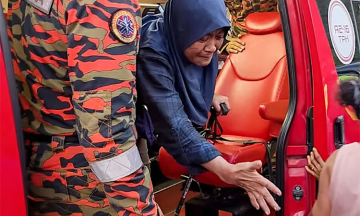
His immediate decision to call a flight attendant was crucial. If a device falls into a seat crevice, the answer is simple: Do not attempt to retrieve it yourself at all costs. Immediately inform a flight attendant. Crew members are well-trained to handle such situations, possessing the equipment and skills to access narrow spaces safely without damaging the device or causing injury.
 |
Flight attendant retrieves a dropped phone for a passenger on a plane. *Photo: Today Tonight* |
The FAA additionally advises passengers to report immediately to the crew if a device shows signs of abnormal heat, battery swelling, smoke, or a burning smell. Flight attendants will isolate the device using specialized thermal containment bags to prevent fire spread.
In Rasmussen's case, the flight attendant safely retrieved his phone by partially disassembling the seat structure. Initially, he simply thought he was asking for help to avoid pinching his hand, but later realized this decision prevented a potential fire and explosion, protecting the lives of everyone on board.
Tam Anh (according to Reader's Digest)