A confluence of factors, from extreme weather and former President Donald Trump’s tariff policies to shrinking livestock herds, is driving food prices in the US to rise faster than the average. In april, prices for this category saw their sharpest increase in nearly four years.
Food prices in the US are forecast to surge just before the november midterm elections, further focusing public attention on the cost of living.
Compared to the gasoline price shock of recent months related to the Iran conflict, this food price increase is slower but will be harder to reverse quickly. This is because autumn agricultural output depends on planting decisions US farmers make in the spring.
Economists suggest the impact of the Iran conflict and the potential for an El Nino phenomenon will continue to pressure American wallets until 2027.
"This will be a challenging year", said Ricky Volpe, a professor of agribusiness at California Polytechnic State University in San Luis Obispo and a former economist at the US Department of Agriculture. "Food will become increasingly expensive, and consumers should prepare for this".
In its food price outlook report released on 27/5, the US Department of Agriculture forecast retail food prices to rise by 3,2% this year, while professor Volpe believes the increase could be around 4-4,5%.
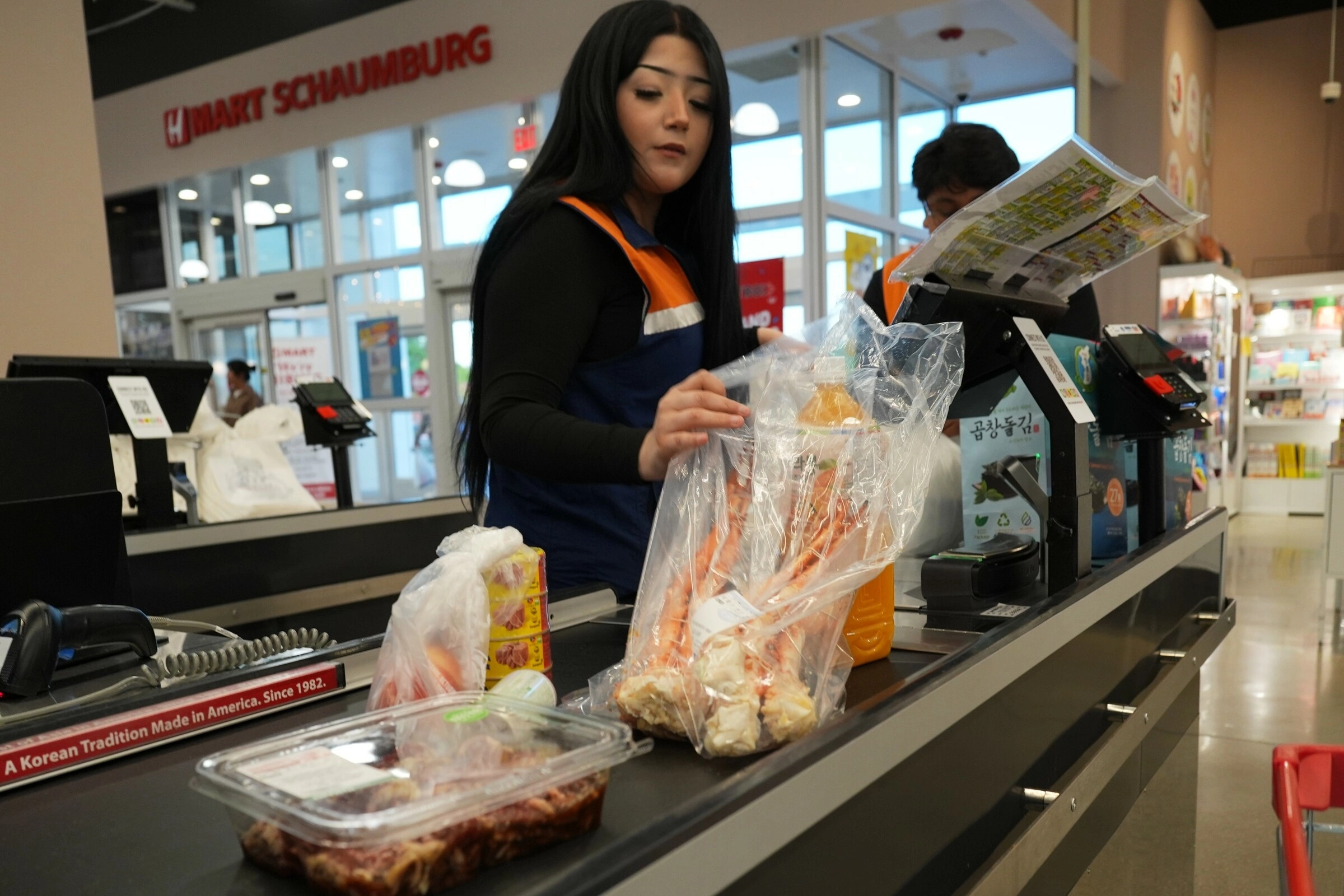 |
A cashier at a supermarket in Schaumburg, US, on 14/5. Photo: AP
James Giese, 62 years old, living in Madison, Wisconsin, said he has had to adjust his spending, such as buying fewer processed foods and less meat, as prices climb. He is now trying to grow potatoes in his backyard to supplement his food supply.
"I am very worried", he said. "I am in the middle-income bracket, but I am starting to feel the pressure clearly".
The unusual price increases from early 2026 reflect a combination of weather risks, trade policies, and persistent pressures related to climate change. Weather from last year to this year has been particularly unfavorable for US farmers, who have faced record heatwaves, historical cold snaps, hail, and wildfires.
The US recorded its hottest start to the year in history. Temperatures by the end of april were about 3,3 degrees Celsius higher than average. Early heat caused some crops to flower weeks ahead of schedule, making them vulnerable to subsequent frosts.
Beef prices, one of the most politically sensitive items in the US, surged to a record high in april. This occurred as the cattle herd size decreased to its lowest level in 75 years due to drought and high production costs.
Tomato prices also rose by 33% in the past two months after two winter storms caused widespread damage during the peak growing season in Florida. Meanwhile, supply from Mexico decreased due to the Trump administration's tariffs on imported agricultural products.
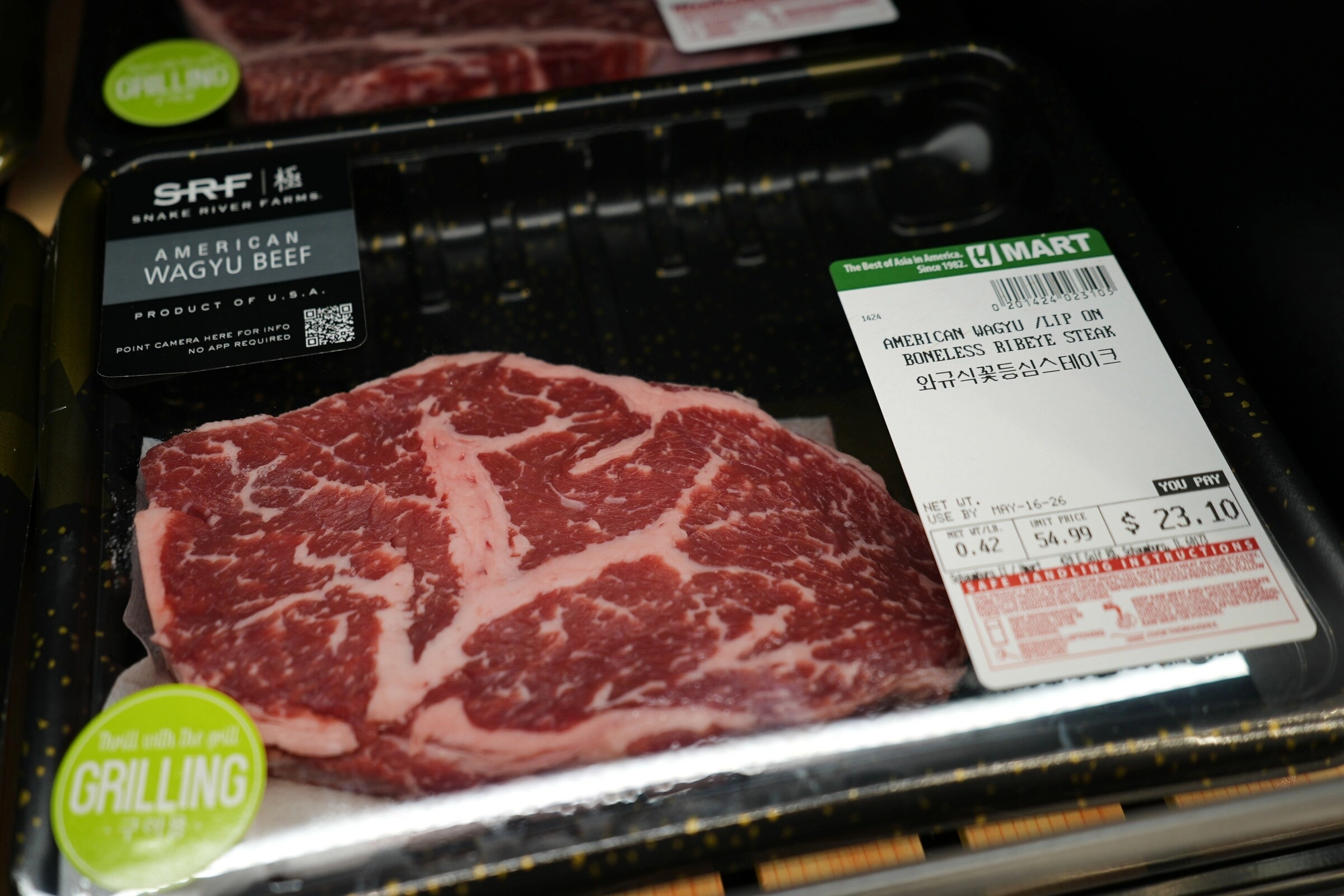 |
A cut of beef at a supermarket in Schaumburg, US. Photo: AP
The ongoing heat and drought in the western and central US indicate that pressure will intensify in the coming period. California contributes nearly 50% of the annual revenue from US vegetables and 75% of the revenue from fruits and nuts. Snow accumulation in the Sierra Nevada mountains this year significantly decreased, reaching only 23% of the normal level by mid-april, raising concerns about irrigation water sources.
Drought has also spread across key US wheat-producing regions, affecting staple wheat varieties, commonly used for all-purpose flour and pasta, due to insufficient rain. As of 19/5, 70% of winter wheat production and 25% of corn production in the US were located in drought-stricken areas, according to the National Drought Mitigation Center at the University of Nebraska Lincoln.
Forecasters also predict that El Nino could form in august, with the possibility of an unusually strong episode extending into 2027 and pushing global average temperatures higher. This phenomenon typically brings more rain to California but can also cause droughts in major producing regions outside the US, affecting rice, coffee, cocoa, and many other agricultural products.
Experts also mentioned the impact of the Iran conflict, which has hit the global fertilizer market hard, as the Middle East is an important source of raw materials.
According to the Green Markets North America index, fertilizer prices have increased by 20% since the conflict began, adding to price pressures as the harvest season approaches. If farmers reduce fertilizer use, crops will also be more vulnerable to heat, drought, or floods.
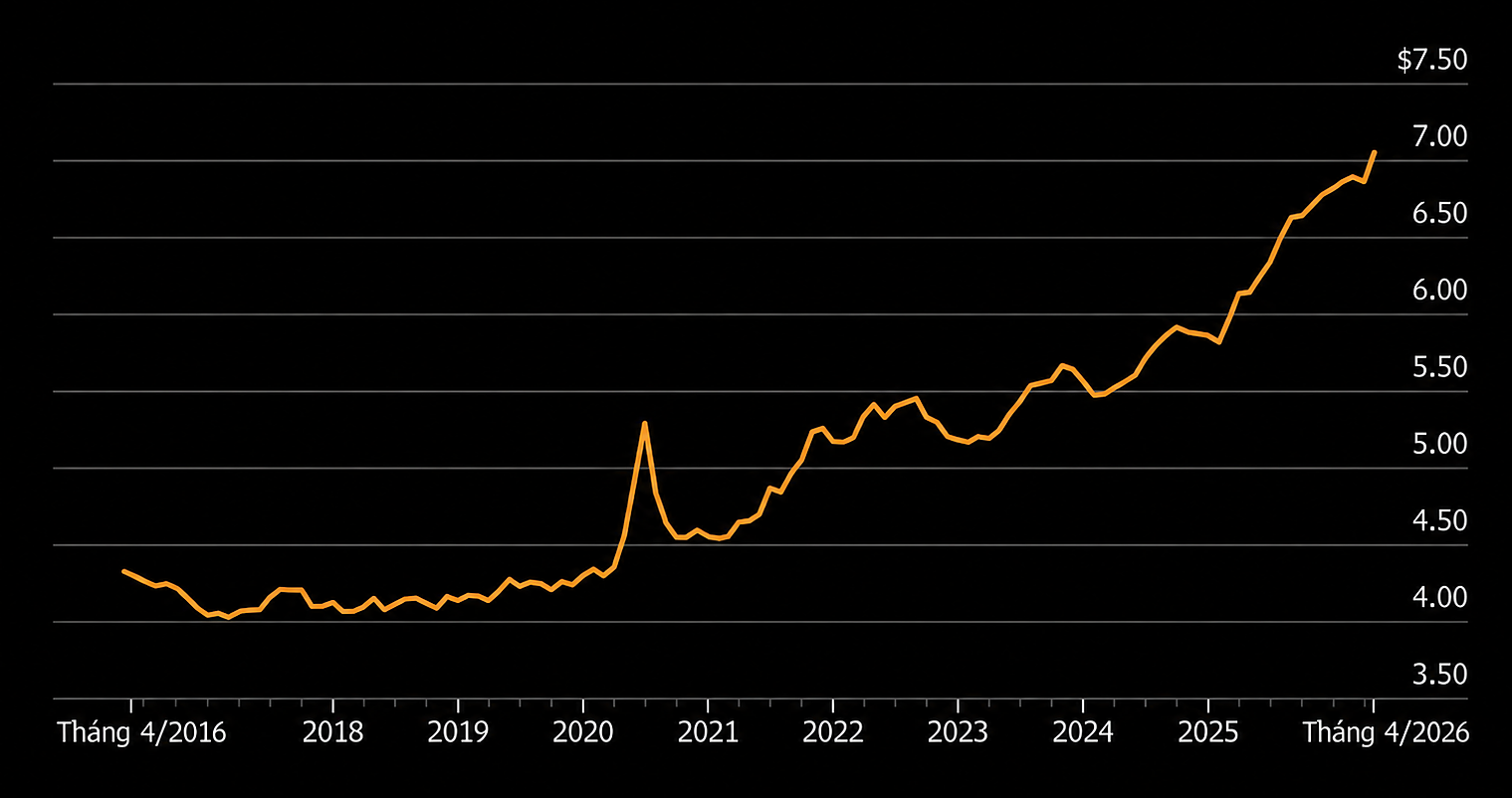 |
Rate of beef price increase in the US. Graphic: US Bureau of Labor Statistics
Rising fuel costs will also drive up retail prices, as farmers and transportation companies spend more on diesel, and plastic packaging becomes more expensive.
Large supermarket chains are trying to curb prices. The chief executive officer of Kroger stated the company will increase discounts to compete more aggressively with Walmart, which has expanded its low-price programs over the past year.
US consumers are weary of continued price increases, even though the rate of food inflation has slowed, said Andrew Harig, vice president of FMI, the Food Industry Association. In other words, slowing inflation only means prices are rising more slowly, not that food is getting cheaper.
At the same time, household debt has increased, personal savings rates have decreased, and inflation-adjusted average hourly earnings fell for the first time in three years in the 12 months ending in april. Data released by the Federal Reserve New York on 25/5 showed that indicators of food insecurity increased "significantly" from 10/2025 to february.
"I think many people still look at their food bills from before Covid-19, from 2019, early 2020, and then say: 'My goodness, I am paying significantly more now'", Harig said. "That is why they feel this pressure so acutely".
Duc Trung (According to CBS News, Insider, AP)