Early on 19/3, the foreign ministers of Egypt, Turkey, Saudi Arabia, and Pakistan convened in Riyadh to discuss diplomatic solutions for the three-week-long conflict involving the US, Israel, and Iran.
However, a significant challenge for them was identifying a negotiating partner in Iran. Earlier that week, Israel had killed Ali Larijani, Iran's National Security Council head, who was seen as the most promising interlocutor for dialogue with the West.
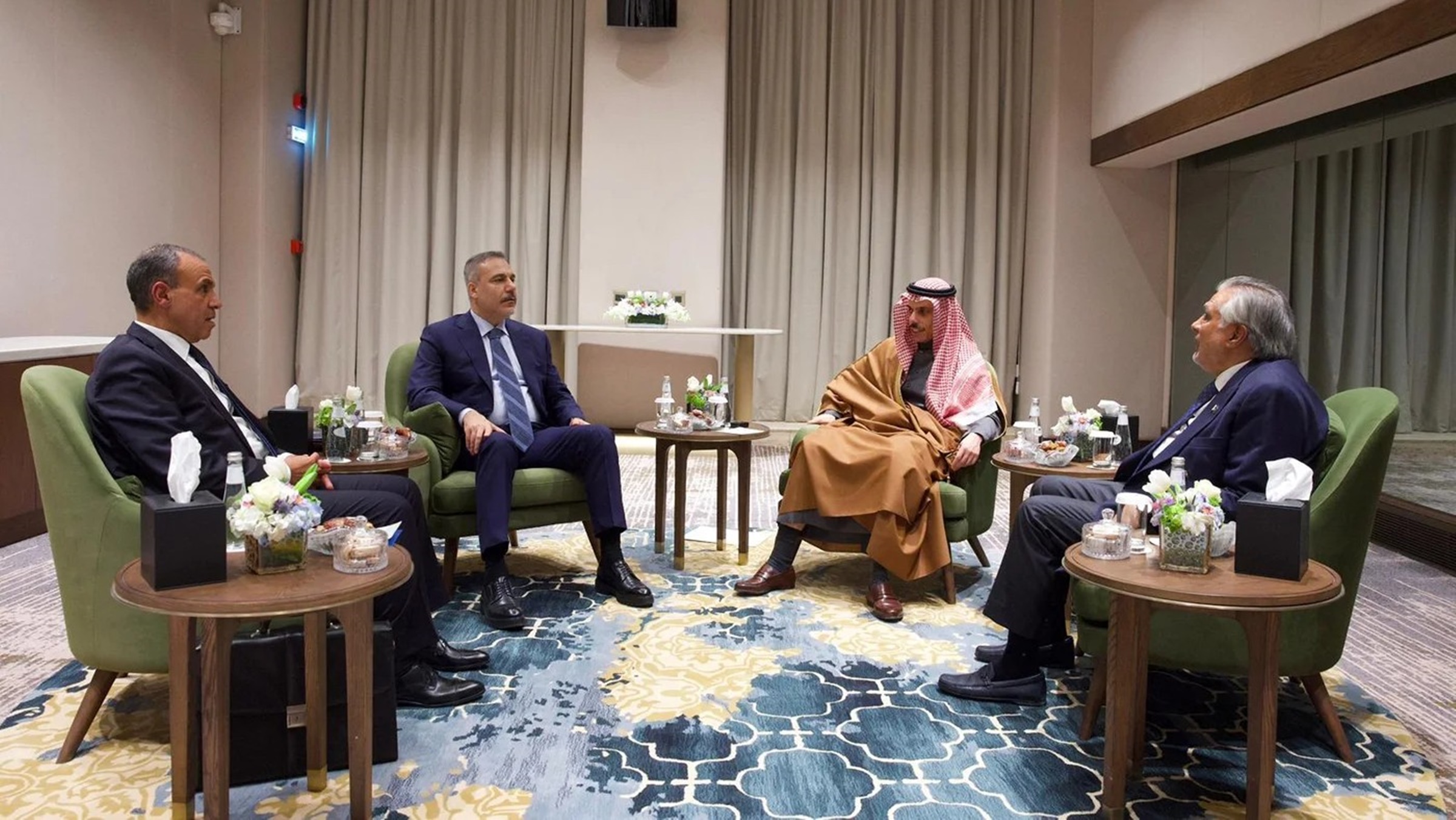 |
The foreign ministers of Egypt, Turkey, Saudi Arabia, and Pakistan met in Riyadh on 19/3. Photo: Saudi Arabian government |
The foreign ministers of Egypt, Turkey, Saudi Arabia, and Pakistan met in Riyadh on 19/3. Photo: Saudi Arabian government
The urgency for a negotiated solution escalated when US President Donald Trump issued an ultimatum to Iran on the evening of 21/3. He demanded the reopening of the Strait of Hormuz within 48 hours, threatening that the US military would "wipe out" Iran's power plants otherwise. In response, the Islamic Revolutionary Guard Corps (IRGC) threatened to destroy all energy and desalination infrastructure across the Persian Gulf, which is vital for the region's survival.
Egyptian intelligence officials worked to establish a communication channel with the IRGC, the paramilitary force protecting the Iranian government and the country's most powerful political and security organization. They proposed a five-day cessation of all hostilities to build trust for a ceasefire, according to informed sources.
These discussions laid the groundwork for President Donald Trump's policy reversal at his Mar-a-Lago club in Florida, over 11,000 km away.
On 23/3, just hours before his ultimatum expired, Trump received updates on the Riyadh discussions. He changed his stance, accepting a diplomatic solution with Tehran and canceling plans to strike Iran's power grid.
This shift followed a series of private discussions, facilitated by intermediaries in the Middle East. US officials believe these talks offered hope for a conflict resolution agreement. Sources familiar with the matter indicate that this also reflected President Trump's growing desire, and that of some advisors, to end the conflict, as he faced political and economic repercussions from the situation in Iran.
"These are sensitive diplomatic discussions, and the US will not negotiate through the media," White House Press Secretary Karoline Leavitt stated. "The situation remains fluid, and any speculation about meetings should not be considered final decisions until the White House officially announces them."
Trump's announcement to postpone air strikes on Iranian power plants immediately boosted the US stock market after weeks of volatility. The Dow Jones and S&P 500 indices recorded their largest daily gains since early February. Brent crude oil prices, the international benchmark, closed down 11% to below 100 USD a barrel, the lowest level since 11/3.
Potential meeting
According to US and Arab government assistants and sources familiar with the matter, recent intense diplomatic efforts have spurred early discussions about a direct meeting between US and Iranian officials. This meeting could take place in Pakistan or Turkey later this week, though preparations are still underway.
President Trump appeared ready to pursue a deal, telling reporters on 23/3 that he was "working with some people" in Iran whom he found "very reasonable and reliable."
However, Tehran maintained its distance from negotiation plans. Iranian officials denied President Trump's claims of effective progress in talks, asserting they had not held any formal discussions with Washington.
Iran's Parliament Speaker Mohammad-Bagher Ghalibaf implied on 23/3 that Tehran was not yet ready to negotiate with Washington.
"The Iranian people demand that the attacking party be thoroughly punished and apologize," he wrote in English hours after President Trump's initial comments.
Ghalibaf affirmed no talks had occurred with the US, adding that such optimistic messages were only released to "manipulate financial and oil markets and help the US-Israel escape the quagmire they are stuck in."
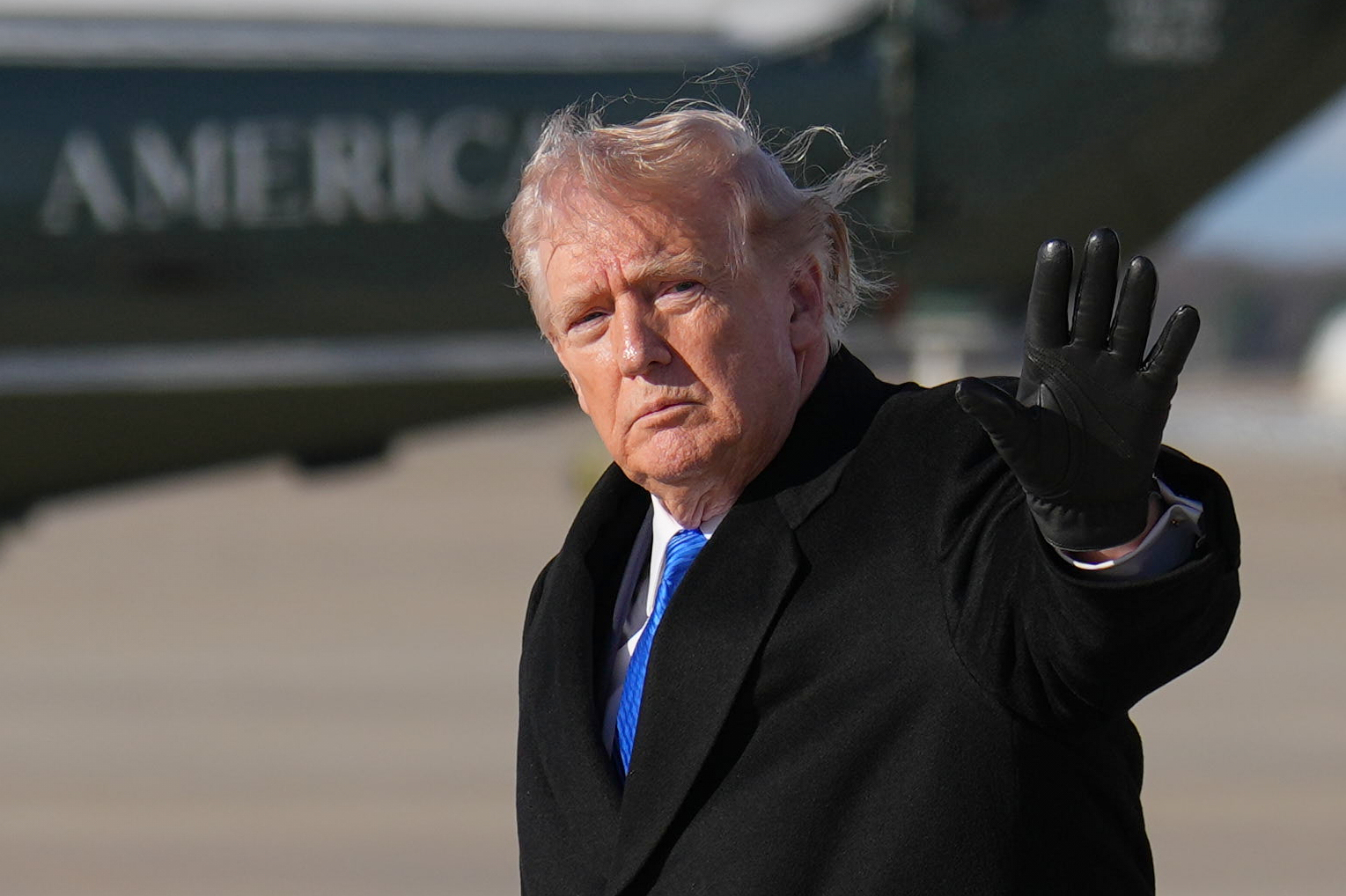 |
President Donald Trump at Joint Base Andrews, Maryland, on 23/3. Photo: AP |
President Donald Trump at Joint Base Andrews, Maryland, on 23/3. Photo: AP
Despite public contradictory statements, European and Arab officials confirmed that behind-the-scenes exchanges continued through intermediaries from Qatar, Oman, France, and the UK.
Among notable proposals was Pakistan hosting a meeting between high-level US and Iranian leaders. The US reportedly quickly supported this idea, with Special Envoy Steve Witkoff and Jared Kushner, Trump's son-in-law, as representatives. Vice President JD Vance might also attend if a deal nears completion.
Iran could send Foreign Minister Abbas Araghchi to the meeting, though Iranian officials signaled they were unenthusiastic about repeating previous failed negotiations between Araghchi and Special Envoy Witkoff. It remains uncertain whether Foreign Minister Araghchi would be willing to leave the country at this sensitive time for negotiations, especially if Vice President Vance does not attend.
Officials stated that Vice President Vance spoke with Israeli Prime Minister Benjamin Netanyahu on 23/3, although Netanyahu publicly confirmed only a call with Trump. According to a government source, President Trump also spoke with Pakistan's Army Chief Asim Munir on the same day.
Washington now faces negotiations with a hardened Iranian administration led by the new Supreme Leader Mojtaba Khamenei, who lost his father, wife, and sister in US-Israeli air strikes. Deep disagreements over the future of the Strait of Hormuz also remain unresolved.
When asked who would control the Strait after the conflict, Trump told reporters: "Perhaps me, me and the Iranian Supreme Leader, whoever that may be."
 |
Iran's Parliament Speaker Mohammad-Bagher Ghalibaf in Tehran in 2021. Photo: AFP |
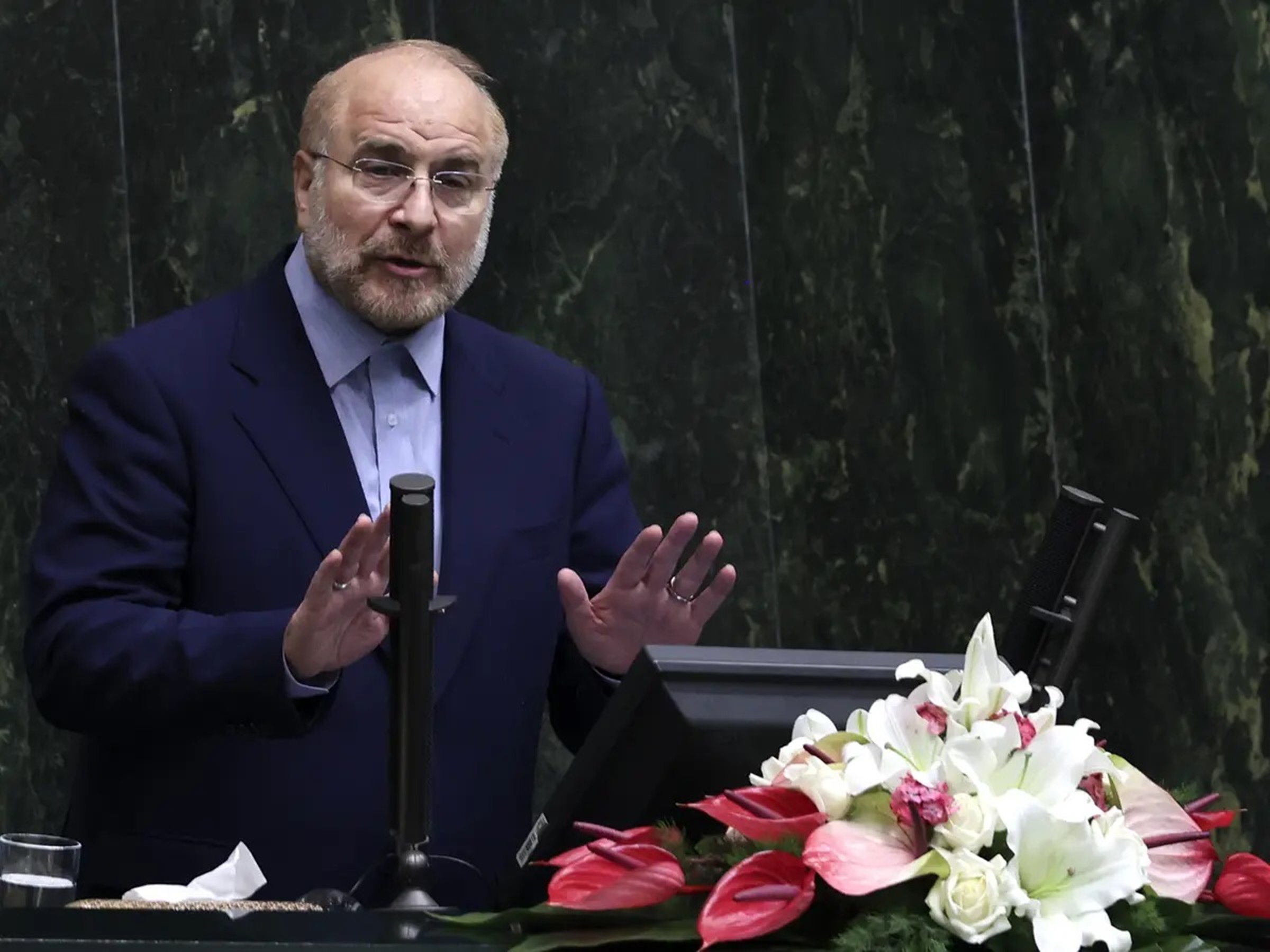
Iran's Parliament Speaker Mohammad-Bagher Ghalibaf in Tehran in 2021. Photo: AFP
Trump mentioned that the US had contacted a high-ranking Iranian official, whom he asserted had credibility in Tehran, but refused to disclose the identity due to safety concerns.
Israel's Jerusalem Post, citing unnamed sources, reported that Iran's Parliament Speaker Ghalibaf was leading potential deal negotiations with the US.
Nicole Grajewski, a nonresident scholar with the Nuclear Policy Program at the Carnegie Endowment for International Peace in Washington, also considers Ghalibaf one of the few remaining senior officials capable of persuading Iran's political leadership and hardliners to accept a deal with the US.
Ghalibaf, 64 years old, is a former hardline IRGC commander who has at times shown pragmatic stances, notably during his years as Tehran's mayor. "Ghalibaf holds significant credibility within Iran's security establishment," Grajewski observed.
By Vu Hoang (based on reports from WSJ, AFP, Reuters)