The California Department of Transportation (Caltrans) last month proposed launching a high-speed bus route on state freeways. This initiative aims to meet the needs of frequent commuters between San Francisco and Los Angeles, offering a significantly faster alternative to existing travel methods.
This high-speed bus system is expected to reduce travel time from San Francisco to Los Angeles to approximately 3 hours 12 minutes, a substantial improvement over the current 8-12 hours. To achieve a maximum speed of 225 km/h, this specialized bus would require dedicated lanes, an autonomous driving system, and advanced braking technology. Caltrans stated in a recent presentation that existing infrastructure on freeways like the Harbor Freeway and San Bernardino Freeway could serve as a starting point for the system.
Caltrans is also considering expanding the system with interregional routes connecting Los Angeles to San Diego, the San Francisco Bay Area, and Sacramento. Ryan Snyder, Caltrans' feasibility study manager, indicated that I-5 and I-10 would be prioritized for these extended routes.
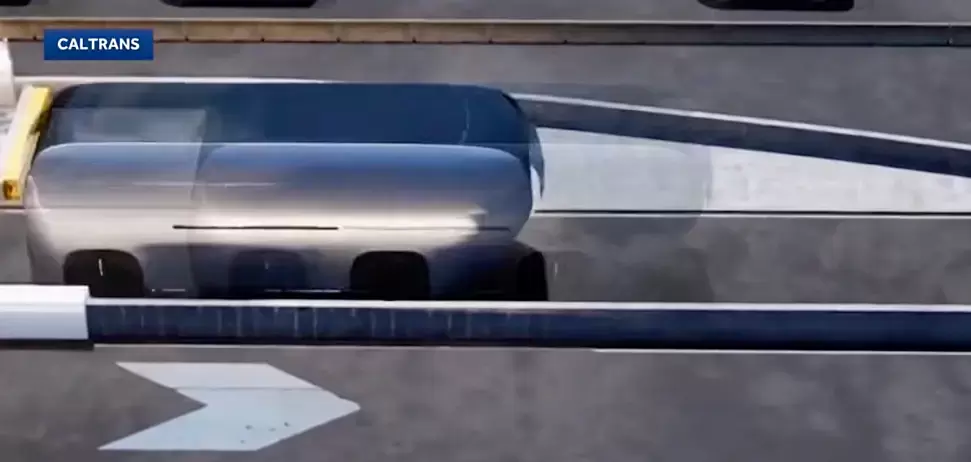 |
Simulation of a bullet bus on a dedicated two-way lane. *Photo: Caltrans* |
The proposal has garnered interest from residents who frequently travel between cities within the state by plane. Jeff Fisher, a San Francisco resident, expressed enthusiasm, stating, "I think this is a great idea. California needs to build more infrastructure." Katie Kim, also a San Francisco resident, who flies to southern California three to four times annually, remarked, "This would be a novel and more accessible form of travel." Tourist Arlette Contreras commented, "Perhaps this is a good idea; who knows, it might even be faster than flying."
Despite public interest, transportation experts anticipate challenges, particularly given the already congested state freeways. Rocky Moretti, director of policy and research at TRIP, a national transportation research nonprofit, emphasized the necessity of building additional dedicated bus lanes. "Given the severe congestion on interstates and some frontage roads, it is crucial to build additional dedicated bus lanes. Existing lanes, which are already heavily used, cannot simply be converted into bus lanes," Moretti stated.
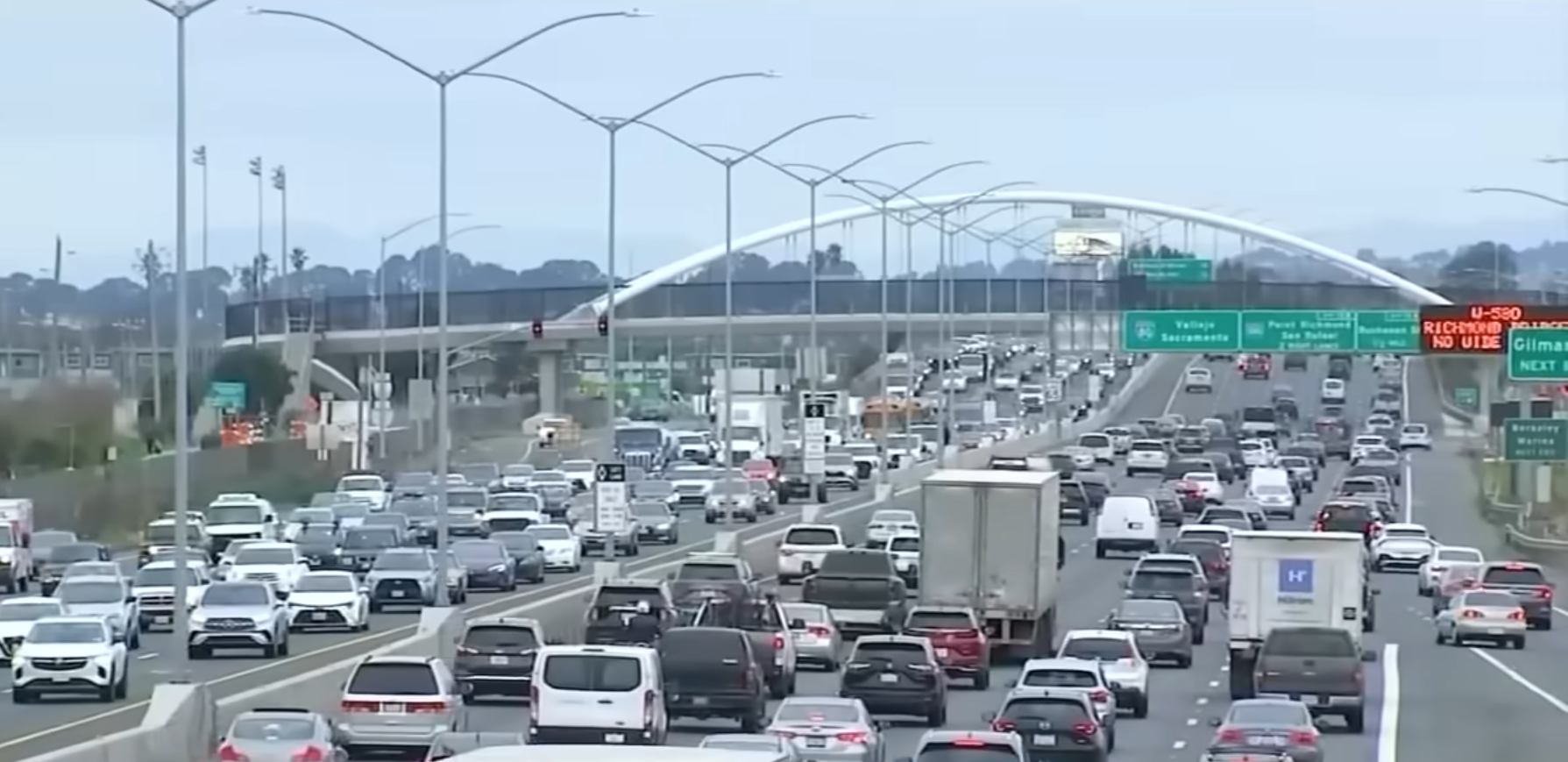 |
Traffic congestion on a California freeway. *Photo: ABC 7 News* |
The timing of this proposal is notable, as California has already invested over 14 billion USD in a high-speed rail project connecting San Francisco with Los Angeles. This substantial prior investment makes the feasibility of new transportation plans a significant concern for residents. Bradley Powles, a resident of Hercules, voiced his skepticism: "I would love an option that doesn't involve going to the airport, but I remain skeptical about whether this plan is feasible."
Caltrans has not yet released cost estimates for the high-speed bus system. A preliminary report suggests that if the 225 km/h target proves unfeasible due to cost, infrastructure, or safety limitations, a speed of 130-160 km/h could be a more realistic option. Powles concluded, "A faster and easier-to-implement solution would be very welcome. I hope this plan becomes a reality."
Duc Trung (According to ABC 7 News, KTLA, AP)