Since taking office in March, Canadian Prime Minister Mark Carney has consistently unveiled new policies across trade, diplomacy, and energy. These initiatives aim to bolster Canada's economic resilience amid tariff pressures from the US.
However, Canadian linguists have expressed discomfort with his choice of words in various official communications. This includes letters to the cabinet, social media posts, announcements regarding meetings with world leaders, and a 493-page budget plan.
They specifically highlight that many English words in these documents feature British "-ise" and "-yse" endings, contrasting with the standard Canadian and American "-ize" and "-yze" spellings.
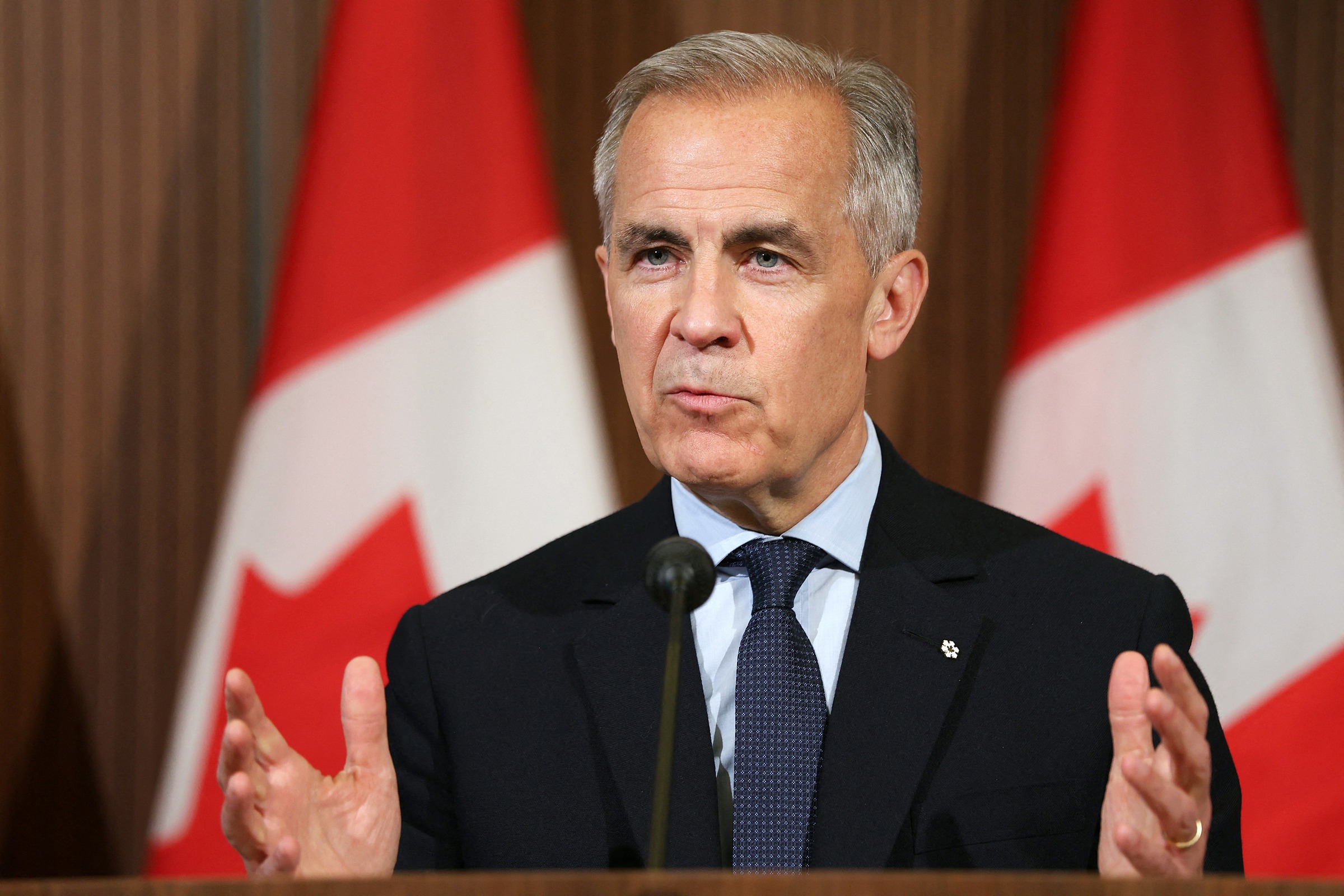 |
Canadian Prime Minister Mark Carney at a press conference in Ottawa on 21/5. *Photo: AFP*
For instance, in September, the Canadian government announced it would be "recognising" the state of Palestine. Officials also introduced new accounting methods to "modernise" the budget. Furthermore, the current administration has been "recognised" for steering the nation through global challenges. Prime Minister Carney frequently employs the word "catalyse".
The pervasive use of these British-style suffixes in the budget plan prompted linguists to submit a petition to Prime Minister Carney this month. They emphasized that Canadian spelling has been consistently adopted by previous administrations "from the 1970s to 2025." They appealed to him to uphold this tradition, viewing it as crucial for preserving Canada's "history, identity, and national pride."
Stefan Dollinger, a linguist at the University of British Columbia and a signatory of the petition, challenged American reporters to envision a scenario. He asked them to imagine a world where the US government adopted British English spelling instead of American English. This would mean the Secretary of Labor writing "labour" instead of "labor," the Secretary of Defense writing "defence" instead of "defense," or King Charles III using American English spelling, writing "traveling" instead of "travelling."
"How fiercely would people protest that?" Dollinger remarked. "The situation is similar in Canada. Language, and its usage, reflects who we are as a nation."
James Walker, a linguist at the University of Melbourne specializing in global English variations, emphasizes the critical role of distinct word usage in national identity. "If you wish to assert your Canadian identity, you can do so through pronunciation, vocabulary, and spelling," he explained.
Prime Minister Carney's extensive academic and professional background has exposed him to various English dialects. He holds Canadian, Irish, and British citizenships. His education included Harvard and Oxford, where he met and married a British national. He also served for 6 years as Governor of the Bank of England.
"I believe the concern over such spelling stems from his position as Canada's leader," Walker stated. "Despite spending a significant portion of his life abroad, many will be uneasy with the prime minister employing spellings not considered standard Canadian English."
Canadian English is inherently a product of the nation's unique history and geography. Dollinger explains that, similar to many Canadian phenomena, the language's evolution results from a prolonged blending of British and American styles, coupled with waves of immigration from other English-speaking nations.
Britain actively encouraged migration to Canada during the 19th century, particularly after the War of 1812. The hope was that these migrants would serve as a bulwark against American expansion. These individuals significantly influenced the development of Canadian English.
"Our history shaped our spelling system, pronunciation, phonetics, and even our system of government," states linguist J.K. Chambers of the University of Toronto. "These elements all stem from our position at the intersection of two powerful nations. Today, we stand as a third powerful nation with our own distinct identity."
The National Post reported in May that Prime Minister Carney had expressed a preference for government documents to be written in British English. The Prime Minister's Office has not responded to requests for comment regarding the petition.
Kaitlin Littlechild, president of the Editors' Association of Canada, suggests that Prime Minister Carney's adoption of British-style spelling risks creating confusion.
"The public views government information as the standard," she noted, "but this usage deviates from what we consider Canadian English." Littlechild stressed that Canadian English represents a distinct aspect of national identity, one that deserves recognition, respect, and honor.
*Hong Hanh (According to Washington Post)*