Japan's new Prime Minister Sanae Takaichi stated before parliament on november 7 that a scenario where Taiwan is attacked could trigger a military response from Tokyo. Her comments drew sharp retaliation from China, as Beijing consistently views Taiwan as its territory awaiting reunification.
Beijing subsequently imposed a series of economic sanctions targeting Tokyo. China's Ministry of Commerce stated that Prime Minister Takaichi's comments had "seriously damaged" cooperation between the two nations.
 |
Chinese President Xi Jinping (left) and Japanese Prime Minister Sanae Takaichi. Photo: CNN |
Tensions show no signs of easing. China sent a letter to the United Nations, affirming it would defend itself if Japan "militarily intervenes in the Taiwan Strait". This statement immediately drew criticism from Tokyo.
China's embassy in Japan also posted on X on november 21 that Beijing has "the right to direct military action" without United Nations Security Council authorization if Tokyo takes any aggressive steps.
For her part, Prime Minister Takaichi has refused to retract her statement, despite pressure from China, asserting that this has long been Japan's stance.
Observers believe the fallout from this diplomatic crisis could cause severe economic losses for Japan, as China is its largest trading partner. However, if the dispute persists, China will also suffer damage, leading to a situation where both East Asian powers "lose together" in this geopolitical game.
The dispute erupted less than two weeks after Prime Minister Takaichi discussed bilateral relations with Chinese President Xi Jinping on the sidelines of the APEC summit in South Korea, where both sides believed they had strengthened ties between their neighboring countries.
Following Prime Minister Takaichi's statement, China advised its citizens against traveling to Japan, citing safety concerns, and reimposed a ban on Japanese seafood imports that had only been partially lifted earlier this year. Several Japanese artists had performances in Beijing canceled or abruptly postponed, and at least two Japanese films were suspended from release in China.
According to Subramania Bhatt, managing director of market research firm China Trading Desk, some Japanese businesses investing in China, such as Toyota and Sony, also "fear direct impacts on their factories and supply chains" in the country.
China Trading Desk estimates that approximately 30% of the 1,44 million tourist trips from China to Japan through the end of december have been canceled. Leading Chinese airlines announced they would assist customers canceling tickets to Japan or changing itineraries free of charge. Many airlines began reducing the number of flights to Japan.
The loss of Chinese tourists could cost Japan between 500 million and 1.2 billion USD from now until the end of the year.
Sean King, senior vice president at consulting firm Park Strategies, suggests that some in Japan might welcome the recommendation to limit tourists from China, believing that foreign tourists to Japan have become too numerous and inconvenient. To date, public reaction to the reduction in tourist numbers appears minimal, as many do not believe Chinese tourists will stop coming to Japan.
Japan has seen a surge in Chinese tourists in recent years due to former Prime Minister Shinzo Abe's policy to promote overseas tourism. However, record tourist numbers also negatively affected the public, with residents complaining about rising living costs or inappropriate behavior by some foreigners, while also fueling xenophobia.
"Overall, the Japanese public seems indifferent or in some cases even welcomes fewer Chinese tourists," said Tokuko Shironitta, Japan managing director at strategic consulting firm Asia Group.
However, for many Japanese businesses, the loss of a large number of Chinese tourists will result in significant damage. "We may see people talk about how satisfied they are in some tourist-overrun neighborhoods, but for most local economies, the damage to jobs and revenue will outweigh any benefits from having fewer Chinese tour groups," Bhatt noted.
China still holds other cards it could use, such as restricting investment, imposing anti-dumping measures, or initiating trade defense investigations.
According to Shironitta, if Chinese officials take more aggressive measures, such as arresting Japanese citizens in China or restricting the operations of Japanese companies in the country, Tokyo might be forced to retaliate with countermeasures, something it has avoided doing until now.
But Japan "has no bargaining chip" against China, observed Li Hao, an associate professor at the University of Tokyo and research fellow at the Japan Institute of International Affairs.
"China remains a huge market for Japanese companies, and they know they have more leverage than their counterpart," commented Paul Nadeau, an associate professor at Temple University Japan. "Historically, leaders on both sides have been able to step back from similar crises through back-channel negotiations or other means, but China is now showing it is willing to escalate, and I am not sure what steps they want Japan to take to restore the relationship."
Tokyo has only protested through diplomatic channels and has primarily sought to resolve tensions through behind-the-scenes efforts.
Nevertheless, the crisis also presents an opportunity for Japan to "quietly accelerate diversification efforts to reduce dependence on China," Bhatt said, adding that the longer the dispute lasts and the more public attention it garners, the more motivation Tokyo will have to mitigate risks from Beijing, such as launching subsidy packages for companies to move supply chains out of China or tightening export controls on semiconductors.
"Over time, the Japanese public and businesses will take more seriously the uncertainties surrounding economic relations with China," commented Kei Koga, an associate professor in the Public Policy and Global Affairs Program at Nanyang Technological University, Singapore. "In the long run, this will likely lead to greater efforts by Japan to de-risk its economic relationship with China."
However, Beijing has not yet used perhaps its strongest weapon: the supply of rare earths to Japan.
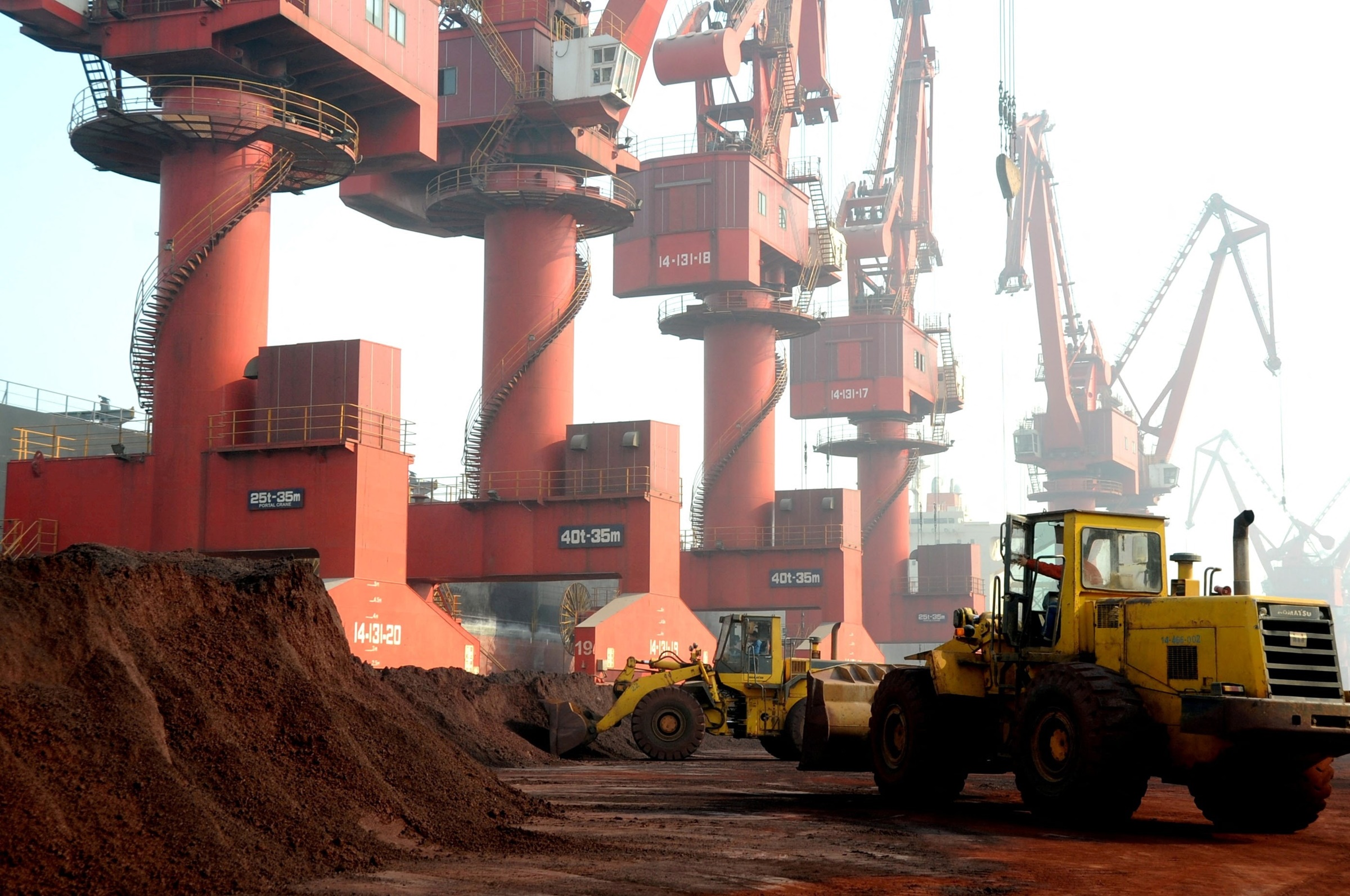 |
Vehicles transporting soil containing rare earth elements for export at a port in Jiangsu province, China, in 2010. Photo: Reuters |
"Controlling rare earths is both an economic and political tool. Actions that increase tensions over the Taiwan issue could trigger targeted restrictions from China," and this would be particularly difficult for many key Japanese industries, Bhatt noted.
Japan's high-tech industries, including electric vehicles, electronics, and defense, rely on rare earths from China, although Tokyo has sought to reduce its dependence from 90% in 2010 to around 60%.
China previously restricted rare earth exports to Japan in 2010 in response to the detention of a Chinese fishing boat captain operating near the disputed Senkaku/Diaoyu Islands in the East China Sea.
However, according to expert Li from the University of Tokyo, it is unlikely Beijing will play that card at this time.
"The rare earth issue is deeply linked to China-US relations," he said, adding that while such a restrictive move would have a large impact on Japan, it would also destroy trust not only between the two countries but also between China and the rest of the world. Japan recently signed an agreement with the US to extract rare earths in the Pacific to reduce dependence on China.
"Other countries will try to diversify their rare earth imports and seek to produce them themselves. This will weaken China's position in the long run," Li said.
As for Prime Minister Takaichi, experts say her firm stance on China could help boost her domestic credibility.
"The more China overreacts, the stronger anti-China sentiment will erupt in Japan," Shironitta said.
A Kyodo news agency poll on november 16 showed 69,9% public support for Prime Minister Takaichi's cabinet, an increase of 5,5 percentage points since she took office in late october. Furthermore, 48,8% of respondents supported Japan's right to collective self-defense if Taiwan is attacked, while 44,2% opposed it.
"Prime Minister Takaichi's resolute stance helps her present herself as a strong, decisive leader domestically," commented expert Koga from Nanyang Technological University.
"Japanese voters will certainly appreciate Prime Minister Takaichi's clear defense of the country's interests, so they will likely support her efforts to strengthen defense capabilities," King from Park Strategies stated.
Prime Minister Takaichi supports increasing defense spending and bolstering security to counter China's military buildup and align Japan's stance with the direction from President Donald Trump's administration.
In response to China's actions, Japan's Defense Minister Shinjiro Koizumi stated the government would proceed with plans to deploy air defense missiles to a base near Taiwan island. Taipei also used this opportunity to show support for Tokyo by lifting all restrictions on food imports from Japan.
Nevertheless, experts warn that the short-term and medium-term costs for Japan will outweigh the benefits of bolstering Prime Minister Takaichi's personal credibility.
"This challenge shows the difficulties of being tough on China, because it is very hard to convert that stance into policy. They are still feasible but are difficult steps, requiring significant political and diplomatic capital," Nadeau commented.
"Although Prime Minister Takaichi is at her peak after one month in office and has achieved some diplomatic successes, she must still carefully manage a minority government that could collapse if the opposition or the public discovers any missteps," he added.
For China, there are also costs to bear as tensions worsen relations between the two sides, and this occurs at a time when Beijing is trying to assert itself as a leading nation promoting multilateralism while the Trump administration pursues an "America first" strategy.
According to Nadeau, China's leadership may be calculating that their pressure tactics will compel Prime Minister Takaichi and future Japanese leaders to revert to previously understood or agreed-upon diplomatic stances and rules regarding the Taiwan issue.
"But the Japanese public will likely resent the coercive moves that have brought the relationship to its current state, and China may find itself in a self-damaging position," he said.
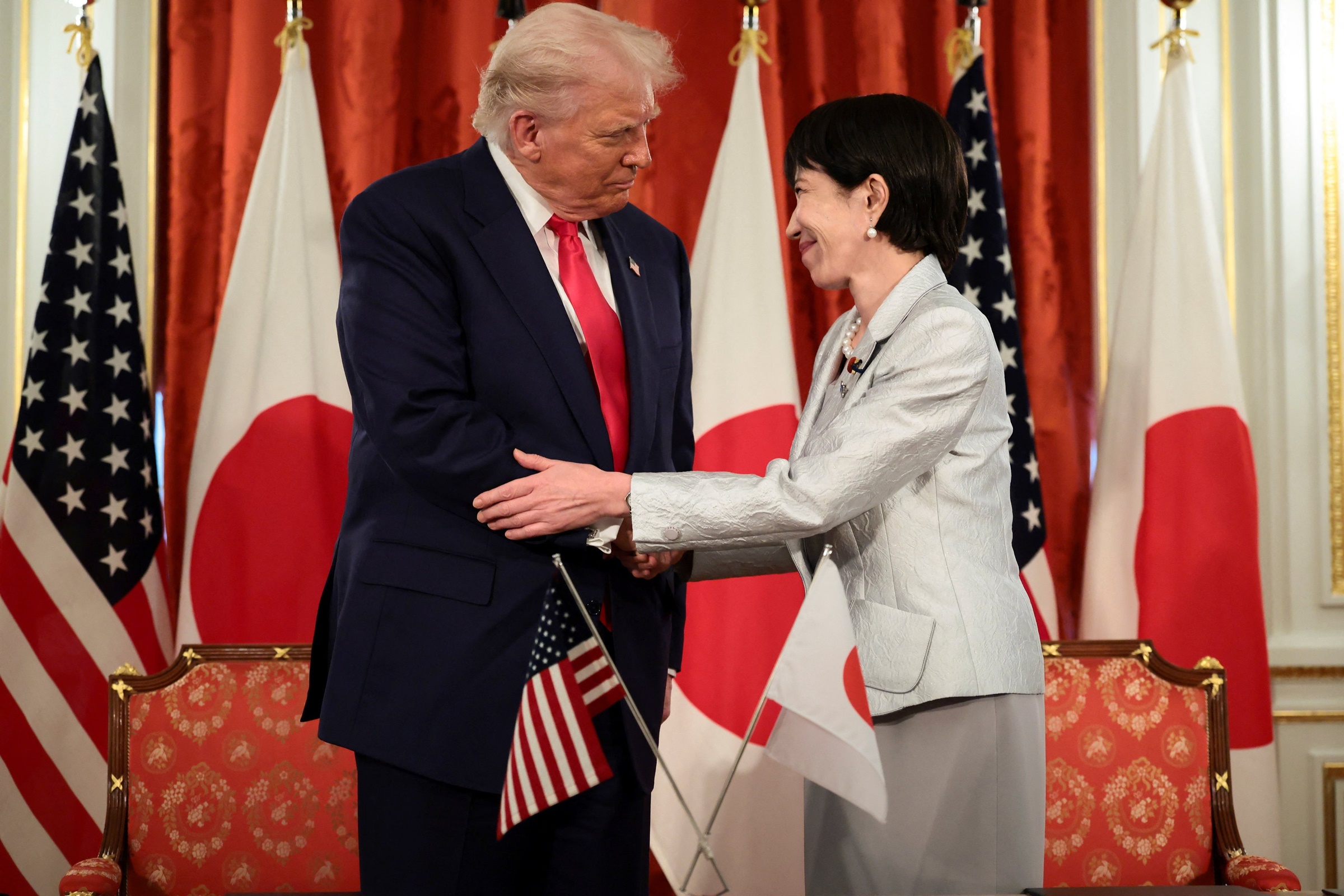 |
Japanese Prime Minister Sanae Takaichi hosts President Donald Trump in Tokyo in late october. Photo: Reuters |
"The relationship is drifting away from the old model of 'cold politics, hot economics,' moving closer to 'cold politics, cold economics'," Bhatt said, adding that this could push Japan "deeper into the orbit of US-led economic and security alliances."
US State Department spokesperson Tommy Pigott reaffirmed the US security commitment to Japan in a post on X, stating that the US "firmly opposes any unilateral attempts to change the status quo, including through force or coercion," regarding the situation in the Taiwan Strait.
In his first meeting with Prime Minister Takaichi last month, President Trump stated that the US was ready to provide "anything she wants, any assistance she needs, anything to help Japan."
If that offer remains valid, Japan will certainly have more cards to play in its confrontation with China, according to TIME commentator Miranda Jeyaretnam.
Vu Hoang (According to TIME, AFP, Reuters)