On 3/1, President Gustavo Petro announced that the Colombian government had activated preventive measures to protect its citizens and maintain stability in the border region with Venezuela. "Security forces are deploying along the border. Humanitarian aid resources are mobilizing to prepare for a large-scale refugee influx", he stated.
In recent years, Colombia has taken in approximately three million Venezuelan refugees.
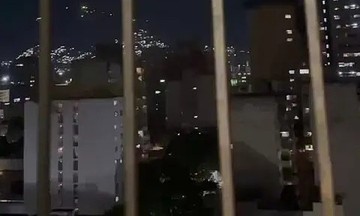
At the Simon Bolivar International Bridge, the main crossing between Venezuela and Colombia, movement remains normal, but an atmosphere of concern prevails. Venezuelan soldiers reported not receiving any new directives.
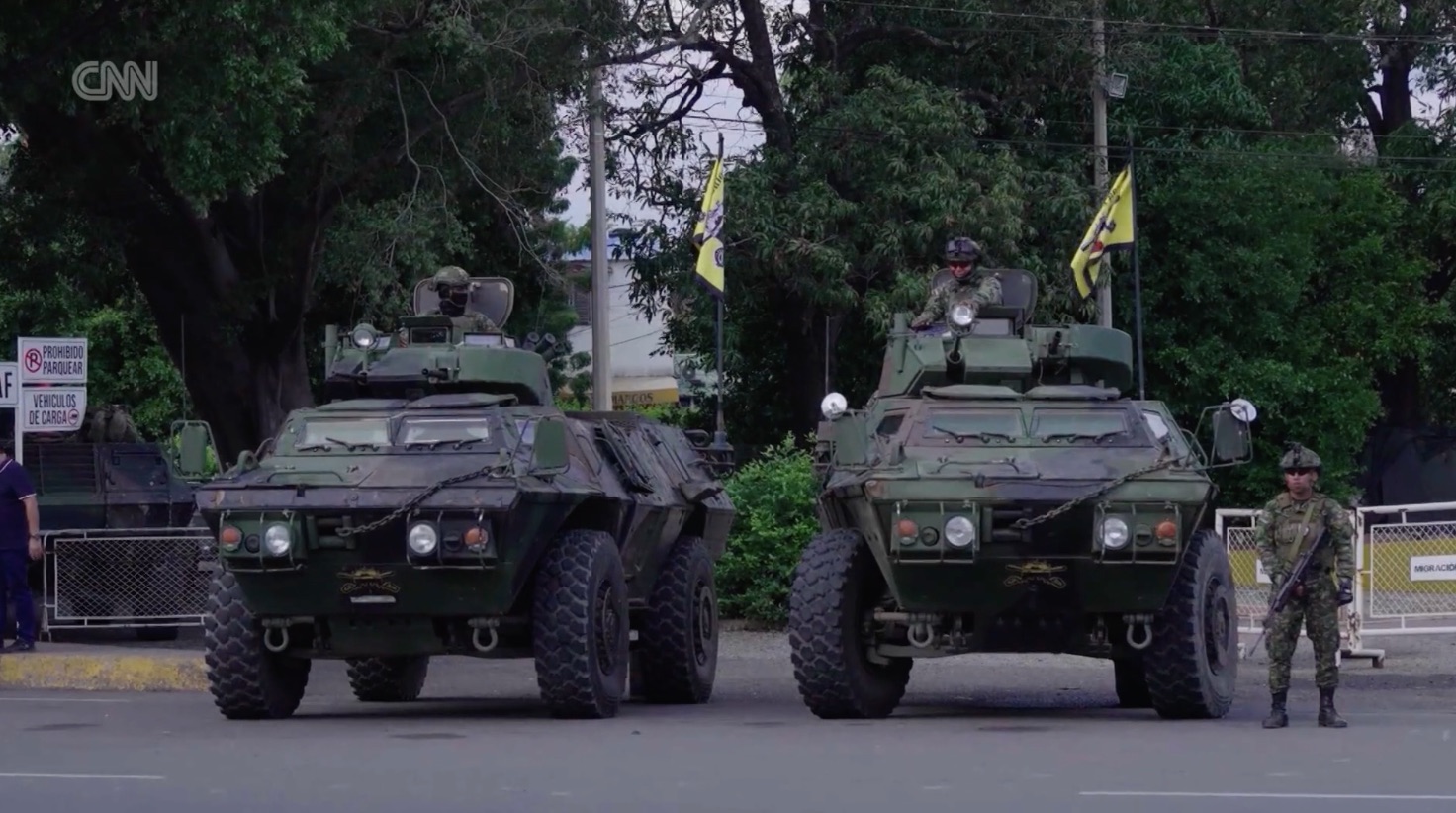 |
Armored vehicles deploy to the Cucuta crossing, between Colombia and Venezuela, on 4/1. CNN |
Armored vehicles deploy to the Cucuta crossing, between Colombia and Venezuela, on 4/1. CNN
Colombian security officials identified criminal gangs and rebel forces as the main threats along the border. The Colombian Red Cross deployed volunteer teams and medical vehicles, ready for the worst-case scenario: an estimated 120,000 people crossing the border if violence erupts.
The Colombian government may declare an emergency in border localities along its 2,200 km frontier with Venezuela. This could happen if the US takes more military action, triggering a security crisis or refugee wave. Emergency measures would curb illegal armed group activity in the area.
Angie Rodriguez, Chief of Staff to the Colombian President, led a delegation of senior officials, including Defense Minister Pedro Sanchez and numerous military commanders, to the border city of Cucuta to coordinate with local authorities.
Colombian officials voiced deep concern over deeper US intervention in Venezuela. This could escalate violence and prompt new migration, particularly as the country prepares for legislative and presidential elections.
Foreign Minister Marco Rubio stated that the operation to arrest President Nicolas Maduro would preclude the possibility of US ground troop deployment to Venezuela, but the Colombian government believes the situation remains unstable, with the potential for armed conflict in Venezuela.
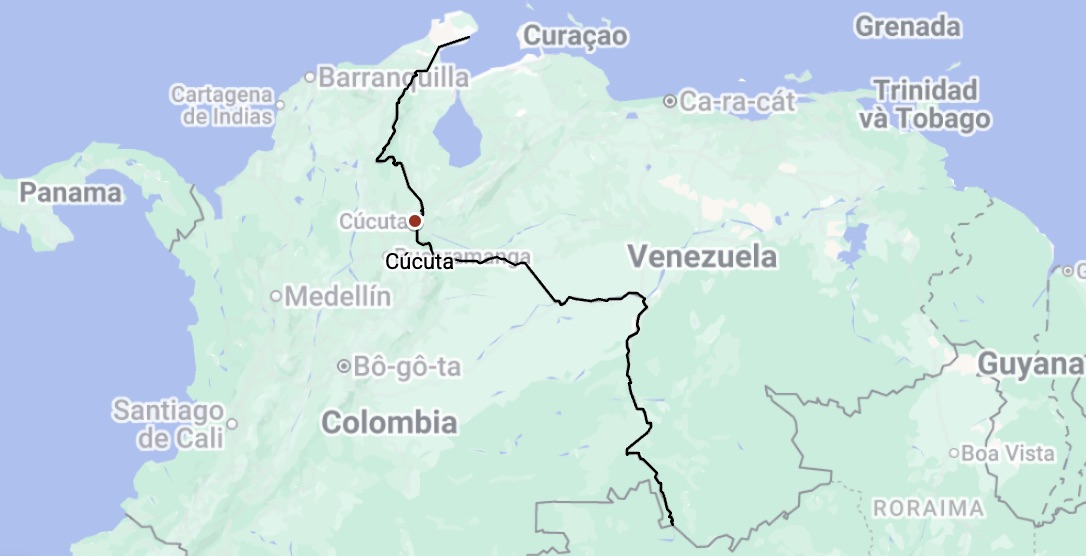 |
The Venezuela-Colombia border. Google Maps |
The Venezuela-Colombia border. Google Maps
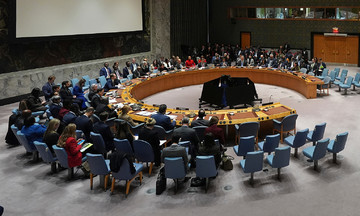
In an earlier message calling for de-escalation, President Petro emphasized that internal conflicts in Venezuela must be resolved peacefully by its people, based on the principle of self-determination, which forms the foundation of the global system with the United Nations at its center. He urged Venezuelans to engage in dialogue and unity, and called on all parties to exercise restraint, prioritizing diplomatic channels. Colombia also condemned the US raid, reaffirming its commitment to respecting national sovereignty and territorial integrity, and opposing the use or threat of force. President Petro proposed convening the United Nations Security Council, where Colombia had just assumed a non-permanent seat on 1/1.
Thanh Danh (According to Colombia One, Colombia Reports, CNN, Guardian)