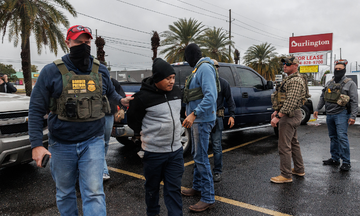
The Canadian Food Inspection Agency (CFIA) announced on 7/11 that it had culled over 300 ostriches at Universal Ostrich Farms (UOF) in Edgewood, British Columbia, on the evening of 6/11, under its avian flu eradication policy.
"The Royal Canadian Mounted Police did not even tell us when they were going to do it", Katie Pasitney, UOF spokesperson, said on 10/11. They blocked the farm's entrance, preventing supporters from the highway. For hours, supporters heard continuous gunshots, targeting animals herded into the culling area.
The ostrich flock had been at the center of a dispute in Canada since 12/2024, when the CFIA ordered their culling after an avian flu outbreak at the farm killed 69 ostriches. The farm owners appealed, arguing the remaining flock was healthy, but the Supreme Court of Canada rejected their appeal on 6/11.
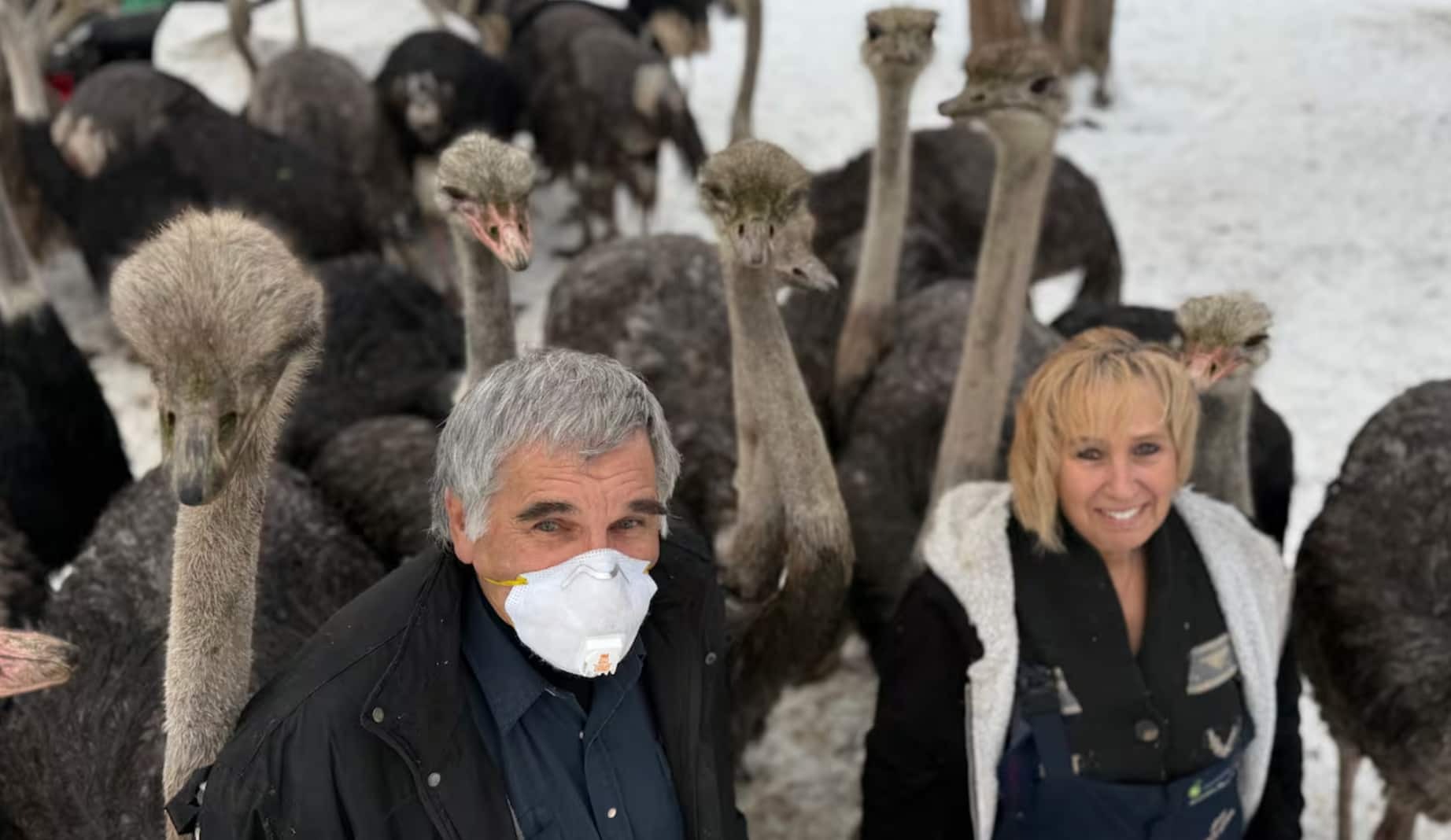 |
Dave Bilinski and Karen Espersen pictured with their ostrich flock at the farm in Edgewood, British Columbia, Canada earlier this year. Photo: CBC
UOF, spanning over 23 hectares, is owned by Karen Espersen and business partner Dave Bilinski. Since the mid-1990s, the facility has raised hundreds of ostriches, profiting from their meat, leather, feathers, and a moisturizing cream extracted from the birds' fat. They also welcomed tourists to visit the farm.
In recent years, the farm began using ostrich eggs for research. During the Covid-19 pandemic, they collaborated with researchers in Japan and the US to study antibodies from the eggs.
UOF's tragedy began in mid-12/2024. An outbreak occurred at the farm, with young ostriches experiencing difficulty breathing and mucus flowing from their eyes and beaks. Some had such high fevers that they sat in puddles, even in cold weather.
The farm's veterinarian was away at the time, and Espersen's efforts to care for the sick ostriches were unsuccessful. They began to die one by one, then in groups. Bilinski collected and buried them in 3 m deep pits. When there was no more space to bury them, he was forced to cover the remaining bodies with tarps.
Local residents began to notice the situation. From the highway, they could see crows gathering to feed on the carcasses. On 28/12/2024, someone reported the situation to the CFIA hotline. For the CFIA, the conditions at the farm at that time were "the perfect formula" for an avian flu outbreak.
Two days later, officials sent personnel to collect samples from some ostrich carcasses. Test results released on 31/12/2024 showed the flock tested positive for H5N1, a dangerous strain of avian flu that has ravaged North America in recent years.
Canadian authorities determined that to comply with national agricultural trade agreements, this outbreak had to be completely eradicated. This meant the ostrich flock had to be culled.
H5N1 can spread from poultry to livestock and humans, but human symptoms are generally mild. However, at the time of the UOF outbreak, British Columbia recorded one case of a young girl requiring emergency care for lung and kidney failure after contracting avian flu.
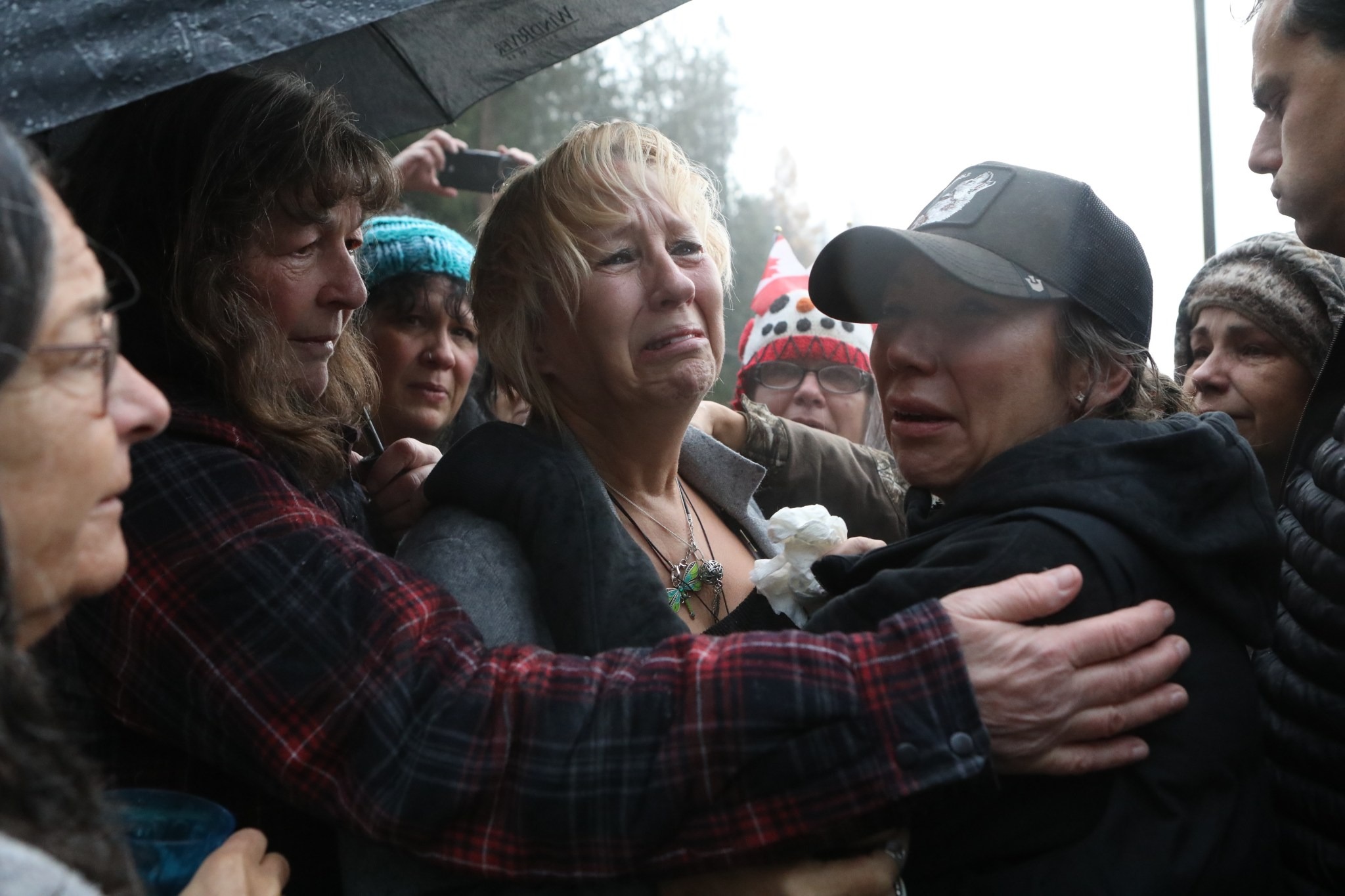 |
Karen Espersen, co-owner of Universal Ostrich Farms, comforted by her daughter Katie Pasitney (wearing a hat) and a supporter at the farm on 6/11, after the Supreme Court of Canada rejected their appeal. Photo: Canadian Press
UOF began efforts to protect the remaining flock, arguing that the surviving animals had developed herd immunity to H5N1 and that their eggs contained valuable scientific information about avian flu.
Espersen stated that their ostrich eggs now contained avian flu antibodies. If used as feed, wild poultry could develop an immune system, and when the scope was large enough, the avian flu epidemic would be halted.
The CFIA denied this argument. "Through a thorough review of peer-reviewed scientific literature, there is no evidence to suggest that a specific ostrich flock has an advantage over other flocks in producing antibodies", the CFIA stated in may.
UOF appealed to the courts, but its appeals were successively rejected by the Federal Court of Canada and the Federal Court of Appeal of Canada.
Meanwhile, Pasitney, Espersen's eldest daughter, sought to contact New York billionaire John Catsimatidis, an animal lover and major Republican Party donor in the US. She called Catsimatidis's radio station WABC, telling the farm's story, and successfully attracted the billionaire's attention.
Catsimatidis funded UOF in its legal battle with the CFIA and contacted officials in former US President Donald Trump's administration. US Secretary of Health Robert F. Kennedy Jr., along with leaders from the National Institutes of Health (NIH) and the US Food and Drug Administration, sent a letter to CFIA leadership in may, requesting that the ostriches not be culled.
"We believe the ostriches that survived last year's avian flu outbreak hold significant value for research", the letter stated. Kennedy continued to urge the CFIA in july to postpone the culling, proposing collaboration between the CFIA and Canadian researchers with the NIH and the US Centers for Disease Control and Prevention.
Dr. Mehmet Oz, leader of the US Centers for Medicare and Medicaid Services (CMS), offered to move the ostrich flock to his farm in Florida. The plan was approved by the US Department of Agriculture, but the farm declined.
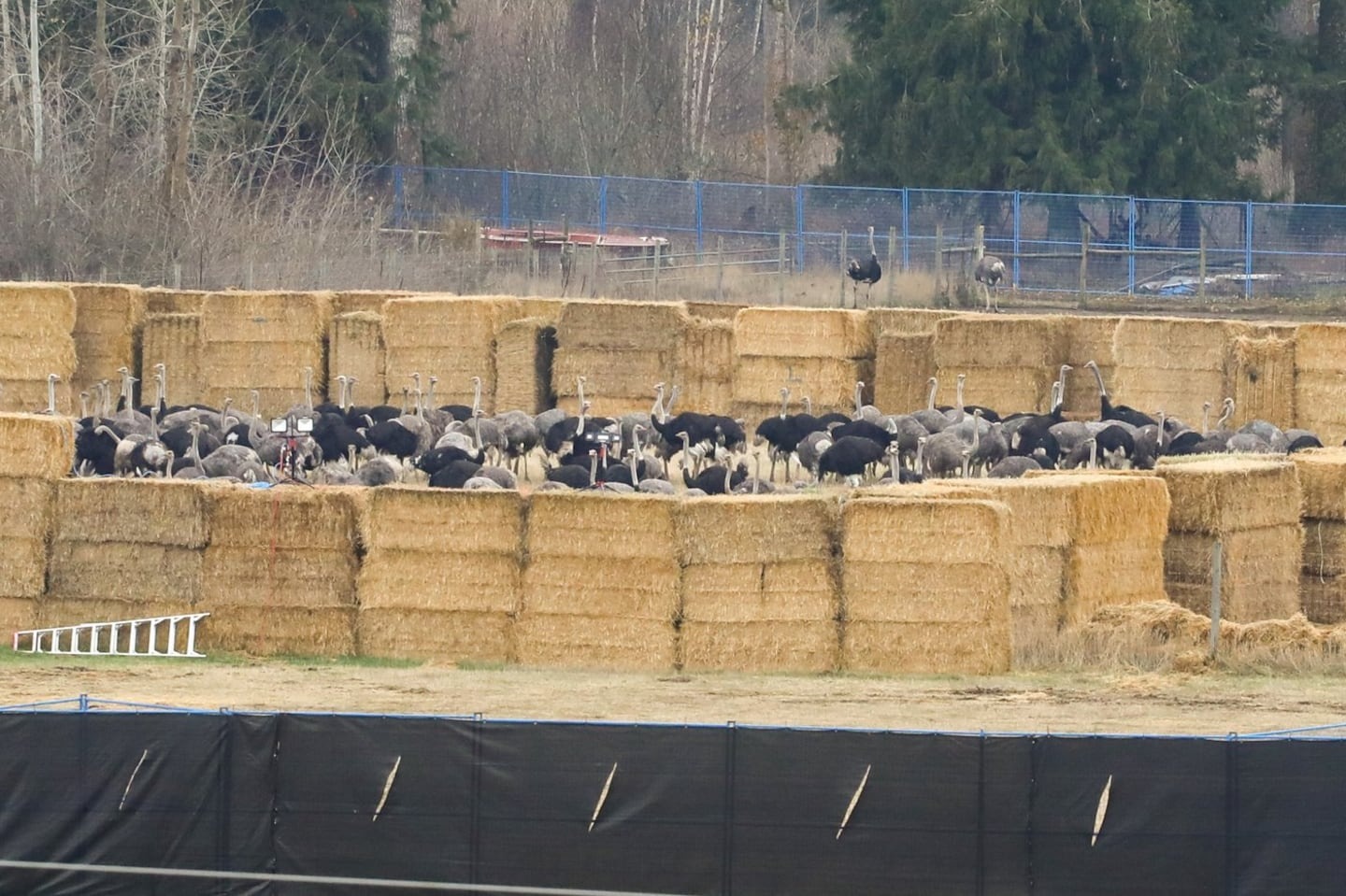 |
Ostriches fenced in hay bales at Universal Ostrich Farms, Edgewood, British Columbia, on 6/11. Photo: Canadian Press
Ostrich advocates gathered near the farm for months, sometimes numbering in the hundreds. They placed obstacles from the highway turnoff to the farm to hinder law enforcement.
On 22/9, the CFIA took over the ostrich pens, their first deployment of such a measure. The Canadian government did not intervene in the matter. Prime Minister Mark Carney declined to comment, while Minister of Health Marjorie Michel, who has authority over the CFIA, did not respond to calls for retesting the flock.
UOF's legal efforts failed on 6/11, when the Supreme Court of Canada rejected both appeals from the farm. "The CFIA will immediately implement regulatory measures to completely cull the ostrich flock", the agency stated after the supreme court's ruling, without providing specifics.
At 16:00 on 6/11, about 10 trucks and SUVs appeared at the farm. CFIA agents herded the ostriches into pens enclosed by stacks of hay bales. Many floodlights were positioned around the area as darkness fell.
At 18:00, gunshots began and continued for hours. Most protestors had left the area at the request of the police, with only a few remaining to pray for the ostriches.
"The ostriches were shot at a time when they should have been resting. They shone floodlights at people so they couldn't see anything, then stood on hay bales, wearing night vision goggles, and shot our animals", Pasitney told Global News.
She also accused CFIA agents of returning to the farm on the morning of 7/11 to put down any remaining live ostriches. The farm does not know where the ostrich carcasses were taken, as they are now considered "hazardous waste".
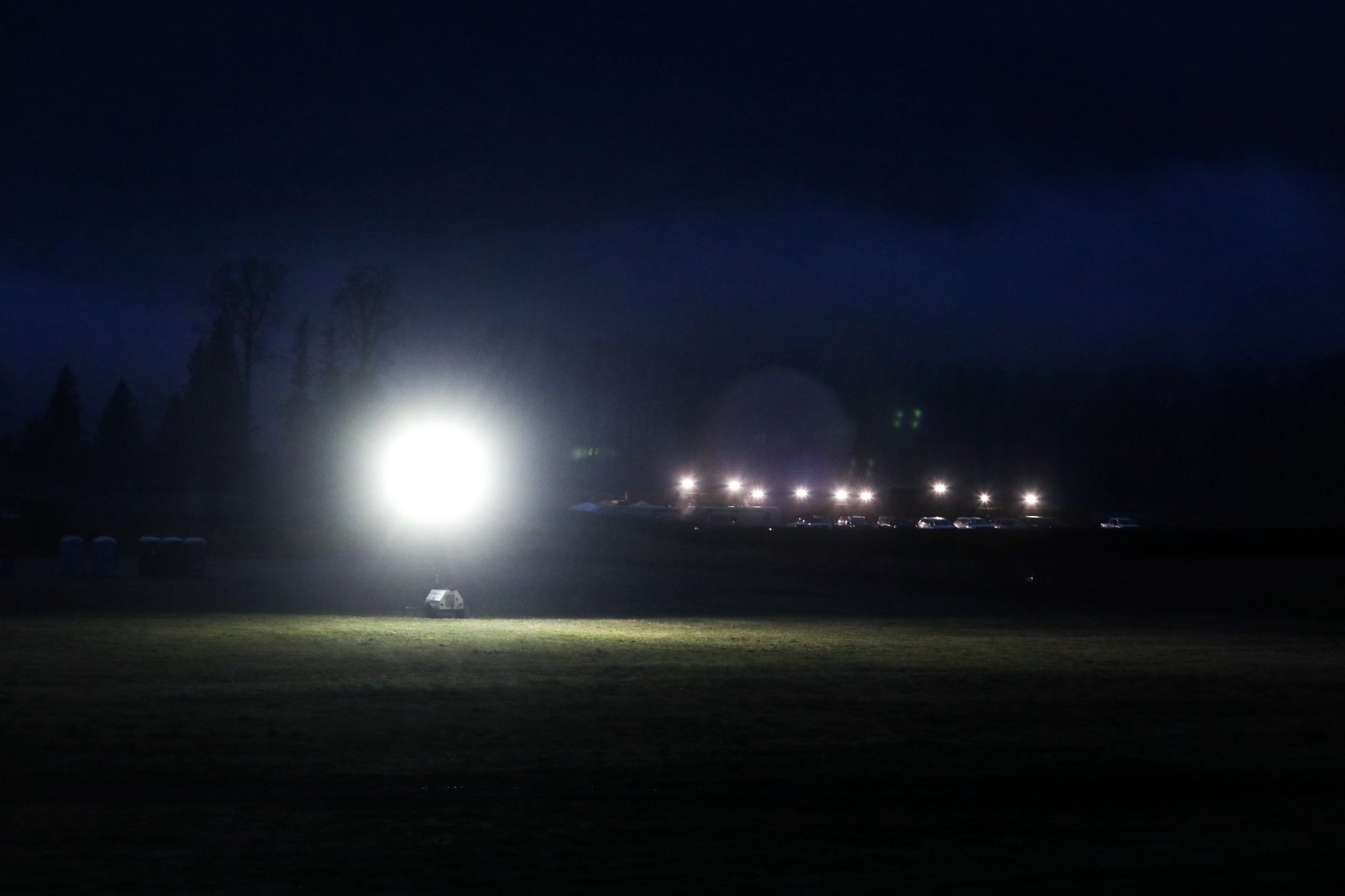 |
Floodlights shining from the ostrich culling area at Universal Ostrich Farms on the evening of 6/11. Photo: Canadian Press
The CFIA denied this, stating they completed their mission at 22:45 on 6/11 and that an agency veterinarian confirmed all animals were dead.
"The culling process was carried out in full compliance with biosecurity and infection control procedures to minimize the risk of highly pathogenic avian flu spread. The final number of ostriches in the flock was 314", the CFIA stated.
The CFIA announced on 13/11 that it had "deeply buried" the ostrich carcasses, eggs, and related items at a landfill in British Columbia. The UOF farm remains quarantined, requiring permission to enter the area.
Nhu Tam (According to Global News, CTV News, The Atlantic)