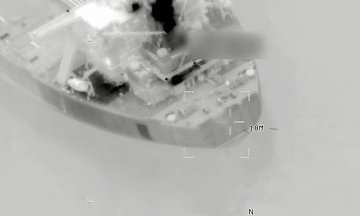
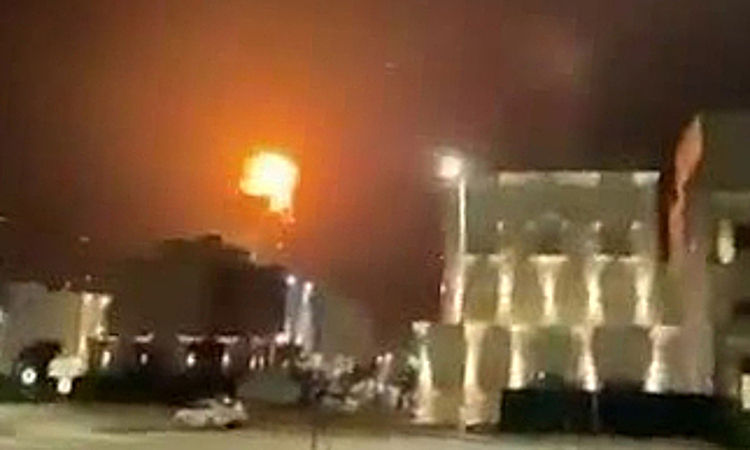
The Islamic Revolutionary Guard Corps (IRGC) today claimed attacks on a US base in Jordan destroyed a radar belonging to the terminal high altitude area defense (THAAD) system, a Patriot battery, and a radar from a C-RAM short-range air defense system.
"Fuel tanks at the US base caught fire. A large warehouse containing helicopter equipment and a helicopter repair and maintenance workshop were also hit," the IRGC stated.
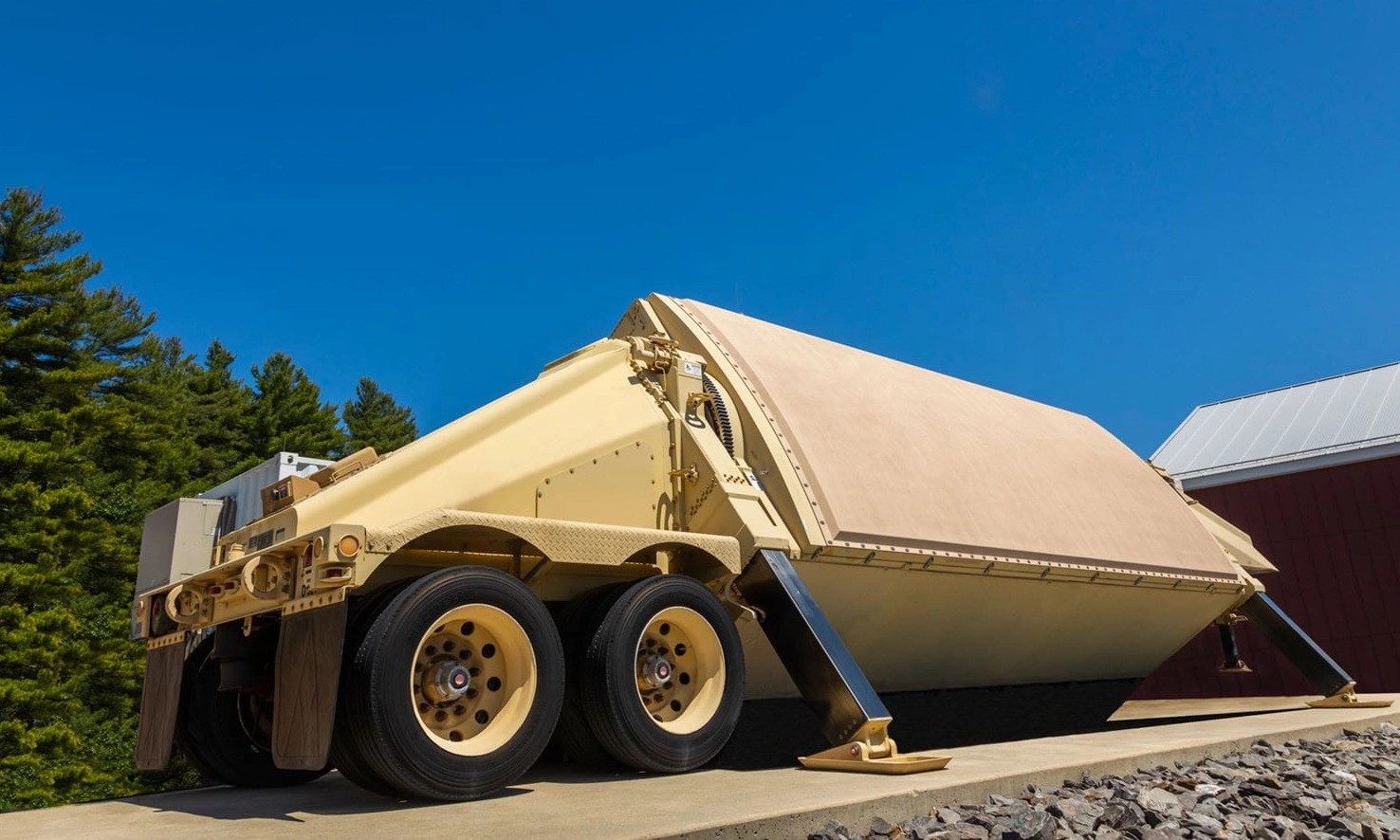 |
An upgraded AN/TPY-2 radar in an image posted in 2025. Photo: RTX |
The IRGC previously claimed strikes on several targets in Kuwait, destroying a large warehouse containing military equipment, a Patriot air defense system, and an MQ-9 unmanned aerial vehicle (UAV) hangar at Ali al-Salem military airport. US troop quarters and two helicopter hangars at Al-Adiri base, along with a telecommunications tower, were also targeted.
The Islamic Revolutionary Guard Corps asserted the strike on Al-Adiri airport caused casualties and significant damage to US helicopters and UAVs deployed there.
Iranian officials affirmed these actions were in retaliation for earlier US airstrikes, emphasizing that the targets of the attacks were "not the people of Jordan and Kuwait". Mohammad Akraminia, spokesperson for Iran's military, stated that Tehran would continue to attack targets in the region until Washington ceases its strikes on infrastructure and coastal areas in Iran. He stressed that Iran's military was "prepared for any enemy scenario".
Jordan's military reported shooting down three Iranian missiles this morning, with the 4th falling in an uninhabited area. Kuwait's military announced on the same day that they were dealing with "hostile unmanned aerial vehicles", but did not specify their targets.
US Central Command (CENTCOM), the agency responsible for US military operations in the Middle East, did not comment on the information.
The THAAD system is considered by Western experts to be one of the best air defense systems in the world today. Its AN/TPY-2 radar, often referred to as THAAD's "eye of god", helps the system detect enemy ballistic missiles from a maximum distance of 3,000 km. In fire control mode, the AN/TPY-2 has an operational range of 1,000 km, while interceptor missiles can hit targets at a distance of 200 km and an altitude of 150 km.
US Department of Defense budget documents show that each AN/TPY-2 radar unit has an ex-factory price of approximately 485 million USD, with the antenna alone costing around 136 million USD. Including customer-specific configurations, operational support, maintenance, and upgrades, each AN/TPY-2 system can reach a value of approximately 1 billion USD. Replacing them in the short term is not simple, as only 16 such radars have been produced in total.
Satellite imagery analysis and field documentation released by ABC News on 19/3 indicated that at least 10 radar surveillance stations in the Middle East had been hit by Iran, including four AN/TPY-2 radars.
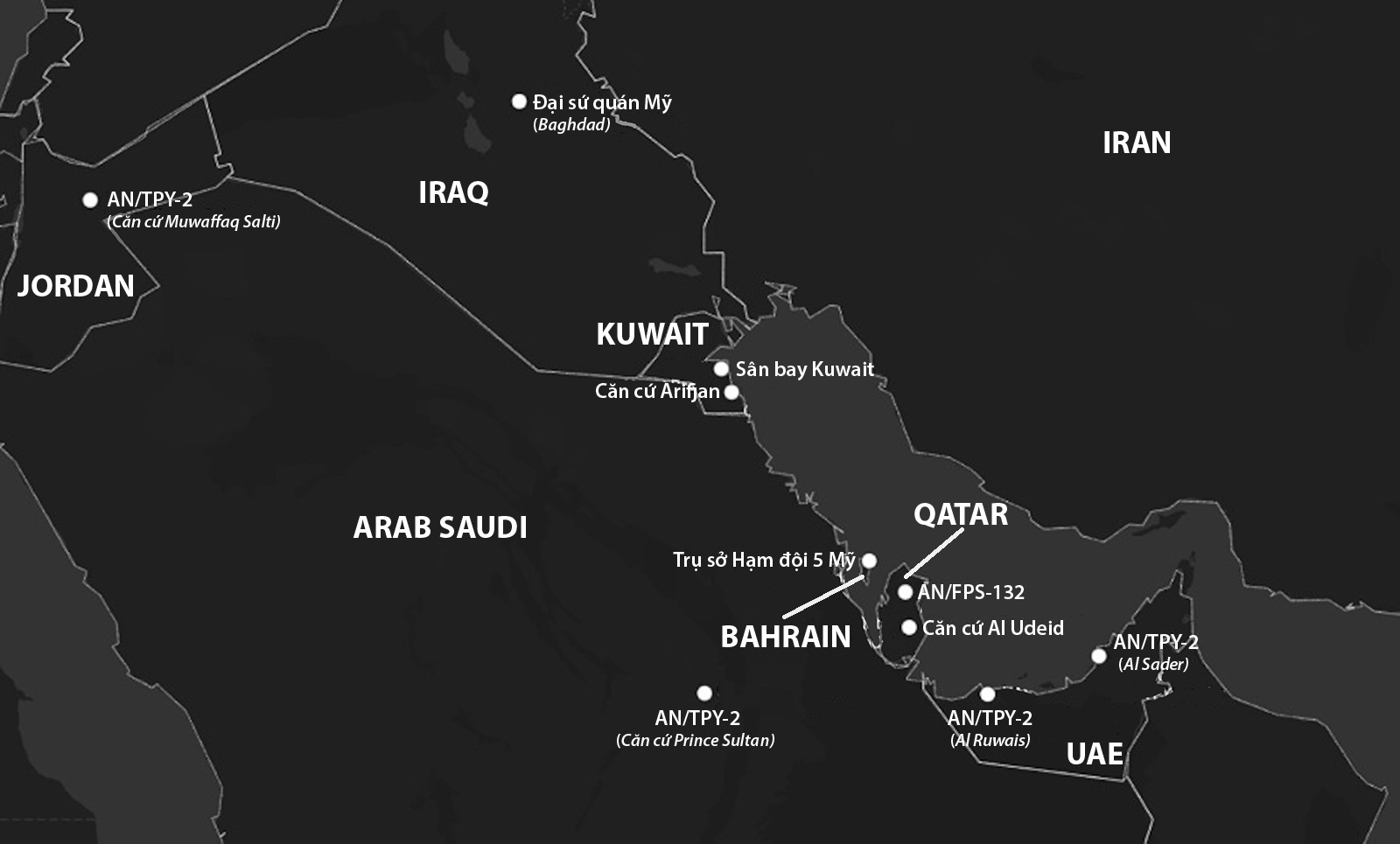 |
US and allied radar sites struck by Iran in the first three weeks of the conflict. Graphic: ABC News |
Iran's attacks have significantly weakened the capabilities of the air defense architecture that the US and its Gulf partners spent decades building, leading to gaps for ballistic missiles and unmanned aerial vehicles to penetrate. "Disabling the AN/TPY-2 radar does not completely paralyze long-range missile defense capabilities, but it will significantly limit observation range," said William Alberque, former director of NATO's Arms Control, Disarmament, and Non-Proliferation Center.
Damage to the THAAD network has now shifted the burden of ballistic missile defense to Patriot systems, which have far inferior capabilities. Aegis-equipped destroyers also have ballistic missile detection and interception capabilities but are limited because they cannot be deployed in the Persian Gulf, which has been Iran's primary attack direction in recent days.
Pham Giang (According to Al Jazeera, AFP, Tasnim)