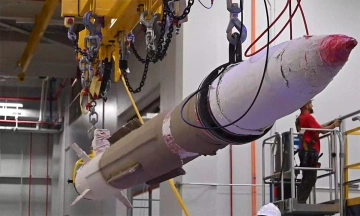
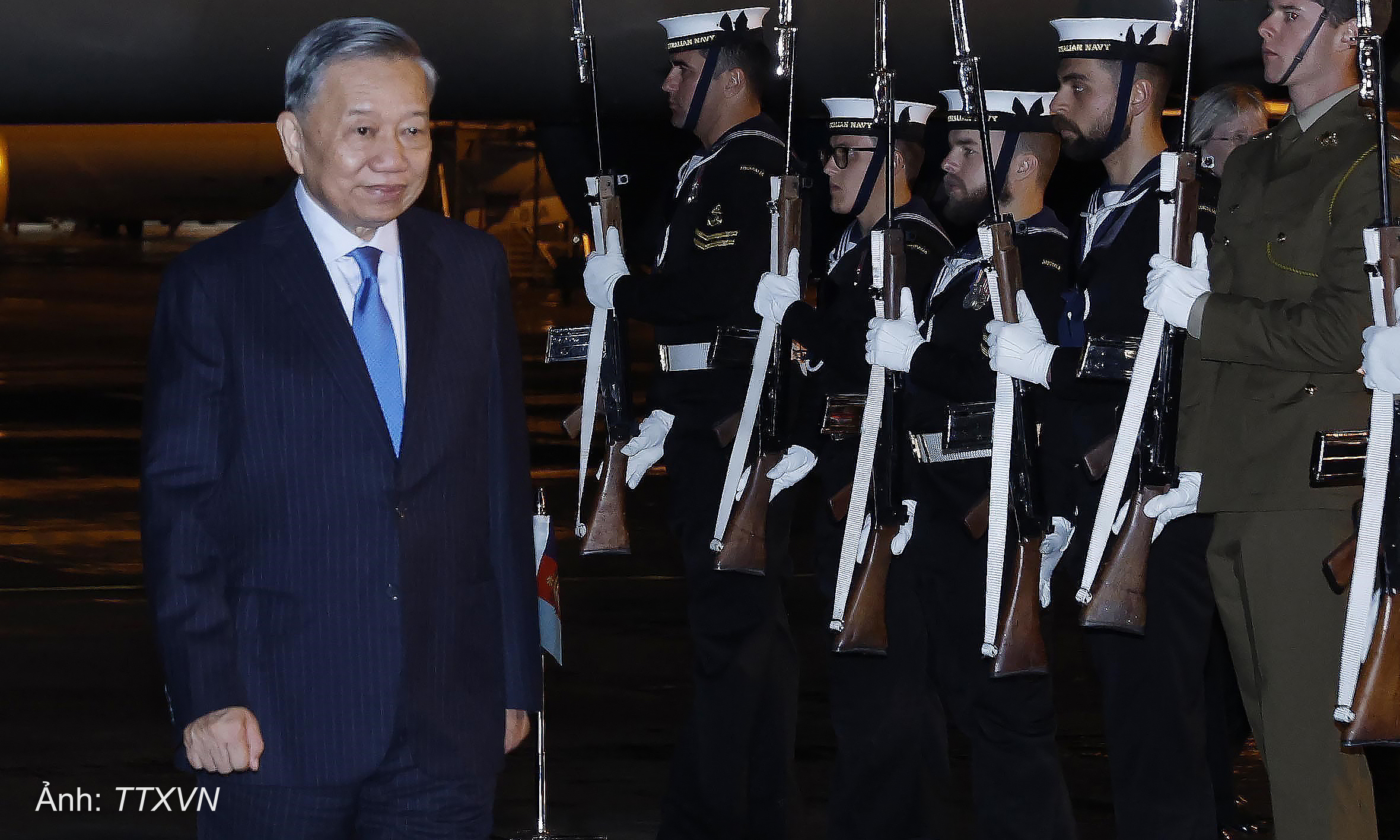
Speaking during a visit to Pakistan on 23/6, President Masoud Pezeshkian stated that there are "no negotiations" regarding Iran's ballistic missile issue, and there will be no such dialogue in the future.
"If Iran did not possess missiles for defense, Israel and the US would have ravaged our country just like Gaza, showing no mercy, whether to the elderly or children. We will never negotiate on our defensive capabilities", he said, "with anyone, under any circumstances".
President Pezeshkian added that Tehran "does not trust Washington", emphasizing that Iran has been attacked two times during ongoing negotiations, yet remains ready for dialogue and to ensure peace.
 |
The Iranian president (left) and the Pakistani prime minister in Islamabad on 23/6. Photo: AP. |
The Iranian president (left) and the Pakistani prime minister in Islamabad on 23/6. Photo: AP.
Pakistani Prime Minister Shehbaz Sharif confirmed that the preliminary agreement the US signed with Iran does not address Tehran's ballistic missile program. "A double standard cannot exist where some countries are entitled to possess ballistic missiles while Iran should not", he said.
US officials have not commented on the information.
President Donald Trump's administration previously declared that destroying missile capabilities was a central objective of its campaign against Iran. Throughout the conflict, Trump and his officials repeatedly stated they had destroyed nearly all of Iran's ballistic missile capabilities.
However, CNN reported on 31/5, citing experts, that Iran still possesses around 1,000 missiles in underground bases.
Trump's stance on Iran's missile issue appears to have softened recently. "If other countries have them, it would be somewhat unfair for them not to have them", he said on 17/6, referring to Iranian ballistic missiles.
 |
Ballistic missile launcher displayed in Tehran, Iran in February. Photo: AFP. |
Ballistic missile launcher displayed in Tehran, Iran in February. Photo: AFP.
In 2019, the Defense Intelligence Agency (DIA) assessed that Iran possessed the "largest and most diverse ballistic missile arsenal in the Middle East". Before the conflict began, Israeli intelligence also estimated Iran owned around 2,500 ballistic missiles of various types.
Most of Tehran's arsenal consists of short-range ballistic missiles with a range under 1,000 km and medium-range missiles extending up to 3,000 km. The Center for Strategic and International Studies (CSIS) suggests that Iran's Soumar cruise missile also has a range of 2,500-3,000 km.
Iran has repeatedly launched missiles and drones at Israel and Gulf countries hosting US forces, in response to adversary attacks. According to satellite imagery analysis published by the *Washington Post* in early May, a total of 217 structures and 11 military assets were destroyed or damaged at 15 US-backed bases during six weeks of conflict.
Pham Giang (According to AFP, Reuters, Al Jazeera)