The Islamic Revolutionary Guard Corps (IRGC) announced on December 4 the start of a two-day naval exercise in strategic waters, including the Persian Gulf, the Strait of Hormuz, the Sea of Oman, and the Nazeat Islands area.
According to the Tasnim news agency, the exercise is named "Mohammad Nazeri," after an IRGC naval special forces commander who died in 2016. The IRGC navy stated it had "issued a tough warning to US warships present in the area," demanding they stay clear of the exercise zone.
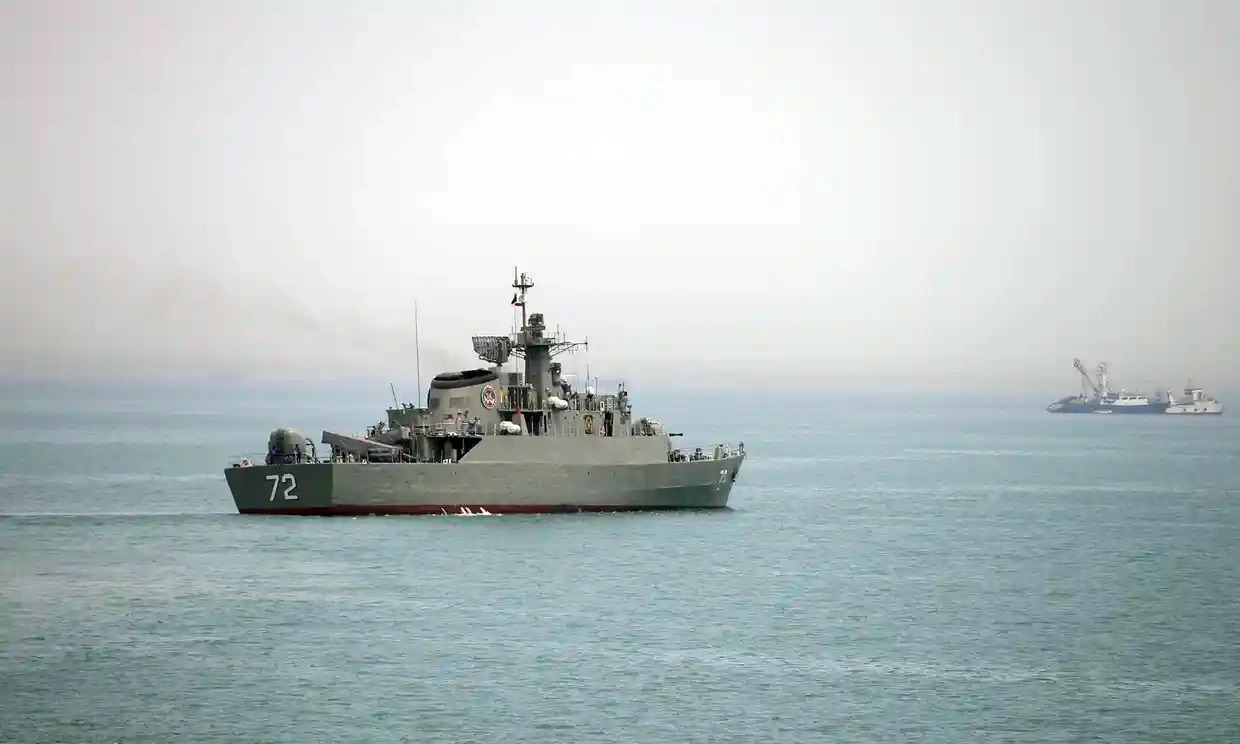 |
An Iranian warship in the Strait of Hormuz. Photo: AP. |
An Iranian warship in the Strait of Hormuz. Photo: AP.
"Naval units issued warnings to US vessels, conveying their resolute message," Iran's state media reported, without specifying the message's content.
US forces stationed in the Persian Gulf have not commented.
The exercise occurred more than 5 months after the 12-day conflict between Iran and Israel in June. Iran's state television reported the event aims to demonstrate the IRGC navy's "spirit of sacrifice and resilience" to counter all threats.
During the exercise, the IRGC will deploy modern weaponry under simulated electronic warfare conditions. Advanced air defense missile systems like Navab, Majid, and Misaq were used. Iranian media emphasized these systems "can detect aerial and maritime targets using AI," and strike with high precision.
IRGC Deputy Commander Ali Fadavi declared that "no country can diminish the role of the Strait of Hormuz" and pledged the IRGC would control this waterway. He stressed that Persian Gulf security is Tehran's "red line," while accusing the US and Israel of causing global instability.
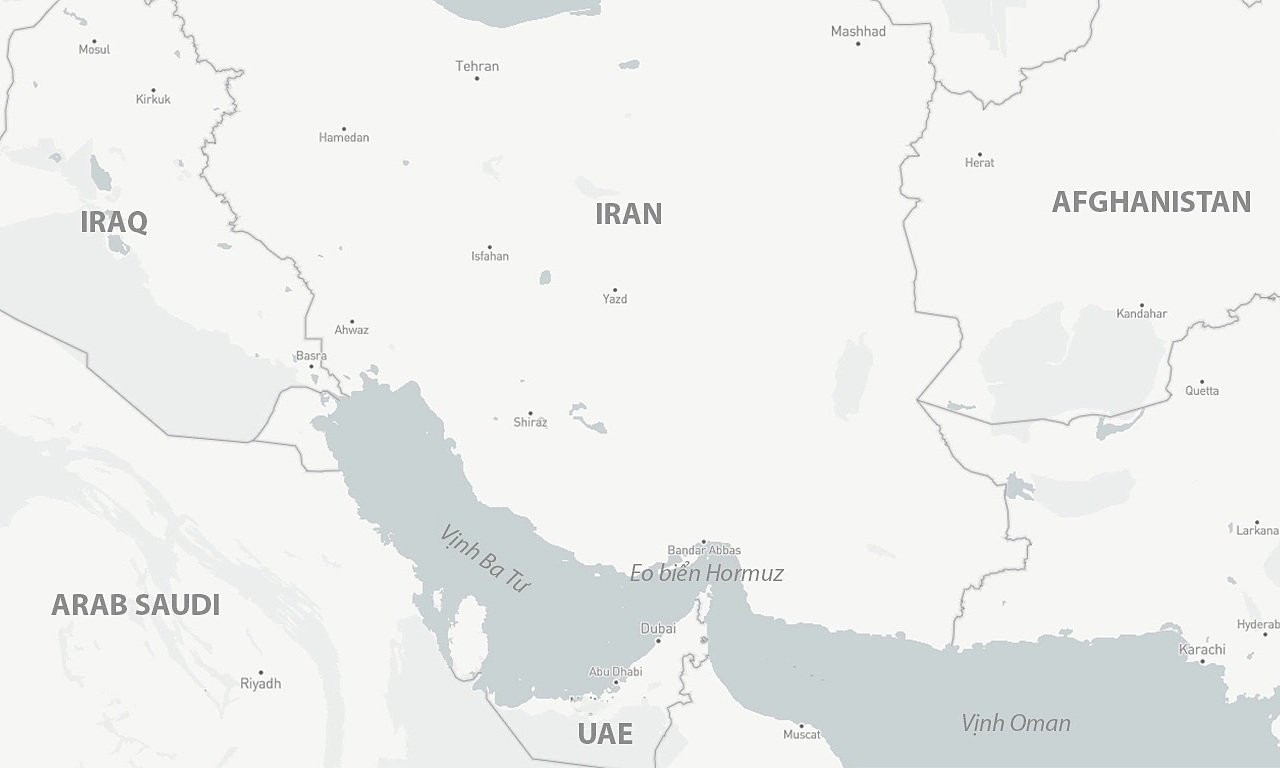 |
The Persian Gulf, Strait of Hormuz, and Gulf of Oman. Graphic: CSIS. |
The Persian Gulf, Strait of Hormuz, and Gulf of Oman. Graphic: CSIS.
The Strait of Hormuz is an inverted V-shaped strait located between Iran, the UAE, and Oman. It connects the Persian Gulf to the north with the Gulf of Oman, which opens into the Arabian Sea. The strait is 161 km long, with its narrowest point measuring 33 km, and the shipping lane in each direction is only about 3 km wide.
Data from the US Energy Information Administration shows that in 2024, over 25% of the world's seaborne oil trade and 20% of liquefied natural gas production passed through the Strait of Hormuz. Saudi Arabia, Iran, the UAE, Kuwait, and Iraq are the main exporters of oil via this route.
Thanh Danh (According to AFP, Times of Israel, Mehr)