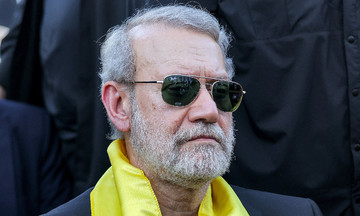
Iran's Tasnim news agency today cited an announcement from the Islamic Revolutionary Guard Corps (IRGC), stating the force conducted its 61st strike as part of the "True Promise 4" retaliatory operation. This strike was in response to Israel's assassination of Ali Larijani, secretary of the National Security Council, and other involved individuals.
A video released by Israel's Kan TV showed streaks of light, believed to be submunitions detaching from Iranian missiles, descending over central Israel.
According to the IRGC, the city of Tel Aviv in central Israel was targeted by a volley of missiles, including the Khoramshahr-4 and multi-warhead Qadr models, as well as Emad and Kheibar Shekan. Iran's state television later confirmed the attack on Tel Aviv using cluster-munition missiles.
CNN reported that the targeted locations included a train station in Tel Aviv and the nearby municipalities of Petah Tikva, Rosh HaAyin, and Kafr Qasim. Israel's emergency response forces stated that two people were killed following the ballistic missile attack from Iran.
Tel Aviv, located in central Israel, serves as the country's economic and technology hub.
On 17/3, the Israel Defense Forces (IDF) announced it had carried out a night airstrike targeting Larijani. The IDF also confirmed the assassination of Gholamreza Soleimani, commander of Iran's Basij paramilitary force, along with his deputy and several senior members.
Iran's Supreme National Security Council later confirmed that Larijani, his son, and his bodyguards were killed.
Larijani was Iran's top national security official and a highly influential figure within the country's leadership. He previously served as an IRGC commander, then as Parliament Speaker, before becoming secretary of the National Security Council.
In the weeks leading up to the outbreak of hostilities, Larijani was responsible for overseeing daily government operations and participated in negotiations with Western powers.
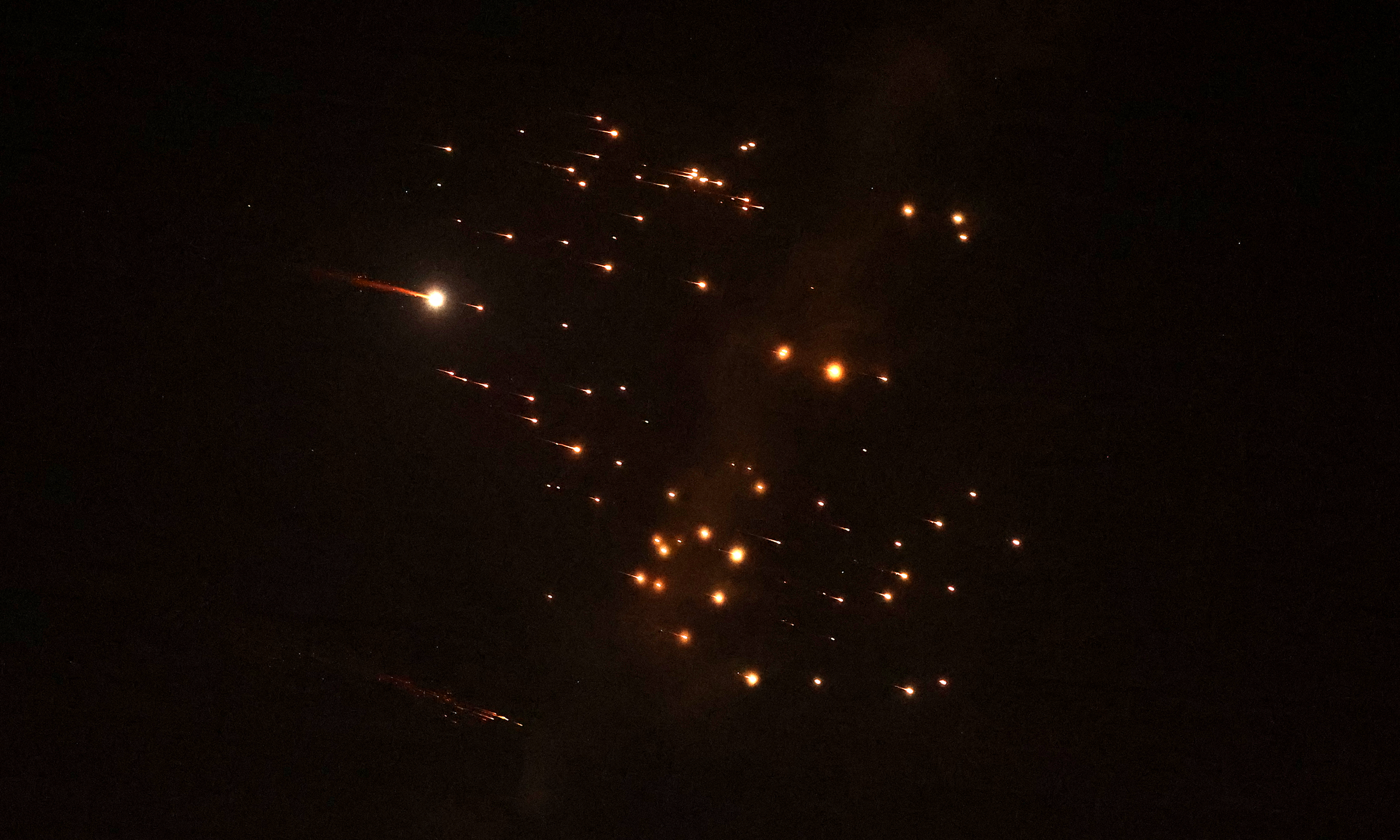 |
Moments as Iranian submunitions descended over central Israel in a video posted on 18/3. *Video: Kan* |
Israeli officials stated that Iran's cluster munitions could disperse dozens of submunitions, each containing several kilograms of explosives, over a radius of approximately 10 km. A defense official acknowledged that despite effective interception efforts, Israel's air defense faced many challenges and could not fully protect all areas.
"Cluster-munition missiles pose a new challenge for Israel's air defense, as they cannot intercept small submunitions in a short timeframe," said Tal Inbar, a missile expert consulting for Israeli defense companies. "This is one mechanism to overcome modern defense systems."
*Pham Giang (According to Times of Israel, Reuters, Tasnim)*