On 17/3, President Donald Trump stated that most of the U.S.'s NATO allies had indicated their unwillingness to join a military campaign against Iran. However, Trump asserted that Washington "needs no help," having destroyed a significant portion of Tehran's military capabilities in recent days.
“Their navy, air force, air defense, and radar have been destroyed. Their leaders, at every level, have been neutralized. They will never again threaten us, our allies in the Middle East, or this world," he declared.
The U.S. leader expressed no surprise at the responses from NATO members. He suggested that alliance relationships are always "one-way," emphasizing Washington spends hundreds of billions of USD annually to protect the alliance but receives no commensurate support when needed.
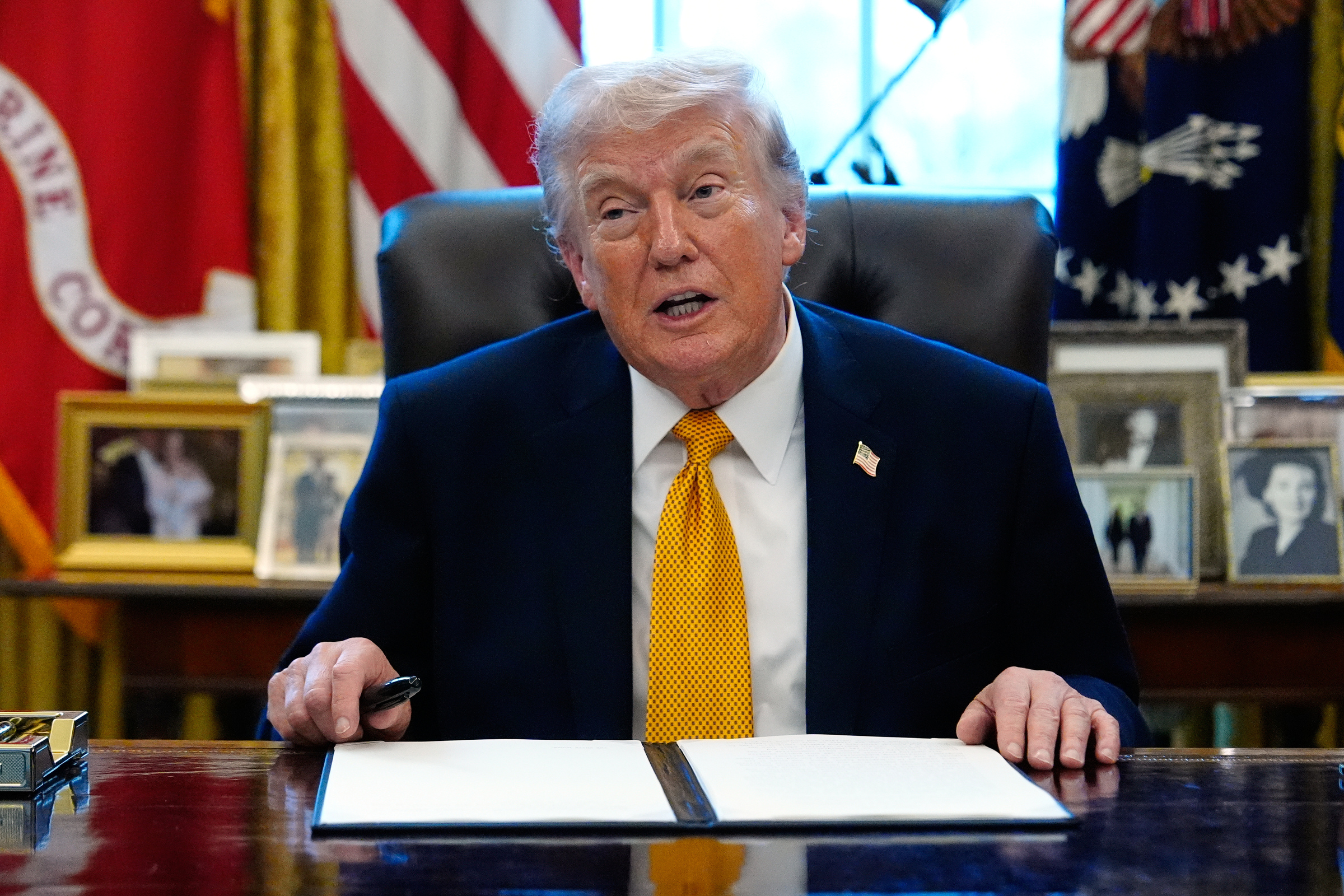 |
President Donald Trump at the White House on 16/3. Photo: AP
“We no longer need or desire assistance from NATO countries; in fact, we never did. Speaking as the President of the U.S., the most powerful nation in the world, we need no help from anyone," the U.S. President affirmed, also criticizing Japan, Australia, and South Korea.
The statement came nearly a day after Trump announced he would soon reveal "a few nations" ready to assist the U.S. in defending the Strait of Hormuz.
In recent days, the U.S. has repeatedly urged allies to send warships to escort oil tankers through the Strait of Hormuz, but many of Washington's allies have been hesitant about this proposal.
On 17/3, President Emmanuel Macron stated that France is only willing to support escorting vessels through the Strait of Hormuz "once the situation calms down." He emphasized that France is not a belligerent party and will not participate in operations to unblock this shipping lane.
Prime Minister Keir Starmer previously stated that the UK is coordinating with allies to develop a feasible plan for restoring maritime operations in the region but ruled out deploying a mission under NATO's name. Many German officials also stressed that the current conflict "is not a NATO issue."
Japan, Australia, Poland, Spain, Greece, and Sweden have also conveyed messages in recent days expressing unwillingness for military involvement in the Strait of Hormuz. Kaja Kallas, High Representative of the European Union (EU) for Foreign Affairs and Security Policy, stated that all 27 member countries do not wish to send warships to the region.
“This is not Europe's war. We did not start it, nor were we consulted," she told members of the European Parliament, emphasizing that the EU does not want to be drawn into a conflict with ambiguous ultimate goals.
The Middle East conflict shows no signs of ending. The Strait of Hormuz, which transports 20% of the world's oil and liquefied natural gas, remains almost completely blockaded, causing energy prices to escalate and raising inflation concerns.
Thanh Danh (According to AFP, Reuters, CNN)