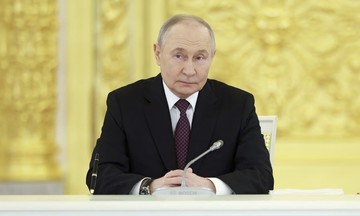
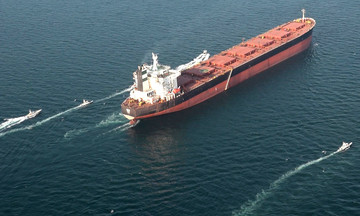
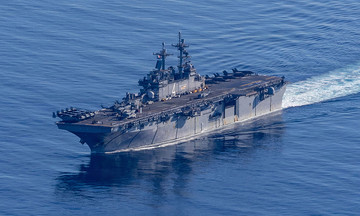
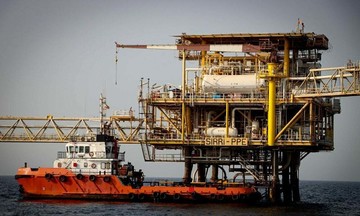
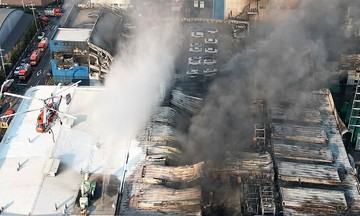
"We warn once again that the enemy has made a grave mistake by attacking Iran's energy infrastructure. Retaliatory measures are underway. If such airstrikes recur, we will launch more strikes on the energy infrastructure of the enemy and its allies," the Islamic Revolutionary Guard Corps (IRGC) announced on 19/3.
The statement came after the IRGC launched missiles at Qatar's liquefied natural gas (LNG) facilities, including the Ras Laffan industrial city. This is known as the world's largest LNG production hub.
QatarEnergy reported that the area sustained two ballistic missile attacks within the past 12 hours, sparking large fires. The corporation acknowledged that the Iranian attacks caused "widespread damage".
The IRGC stressed that subsequent retaliatory strikes would be far more powerful and "will not cease until the complete destruction" of US and allied oil and gas infrastructure in the region.
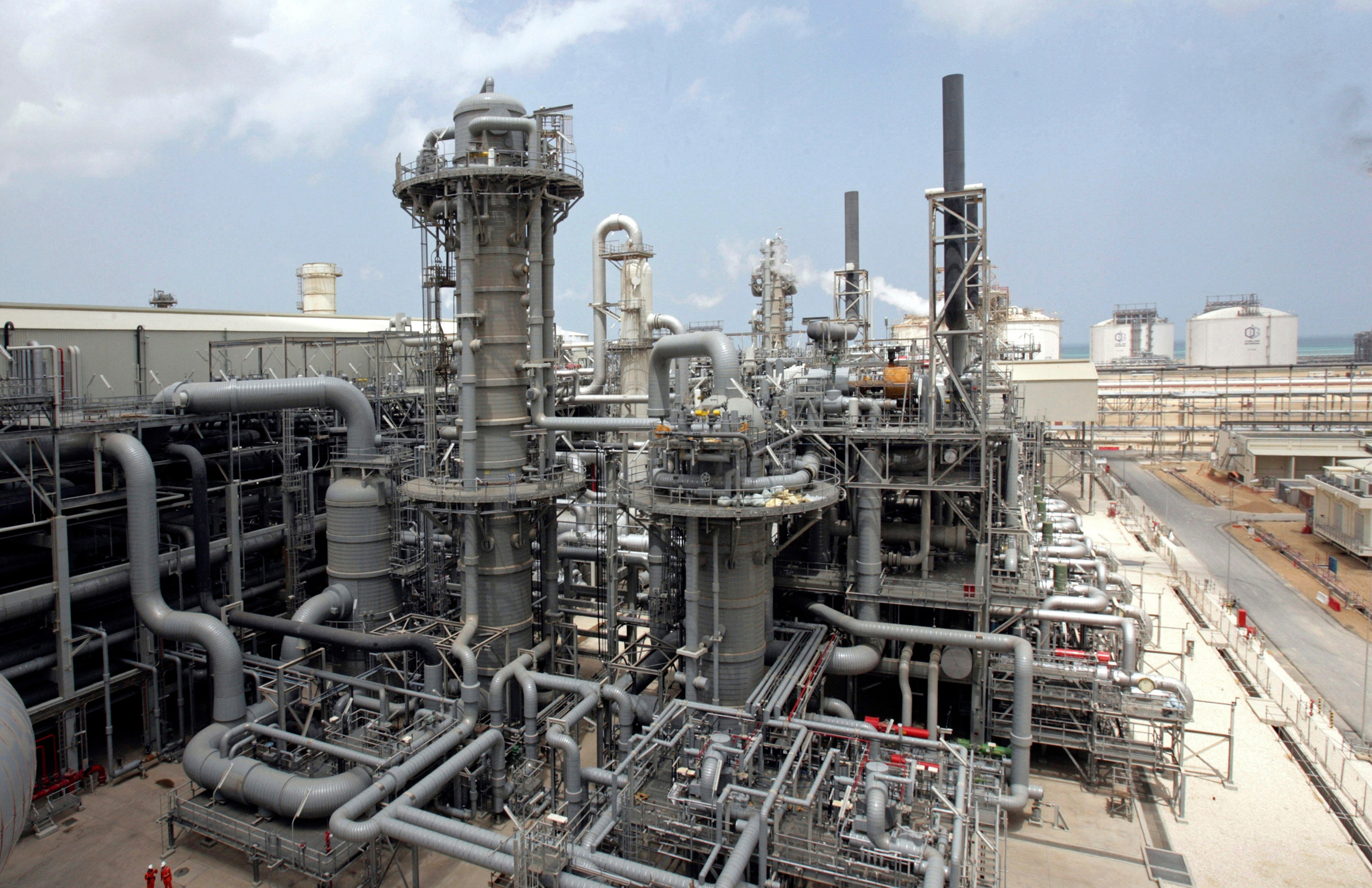 |
The Ras Laffan liquefied natural gas facility, Qatar, in 4/2009. Photo: AP |
Ras Laffan, located about 80 km from the capital Doha, plays a pivotal role in Qatar's economy. The repeated attacks on this area are considered a direct blow to the energy lifeline of this Gulf nation.
In addition to the Ras Laffan LNG complex, Iran also attacked gas facilities in the United Arab Emirates (UAE), including the Habshan facility and the Bab field. Abu Dhabi officials called this a dangerous escalation, stating that gas production operations had to be halted after air defense systems intercepted the threats.
Iran launched a large-scale attack on energy infrastructure in the Gulf after South Pars, the world's largest gas field shared by Tehran and Qatar in the Persian Gulf, was attacked. Iranian President Masoud Pezeshkian condemned the attack, warning of "uncontrollable" consequences that could spread globally.
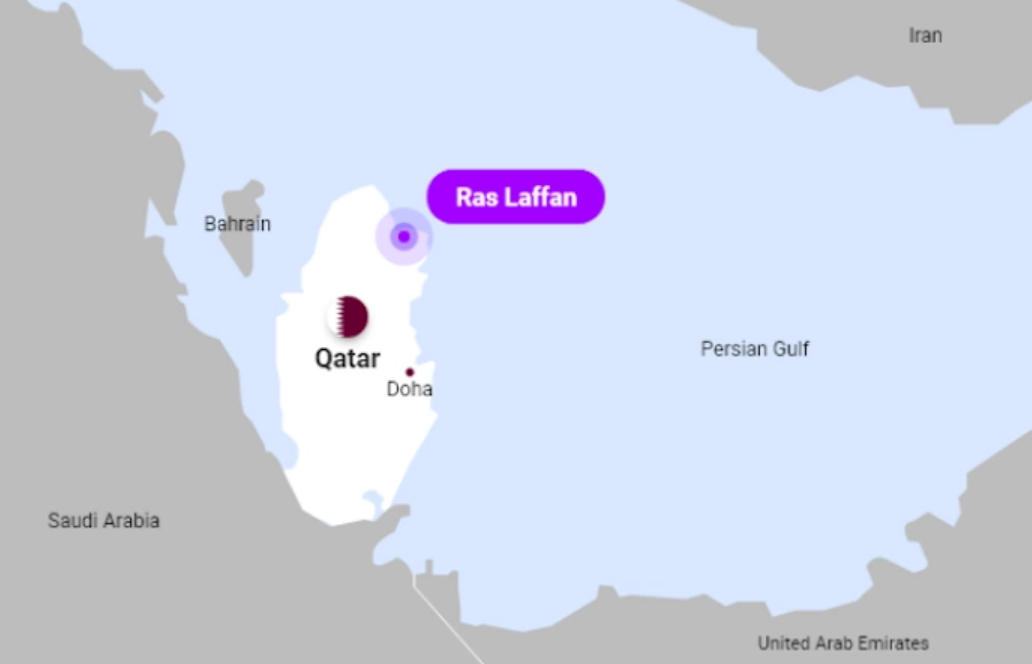 |
Location of the Ras Laffan complex. Graphic: Oil and Gas Middle East |
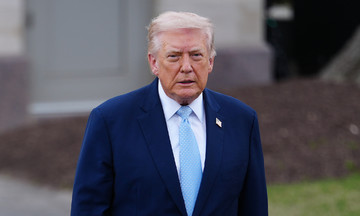
US President Donald Trump asserted that the US and Qatar were not involved in the attack on the South Pars gas field, attributing it to a unilateral action by Israel. He called on Israel to cease attacks on this gas field unless Iran continues to escalate.
However, the US President warned that Washington is ready to respond if Iran continues to target Qatar's energy infrastructure. He declared that the US could "blow up the entire" South Pars gas field if Qatar's LNG facilities are attacked again, though he admitted not wanting to use such strong firepower as Washington also seeks to avoid long-term repercussions.
The Middle East conflict has entered its 19th day, claiming over 2,000 lives and disrupting global energy markets. Oil prices have risen by 5%, exceeding USD 108 per barrel, while Brent crude has surged nearly 50% since hostilities erupted in late February. This development is largely due to Iran tightening its control over the Strait of Hormuz, a route for about 20% of the world's oil supply.
Gulf Arab nations face increasing pressure as they are repeatedly subjected to attacks on military bases, civilian facilities, and energy infrastructure, but have not yet taken direct military action in response to Iran.
Thanh Danh (According to Times of Israel, CNN, AP, CNBC)