Israeli defense officials, cited by the Times of Israel on 19/3, assessed that submunitions, typically containing a few kg of explosives, launched from Iranian cluster munition warheads are "unlikely to cause significant damage" to individuals in hardened shelters.
"There are times when air defense forces will bypass some or all targets to conserve their inventory of short-range interceptor missiles", an official stated.
Moment of Iran's 'cluster munition missile' attack on Israel. *Video: Times of Israel, NDTV*
The Israel Defense Forces (IDF) estimates Iran has launched over 350 ballistic missiles at the country since the conflict began on 28/2. During the first 10 days, about one-half of Iran's missiles carried cluster munition warheads, while others carried high-explosive warheads weighing hundreds of kg. The proportion of missiles with cluster munitions has increased recently.
Israeli officials reported that at least 9 people have died and several were injured by Iran's cluster munition warheads. Israeli defense officials affirmed that the IDF "spares no effort" to protect citizens and intercepts every threat, but urged compliance with shelter directives to avoid casualties.
Long-range air defense systems, such as Arrow, can intercept Iranian missiles before they deploy cluster munition warheads. The Iron Dome, a short-range air defense system, is tasked with destroying submunitions; however, it cannot always intercept all of them.
The IDF reports a 90% interception rate for Iranian missiles targeting densely populated areas or critical infrastructure in Israel since the conflict began. Israeli defense officials stressed that the IDF continuously improves its air defense systems, even during the conflict.
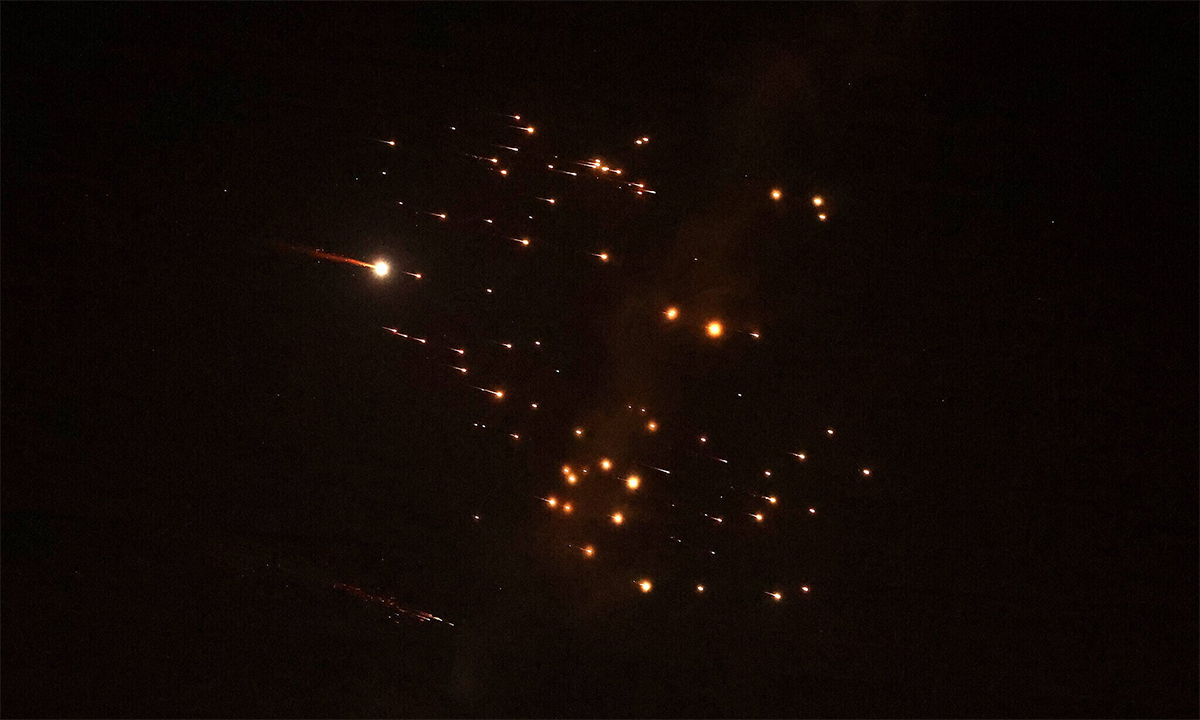 |
Streaks of light from submunitions in the sky over Netanya, Israel on 18/3. *Photo: AFP*
Cluster bombs are aircraft-dropped, while cluster munitions are typically launched from artillery, rockets, or missiles. These weapons are not lethal due to conventional explosives or penetrating warheads; rather, they disperse a large number of submunitions as they near the target.
An army's decision to use cluster munitions indicates a prioritization of large-scale destructive capability over weapon accuracy.
This decision, however, often leads military commanders to be less attentive to the long-term consequences of cluster munitions. Some submunitions may malfunction, failing to detonate and scattering across a wide area without any marked maps, either falling to the ground or getting caught in bushes.
According to experts, most of Iran's ballistic missiles can carry 24 submunitions, with the modern Khorramshahr model capable of carrying up to 80.
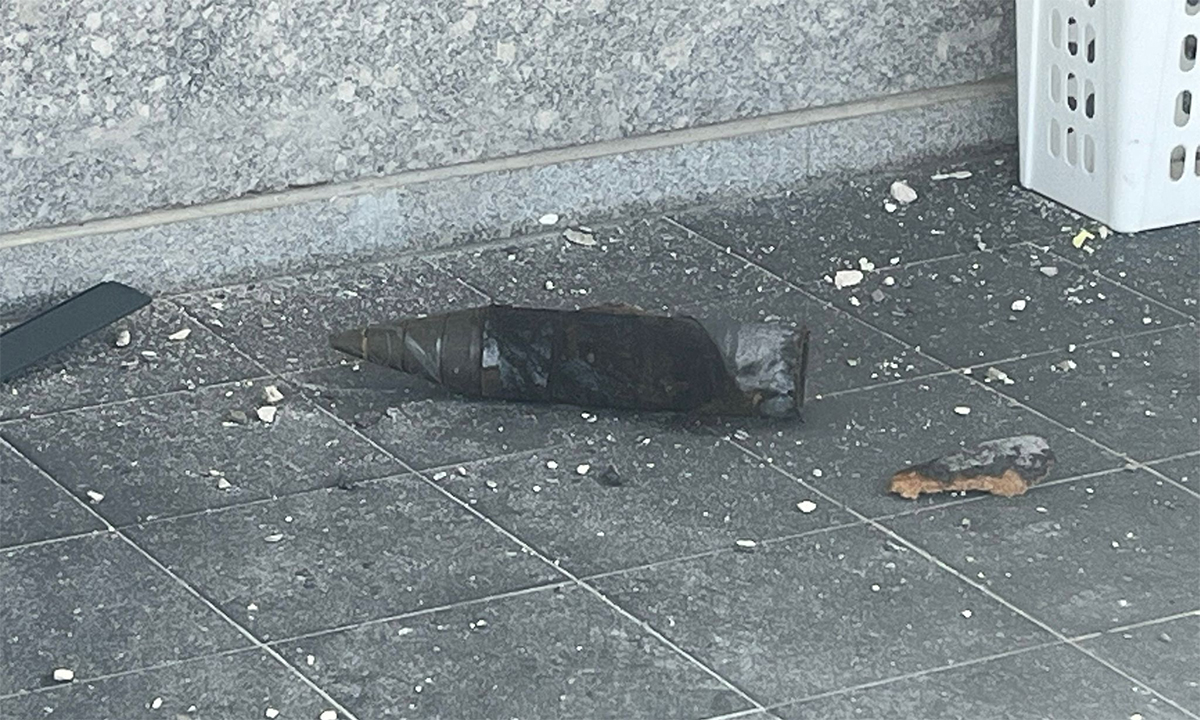 |
A submunition falls in central Israel after an Iranian attack in 6/2025. *Photo: Times of Israel*
An Israeli defense official admitted that despite effective interception efforts, the country's air defense faces many challenges and cannot fully protect all areas.
Tal Inbar, a missile expert consulting for Israeli defense companies, stated, "Missiles carrying cluster munition warheads pose a challenge for Israel's air defense, as they cannot intercept small submunitions quickly. This is one mechanism to overcome modern defense systems."
Nguyen Tien (According to Times of Israel, AFP, AP)