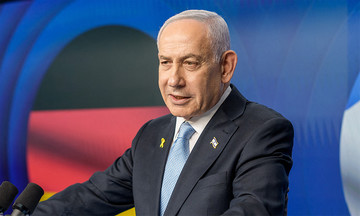
Japanese cultural events across China face cancellations and postponements as political tensions between Beijing and Tokyo escalate, primarily over the issue of Taiwan. The immediate trigger for this diplomatic chill was Japanese Prime Minister Sanae Takaichi's statement on 7/11, suggesting Tokyo might deploy defense forces if a conflict erupted in the Taiwan Strait. Beijing quickly denounced this as "blatant interference" in its internal affairs, responding with economic and cultural measures that have impacted the world's fourth-largest economy.
This fallout has led to numerous event cancellations across Chinese cities. On 19/11, fans of Japanese singer-songwriter Kokia were disappointed when her Beijing concert was abruptly called off due to "technical issues." "They should have announced it sooner! People waited for one and a half hours, many even traveled from afar," one fan expressed frustration.
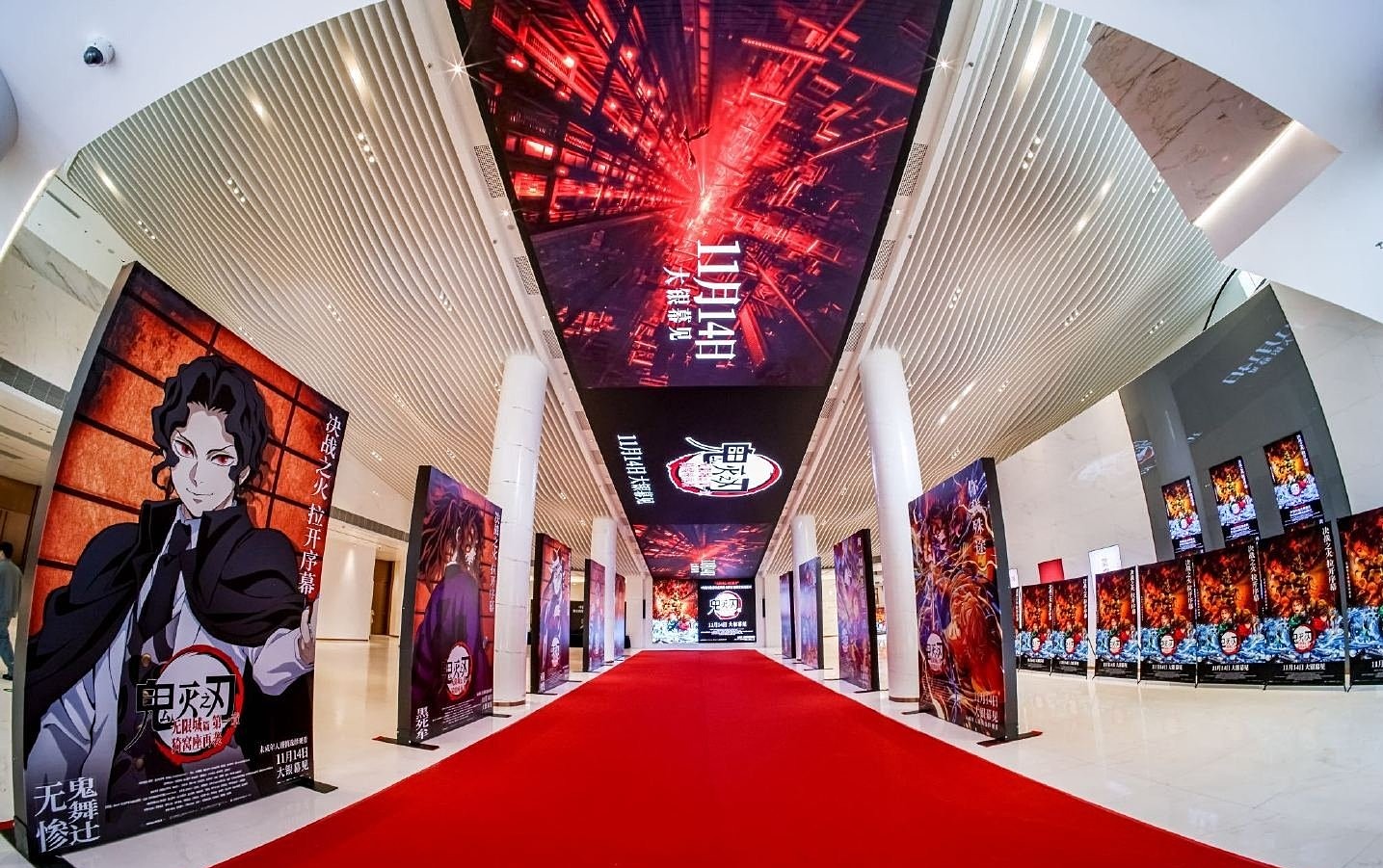 |
Poster advertising the film "Demon Slayer: Infinity Castle" in a cinema in China on 13/11. Photo: X/Root |
Poster advertising the film "Demon Slayer: Infinity Castle" in a cinema in China on 13/11. Photo: X/Root
Other notable cancellations include at least two shows in Beijing, three in Shanghai, and two in Guangzhou. A Guangzhou event scheduled for late november, featuring three members of the Japanese boy band JO1, was also canceled due to "unforeseen circumstances," organizers announced earlier this week. In Shanghai, a three-day comedy festival with dozens of Japanese artists was called off for "similar reasons" two days before its 20/11 opening. Film releases have also been affected: the comedy film "Cells at Work!" was postponed from its 22/11 premiere, and an animated film about Shin Crayon was delayed from its early december release.
Japanese animation, manga, video games, and films have long held a connection with young generations in China. Among these, works by Hayao Miyazaki's Studio Ghibli, including "Spirited Away" and "Howl’s Moving Castle", are particularly beloved. Concerts featuring the works of Studio Ghibli composer Joe Hisaishi consistently attract large audiences. Earlier this year, 42 performances of a stage adaptation of "Spirited Away" sold out in Shanghai.
The current tensions mark the largest dispute between Tokyo and Beijing in years. China views Taiwan as an inseparable part of its territory and has repeatedly stated its readiness to use all necessary means for reunification, not ruling out force, though its general policy favors peaceful dialogue. Beijing's retaliatory measures have included a tourism boycott, a halt on seafood imports, and the cancellation of high-level meetings and cultural events with Japan. The annual Beijing - Tokyo Forum, which gathers senior officials from both countries, was postponed this weekend. China has also advised tourists and students to reconsider travel plans to Japan. This is not unprecedented; Beijing implemented similar measures against South Korea in 2016 after Seoul agreed to deploy a US missile defense system.
For Wang Shu, a 21-year-old university student in Tianjin and a lifelong fan of Japanese animation, the current atmosphere is "unfriendly" towards artistic exchange. Wang, who has attended anime promotional events and occasionally cosplayed, worries that public sentiment in China could turn against fans of Japanese culture like herself. "Public opinion could become unfriendly and turn to criticize those who favor Japanese culture," she said.
Amid this strained atmosphere, some Chinese citizens have expressed support for measures targeting Japanese cultural exports. "Starting with ourselves, the whole country should boycott Japan," was a popular comment on Chinese social media. Others, however, advocate for restraint and a more nuanced approach to cultural products. Xu, a 22-year-old fan of Hello Kitty and Nintendo games, stated, "When choosing games, anime, or related goods, I often check if the company has made anti-China statements or said anything inappropriate about sensitive issues." She added, "If relations continue to deteriorate, upcoming events could be canceled, which would be inconvenient and disappoint fans."
On social media platforms, many expressed concern that "Demon Slayer: Infinity Castle," an animated film released last weekend, might be pulled from cinemas. The movie currently tops the Chinese box office, earning over 400 million yuan (56,3 million USD) as of 19/11, according to Lighthouse Professional Edition. "If rumors of the film being pulled actually happen, I will definitely go see it before it's removed," Xu said. There are also worries about the potential postponement of a "Sailor Moon" musical adaptation, slated to tour Hangzhou, Shanghai, and Beijing late this month.
Despite the diplomatic tensions, Wu Yuening, a 21-year-old university student in Beijing, remains determined to attend cultural events. She believes that "excessive restrictions only exacerbate tensions." Simon Guo, a Japanese animation enthusiast, argues that creative work should not be equated with politics. "Many Chinese work in the anime industry, contributing in many aspects to Japanese films," Guo, 30, said. Pan, a fan of "One Piece," hopes that normal cultural exchanges remain unaffected to retain talent in this field.
By Hong Hanh (Source: SCMP, CNN, Reuters)