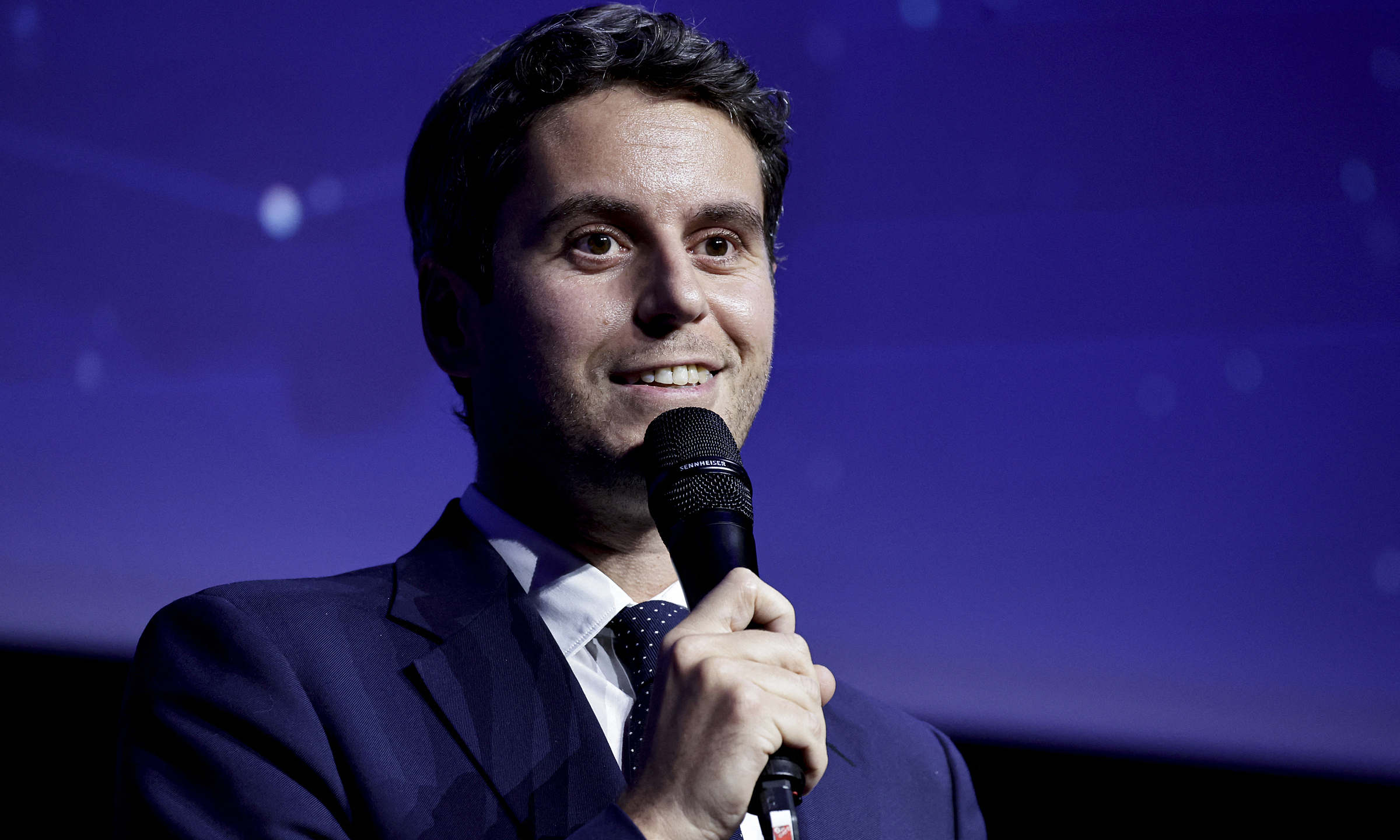
French President Emmanuel Macron stated on 2/4 while visiting South Korea that "some advocate opening the Strait of Hormuz by force through military operations. The US sometimes expresses this view."
Macron affirmed that France considers this an "unrealistic" solution and would never choose it. He added that such an approach would be time-consuming and expose those navigating the Strait to attacks from the shore by Iran's Islamic Revolutionary Guard Corps (IRGC).
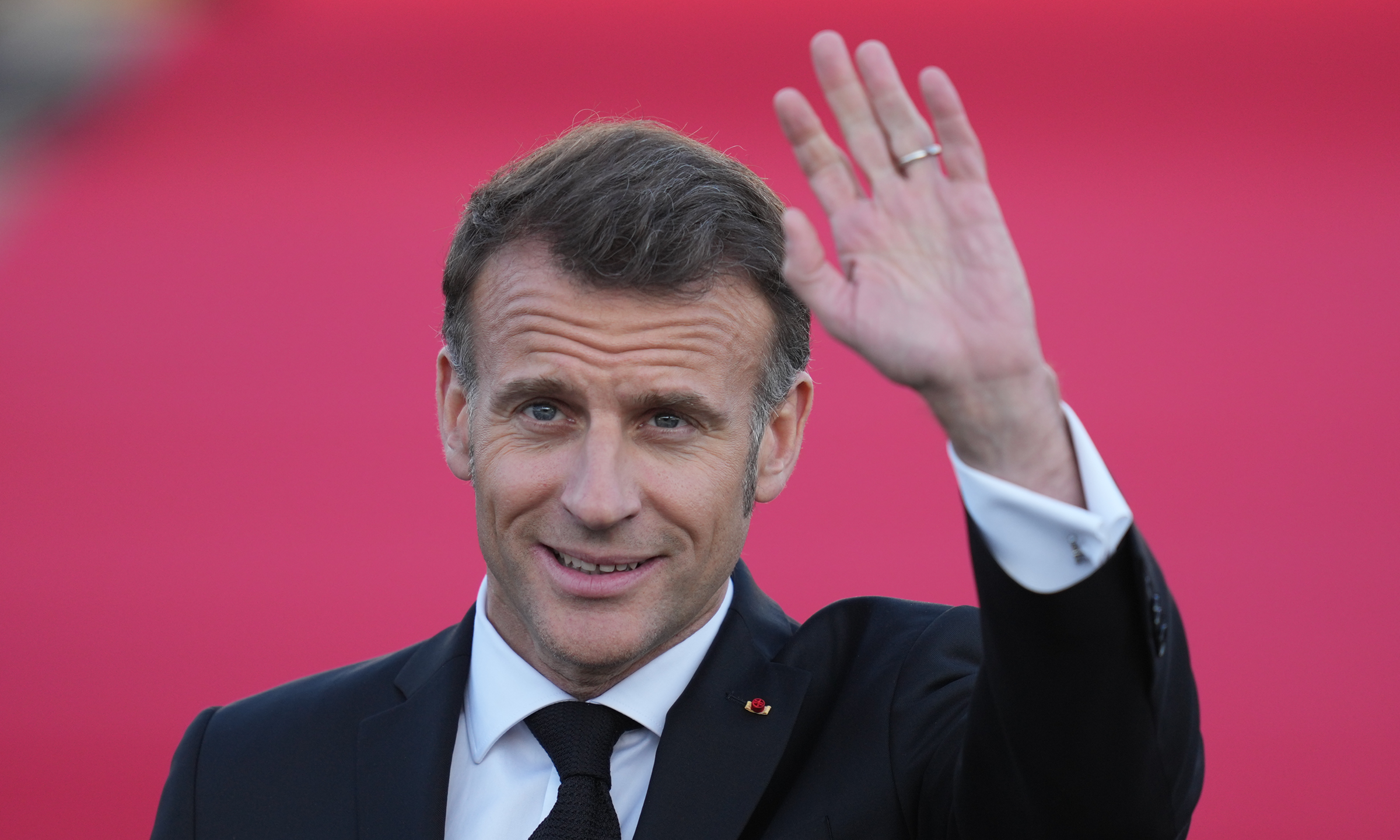 |
French President Emmanuel Macron at the airport in South Korea on 2/4. *AP*
The French leader believes the Strait of Hormuz can only reopen with Iran's cooperation. "Therefore, the first and most important step is a ceasefire and a resumption of dialogue," he stated.
Macron also criticized US President Donald Trump for his inconsistent statements regarding the Middle East conflict. "One must be serious. To be serious, one does not contradict previous statements daily. Perhaps one should not speak every day," he remarked.
When questioned about Trump's criticism of NATO allies, Macron stated he "does not want to constantly comment on the campaign the US decided on with Israel."
"They can complain about not receiving support, but that is not our campaign. We want peace as soon as possible," he added.
President Trump on 20/3 called NATO "cowardly" for not assisting the US in reopening the Strait of Hormuz. He subsequently labeled NATO a "paper tiger" and confirmed he was seriously considering withdrawing the US from the alliance due to its non-participation in the Middle East conflict.
The French president on 2/4 noted that the US-Israel campaign is not a long-term solution to Iran's nuclear issue. Western nations have for years accused Iran of seeking to develop atomic weapons, while Iran maintains its nuclear program is for peaceful purposes.
"Without a framework for diplomatic and technical negotiations, the situation could worsen again in a few months or years," Macron warned.
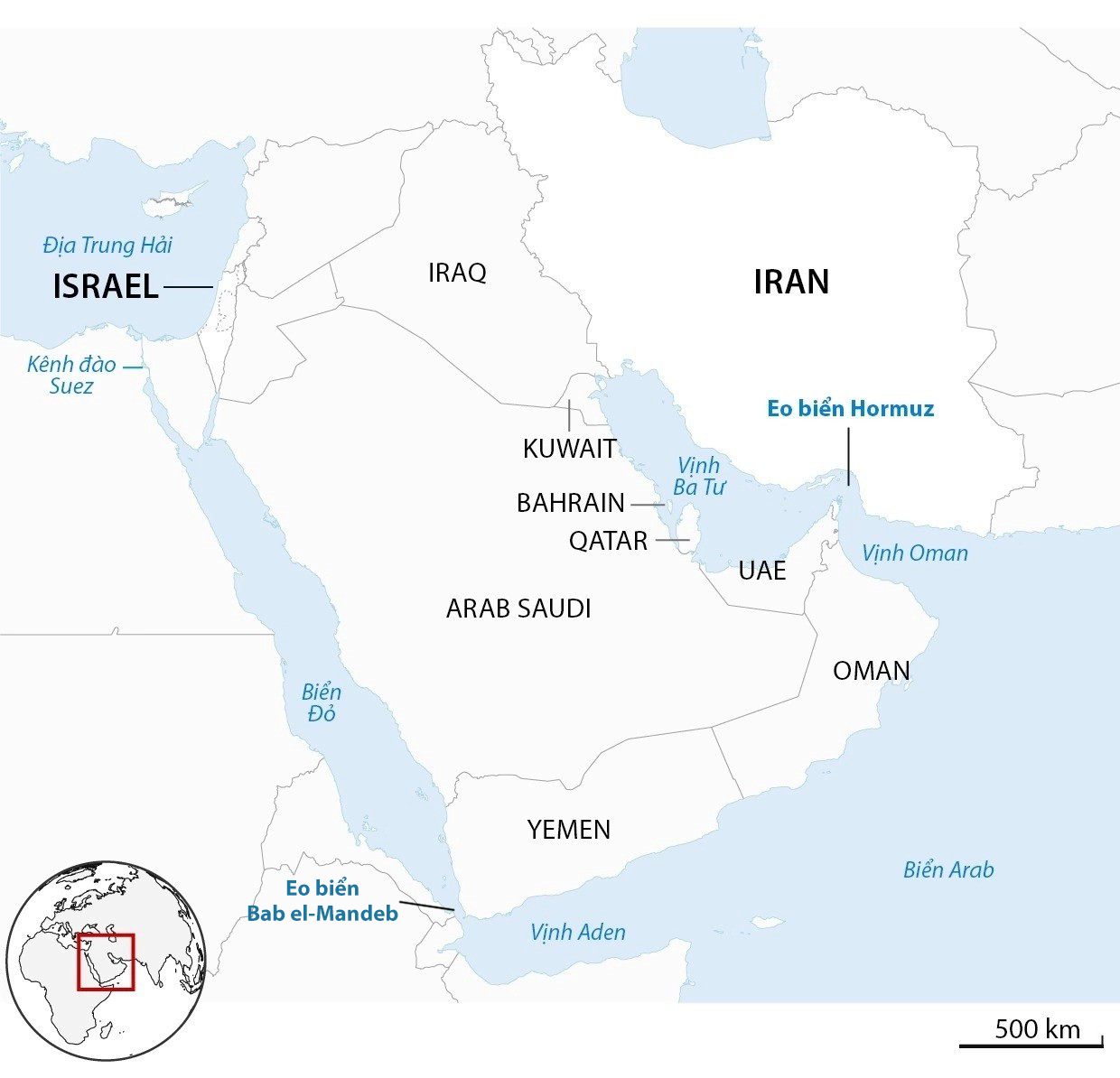 |
Location of the Strait of Hormuz. *Guardian graphic*
After being attacked by the US-Israel on 28/2, Iran launched a retaliatory campaign, targeting military and energy infrastructure in the Middle East with missiles and drones.
Tehran also almost completely blockaded the Strait of Hormuz, a critical waterway through which about 20% of the world's crude oil passes. Iran stated that "non-hostile vessels" could navigate the Strait if they coordinate with Tehran and comply with announced security regulations.
On 1/4, President Trump urged nations receiving oil via the Strait of Hormuz to "take responsibility for that route."
Pham Giang (*According to AFP, Reuters*)