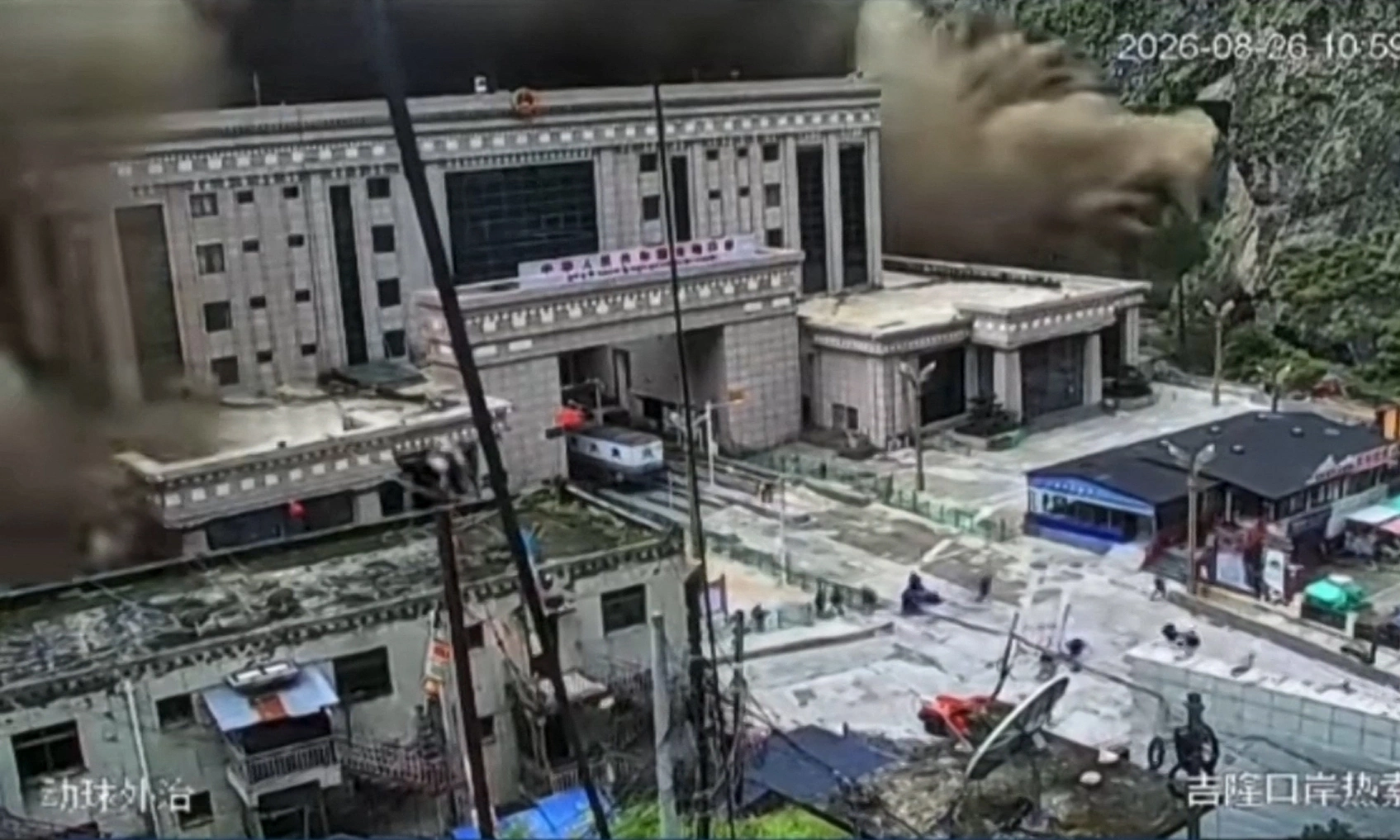
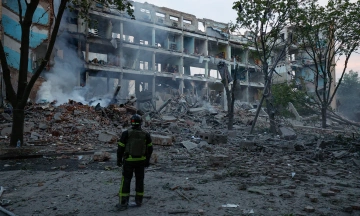
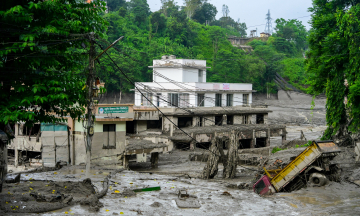
"As of 5 PM on 27/8, we have recorded 359 fatalities", Nepali police stated. Among the over 900 people still unaccounted for, 517 are foreign nationals.
China has not yet provided updated figures on casualties from its side of the border. In its most recent announcement, officials in Gyirong county, Tibet autonomous region, reported that the flash flood disaster resulted in 3 deaths and 558 missing individuals, including 260 foreign nationals.
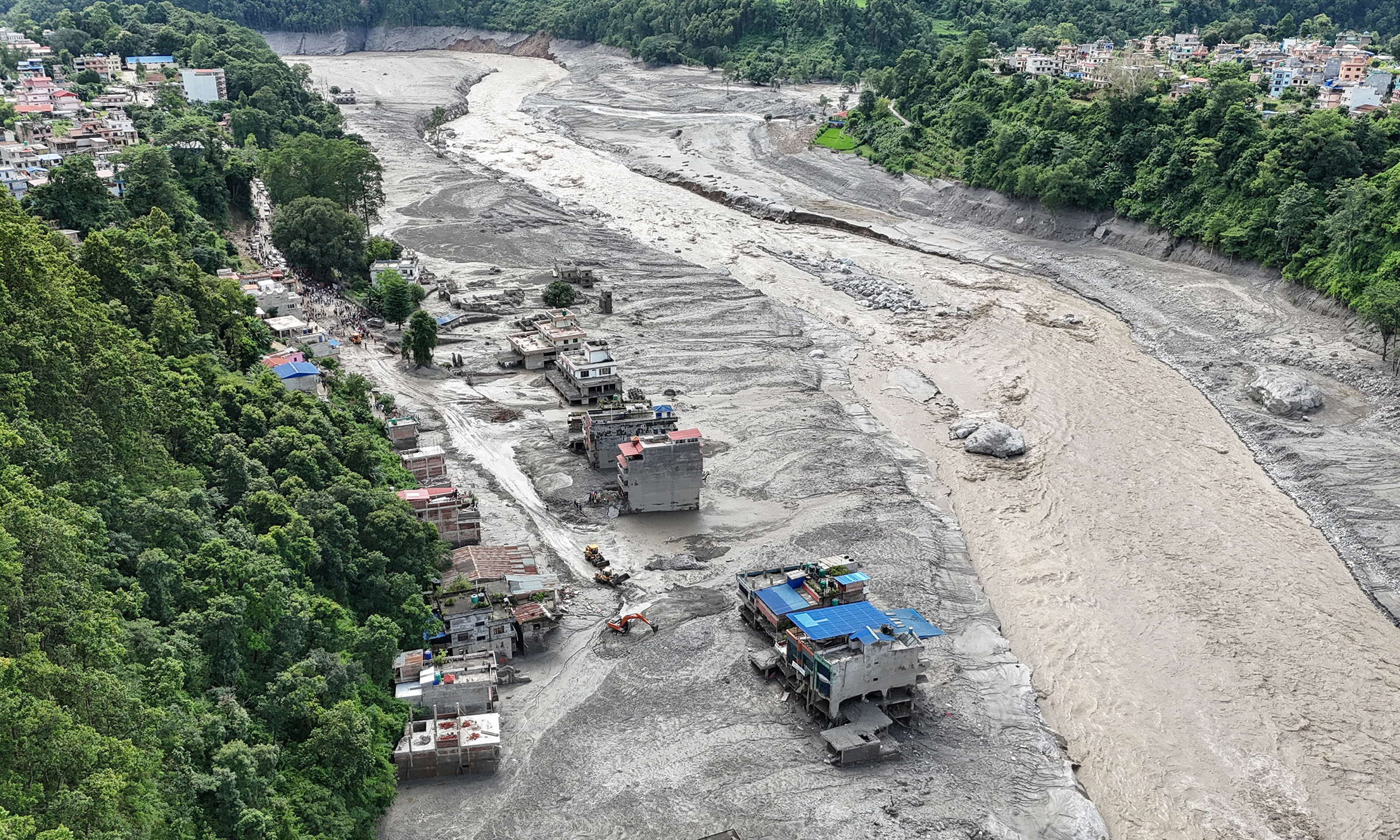 |
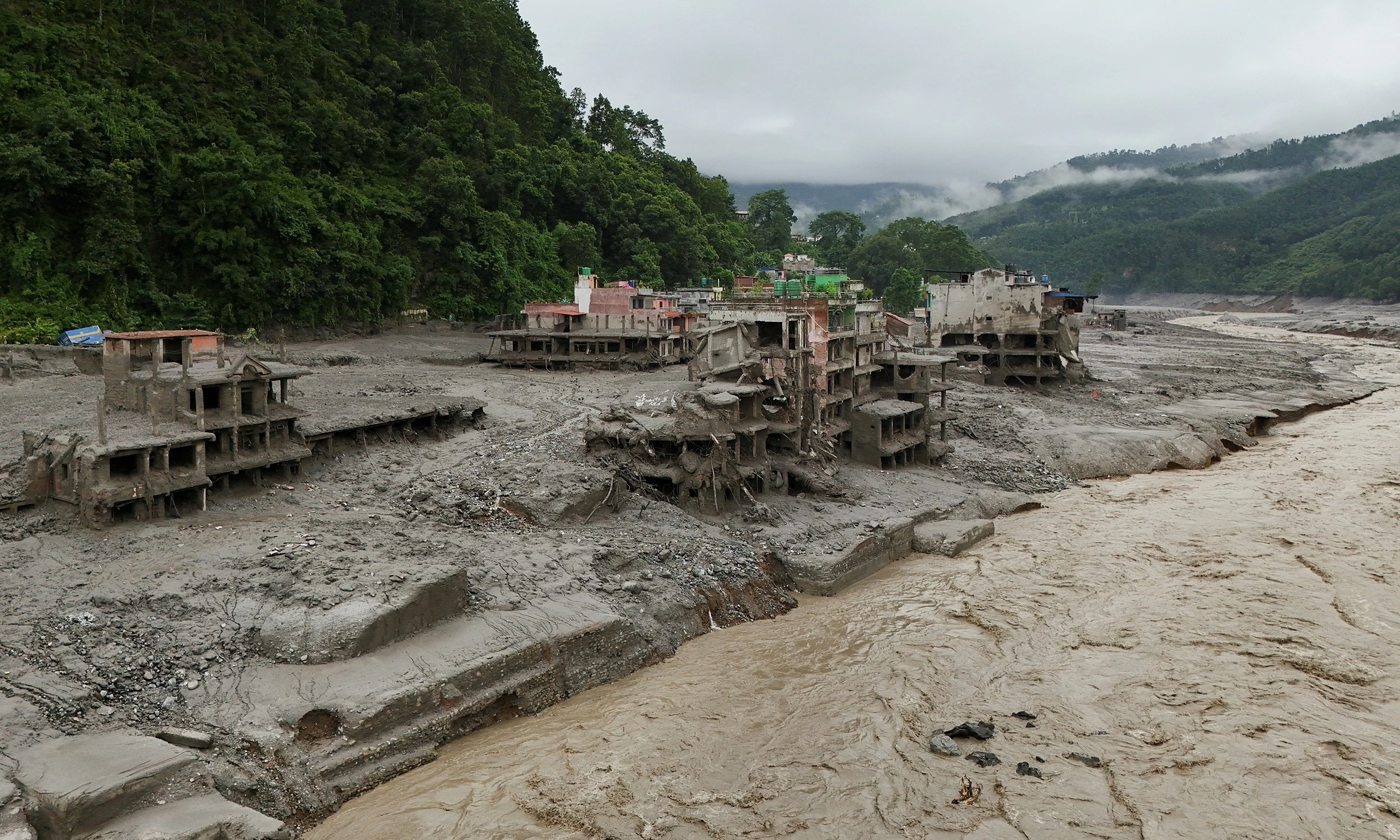
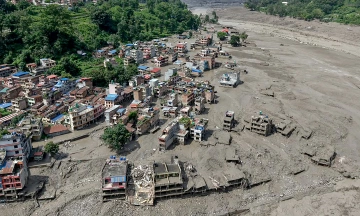
Houses submerged in mud in Nuwakot district, Nepal, after the 26/8 flash flood. Photo: AFP
"Everything is over. This place is now a giant graveyard; all that remains is sand and gravel stained red by victims' blood", said Omkar Joshi, a Nepali customs official rescued in Timure town.
Nepali authorities have deployed helicopters to search for survivors and drop emergency supplies to thousands isolated in villages and towns following the disaster. Nepali soldiers are using search dogs to locate victims' bodies buried under thick layers of earth and rocks.
Rescue teams have located 100 Indian nationals, primarily pilgrims, and 25 Chinese workers in the hardest-hit area around the Trishuli region.
Chinese Premier Li Qiang visited the scene in Gyirong county. Reuters suggests this visit underscores China's view of the disaster as a top national priority. The Chinese Ministry of Foreign Affairs announced that the country is coordinating closely with Nepal on search and rescue operations.
China has mobilized nearly 800 rescue personnel, along with search dogs and speedboats, to the affected area. A Chinese armed police officer noted that the upstream lake remains unstable, and treacherous mountain roads are hindering search and rescue efforts.
Experts also voice concerns about the risk of another flood due to water accumulating upstream, blocked by a massive amount of debris in the valley. Kathmandu's flood forecasting agency in Nepal issued a special warning about rising water levels, advising residents downstream of the Bhote Koshi river, tourists, rescue teams, and other stakeholders to exercise caution.
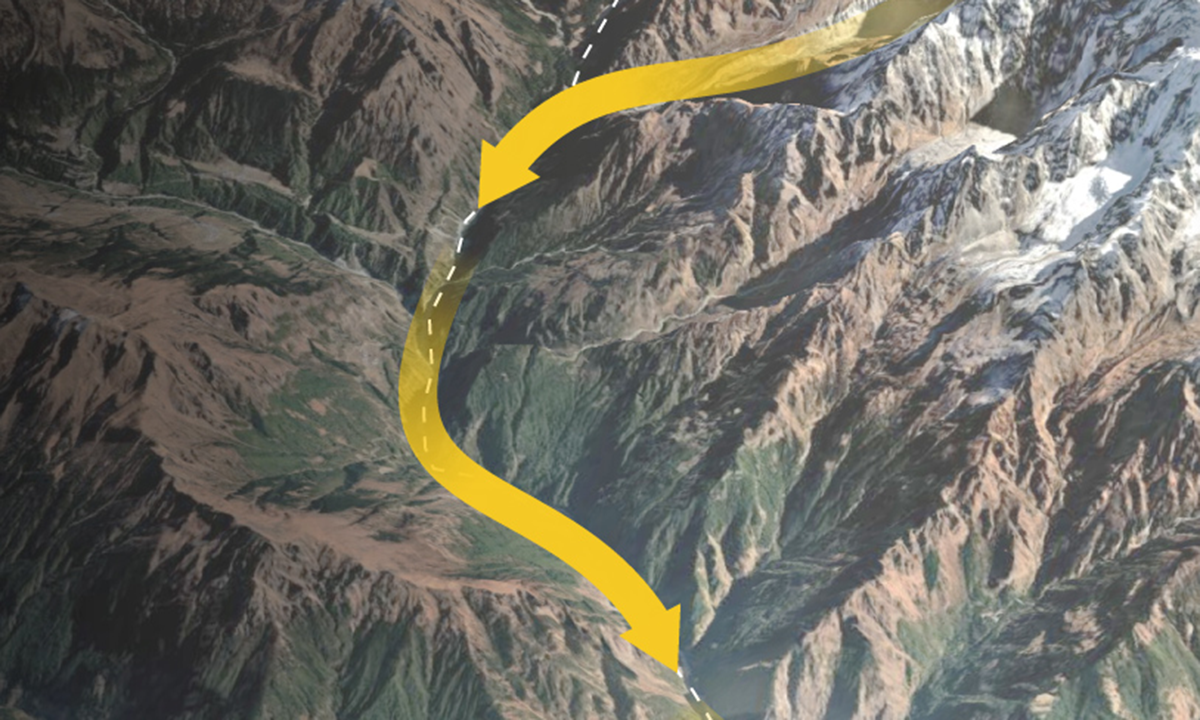 |
The path of the tsunami-like flash flood on the Nepal - China border. Click on the image to view full details. Photo: AFP
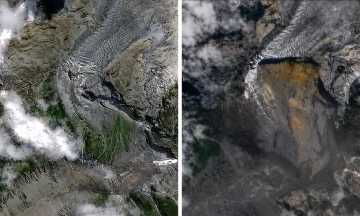
The US Geological Survey (USGS) attributes the 26/8 disaster to a glacier collapse, triggering a massive flow into the areas below. The floodwaters, carrying soil and rocks, submerged many villages, destroying infrastructure and vehicles.
Experts suggest climate change may have played a role but emphasize a lack of specific evidence to determine the exact cause of the disaster.
Nguyen Tien (According to AFP, Xinhua, Reuters)