Nikolai Patrushev, chairman of Russia's Maritime Council, criticized Western nations on 17/2 for attempting to cripple Russia's economy with sanctions and for recently seizing Russia-linked oil tankers.
He condemned these Western actions as "piracy" and "gunboat diplomacy", asserting that Moscow must respond firmly to protect Russia's interests in key maritime areas. Patrushev warned that Moscow could retaliate in kind soon, 'paying more attention' to the routes and cargo of European-flagged merchant ships.
"In key maritime areas, including those far from Russian territory, we need to deploy substantial permanent forces capable of cooling the ardor of Western pirates," Patrushev stated in an interview with Argumenty i Fakty newspaper.
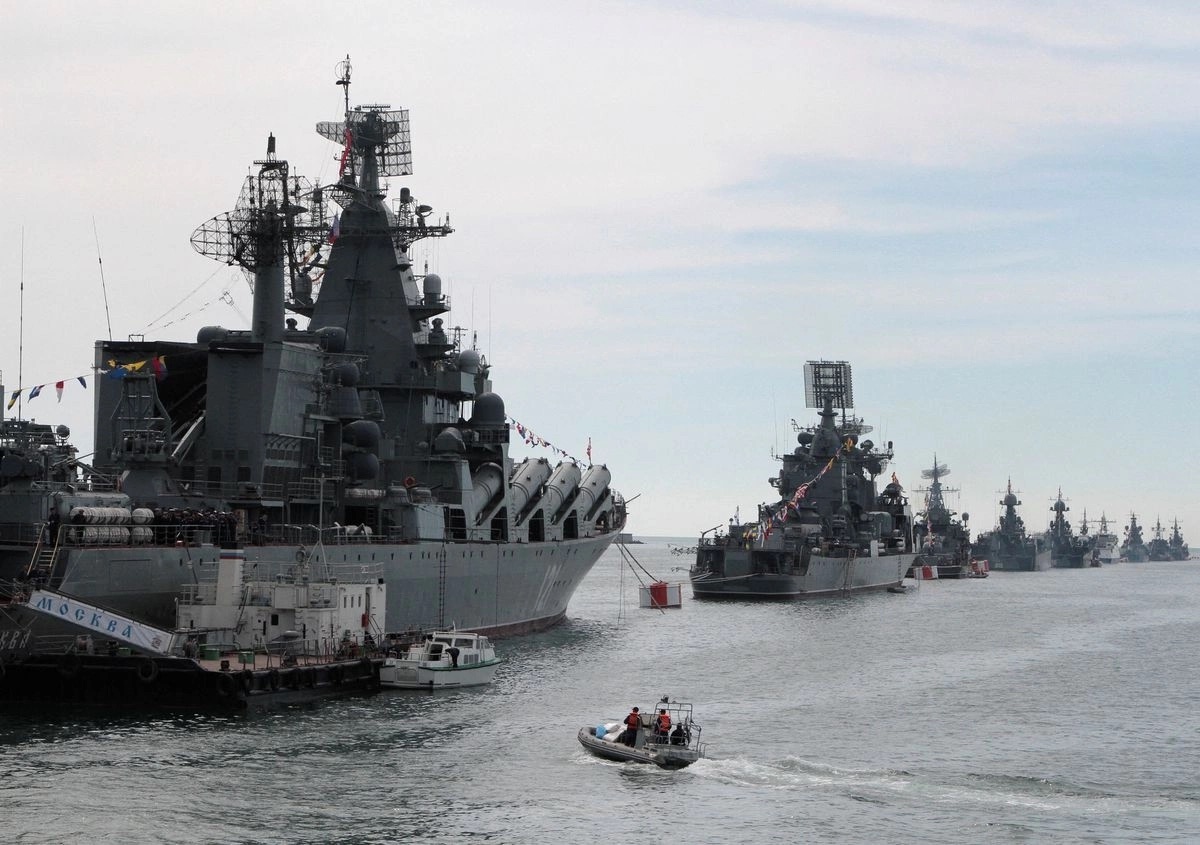 |
Russian naval ships anchored in a bay at Sevastopol port on the Black Sea in 2014. *Reuters* |
The senior official also voiced concerns that NATO is planning a naval blockade of Kaliningrad, a Russian exclave situated between two NATO member states, Lithuania and Poland, and bordering the Baltic Sea. He suggested that European nations are pursuing military escalation, testing Russia's patience, and provoking a response.
"If peaceful solutions to this issue fail, the Russian navy will break and destroy the blockade," Patrushev declared. "If we do not retaliate forcefully, soon enough Britain, France, and the Baltic group will become so arrogant that they will seek to block our country's access to the sea, at least in the Atlantic region."
He emphasized that all naval blockade plans targeting Russia "are illegal," asserting that Western countries have fabricated the term "shadow fleet" to justify blockading Russia. The "shadow fleet" typically refers to a network of oil tankers, estimated at about 1,500 older vessels or those with opaque ownership information, allegedly assisting Russia in circumventing sanctions.
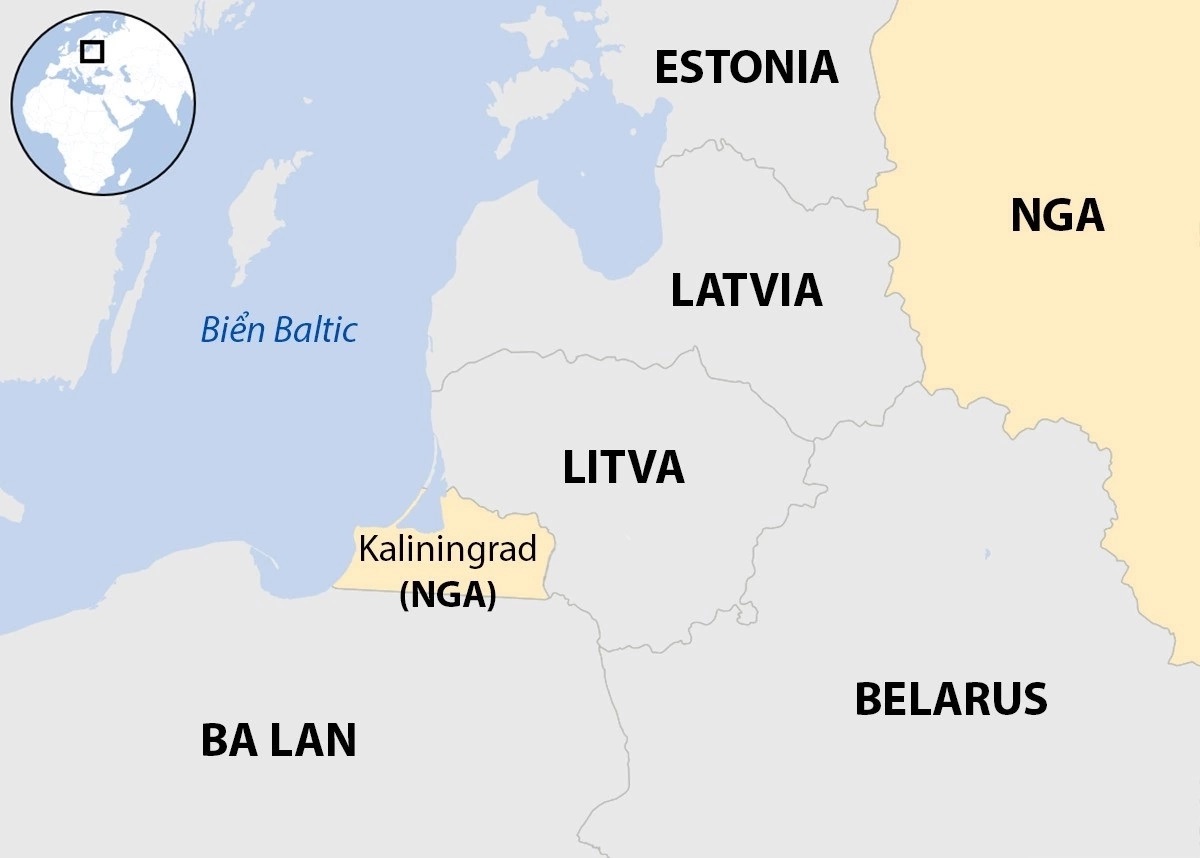 |
Location of Russia and Kaliningrad. *BBC graphic* |
The United States has recently intercepted numerous oil tankers allegedly part of the "shadow fleet", linked to Russia, Iran, and Venezuela. Meanwhile, European governments still find it challenging to establish a unified legal framework for intercepting or seizing these vessels, instead relying on financial sanctions, insurance limitations, and cargo inspections.
In January, the French navy intercepted a Russian oil tanker suspected of belonging to the "shadow fleet" in the Mediterranean Sea, but ultimately allowed the vessel to continue its journey. Last weekend, British Defense Minister John Healey met with European counterparts on the sidelines of the Munich Security Conference to continue discussions on the possibility of coordinating the seizure of illegal oil tankers.
Thanh Danh (*According to Reuters, Guardian*)