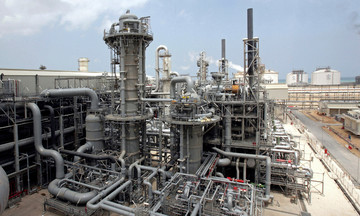
"Pressure from Iran will be counterproductive, and we certainly reserve the right to take military action if necessary," Saudi Foreign Minister Faisal bin Farhan Al Saud declared on 19/3.
Farhan's statement followed Iran's ballistic missile strikes on critical gas facilities in Qatar and the United Arab Emirates, which caused significant infrastructure damage. In the days prior, the Islamic Revolutionary Guard Corps (IRGC) also repeatedly attacked military targets and energy infrastructure in several Gulf states, including Saudi Arabia, and blockaded the Strait of Hormuz, paralyzing this vital maritime route.
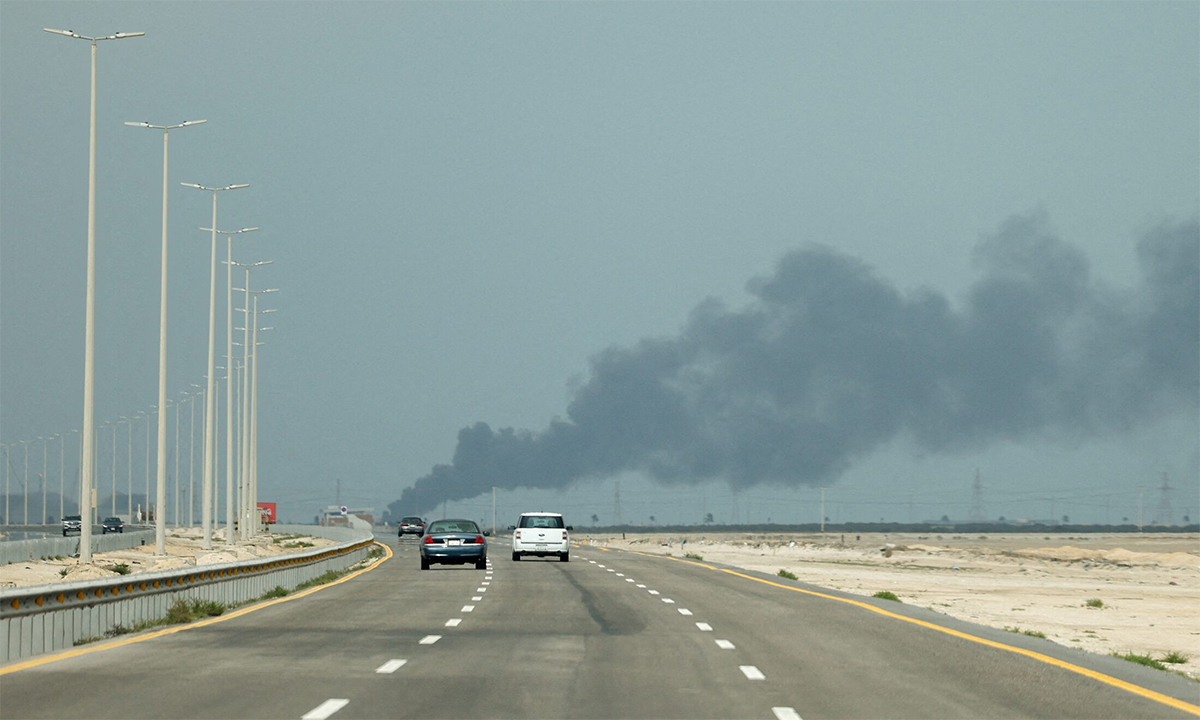 |
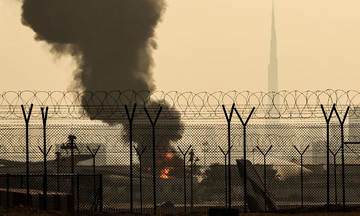
Smoke rises after a UAV struck the Ras Tanura oil refinery, Saudi Arabia on 3/2. Photo: Reuters |
Saudi Arabia's foreign minister noted that the precision of the strikes indicated Iran had meticulously planned attacks on neighboring countries, despite Tehran's repeated denials.
"It is important for Iran to understand that Saudi Arabia and its partners, the countries under attack, all possess significant military capabilities to use if they wish," Faisal stated. "Our patience has limits. I hope they understand the message and quickly recalculate their strategy, stopping attacks on neighboring countries."
This marks Saudi Arabia's strongest message to Iran in nearly three weeks of conflict between Tehran and Washington - Tel Aviv.
Foreign Minister Faisal stated that trust with Iran has been "completely broken" due to its attacks on neighboring nations, and it will take a long time to restore relations even if the conflict ends. "If Iran does not stop immediately, almost nothing can re-establish that trust," Faisal added.
"This is not a reaction to Iran's ongoing situation; instead, they have incorporated attacking neighboring countries as a tool to pressure the international community into their operational plans," Faisal said. "We know for certain that Iran has been developing this strategy for over a decade."
Faisal issued the warning after foreign ministers from Arab and Islamic countries met in Riyadh, Saudi Arabia, to discuss the Middle East conflict.
Qatar's Ministry of Foreign Affairs strongly condemned Iran's attack on the Ras Laffan industrial area, located about 80 km northeast of the capital Doha. This area hosts the world's largest liquefied natural gas (LNG) production plant, which accounts for about 20% of global supply.
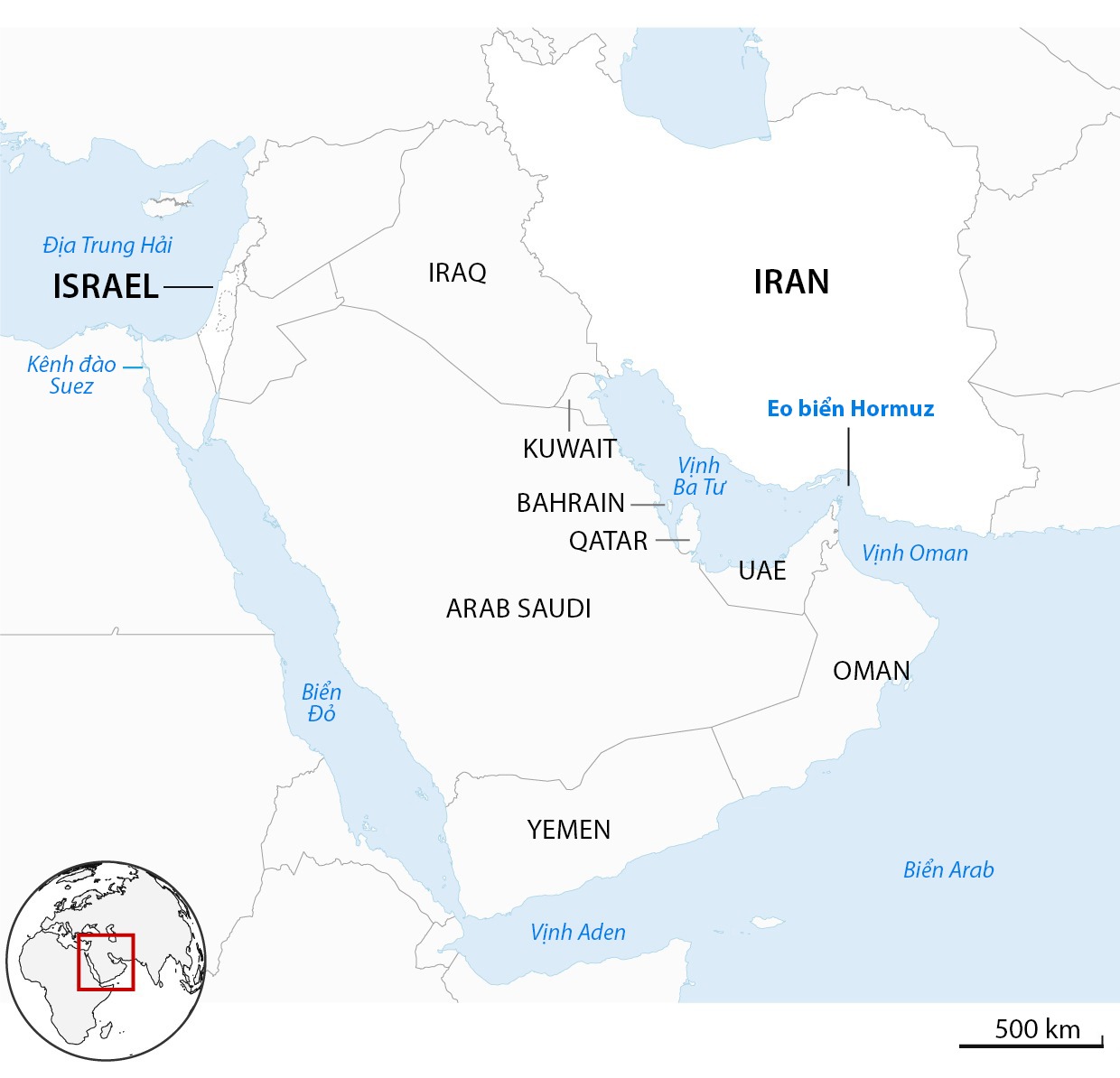 |
Countries in the Middle East region. Graphic: Guardian |
Saudi Arabia's Ministry of Defense announced on 18/3 that it had intercepted 4 ballistic missiles targeting Riyadh and 2 others aimed at the country's east. The UAE Ministry of Defense reported its air defense intercepted 13 missiles and 27 UAVs. Operations at the UAE's Habshan gas facility were halted due to an incident caused by missile debris.
This series of attacks by Iran followed an Israeli airstrike on South Pars, the world's leading gas field, located off the coast of Iran's southern Bushehr province.
The IRGC warned it would attack and destroy oil and gas facilities in Qatar, Saudi Arabia, and the UAE if Israel continued to target the South Pars gas field.
The Middle East conflict erupted on 28/2, resulting in over 2,000 deaths and disrupting global energy markets. Oil prices have increased by 5%, exceeding 108 USD per barrel, while Brent crude prices have risen by nearly 50%. This escalation is largely due to Iran tightening its control over the Strait of Hormuz, a route for approximately 20% of the world's oil.
Gulf Arab states are facing increasing pressure as they endure continuous attacks on military bases, civilian facilities, and energy infrastructure, but have not yet taken direct military action in response to Iran.
Nguyen Tien (AFP, AP, Al Jazeera)