On 4/1, Secretary of State Marco Rubio stated that the US would not interfere in Venezuela's governance. However, he confirmed the continued enforcement of an oil blockade on sanctioned tankers, which would be used as leverage to drive policy changes in Venezuela.
"And that's the kind of control President Donald Trump was referring to when he said that," the US Secretary of State remarked on CBS's "Face the Nation," referencing Trump's earlier statement that the US would "run Venezuela" during a transitional period.
Rubio added, "We will maintain that blockade and expect changes, not only in how Venezuela's oil industry operates for the benefit of its people, but also to end drug trafficking."
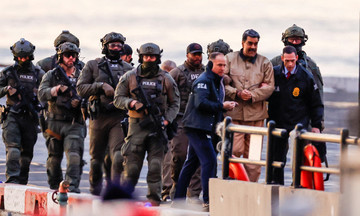
Observers suggested that Secretary of State Rubio's statement aimed to alleviate skepticism regarding the US's ability to effect regime change or organize elections in Venezuela, following alleged airstrikes and the arrest of President Nicolas Maduro and his wife in the early hours of 3/1.
During a press conference after the raid, Trump did not specify a timeline or oversight mechanism for the potential "running of Venezuela." He even declared that the US would deploy troops to protect oil fields in Venezuela, which would pave the way for US oil and gas companies to invest in restoring the country's energy infrastructure.
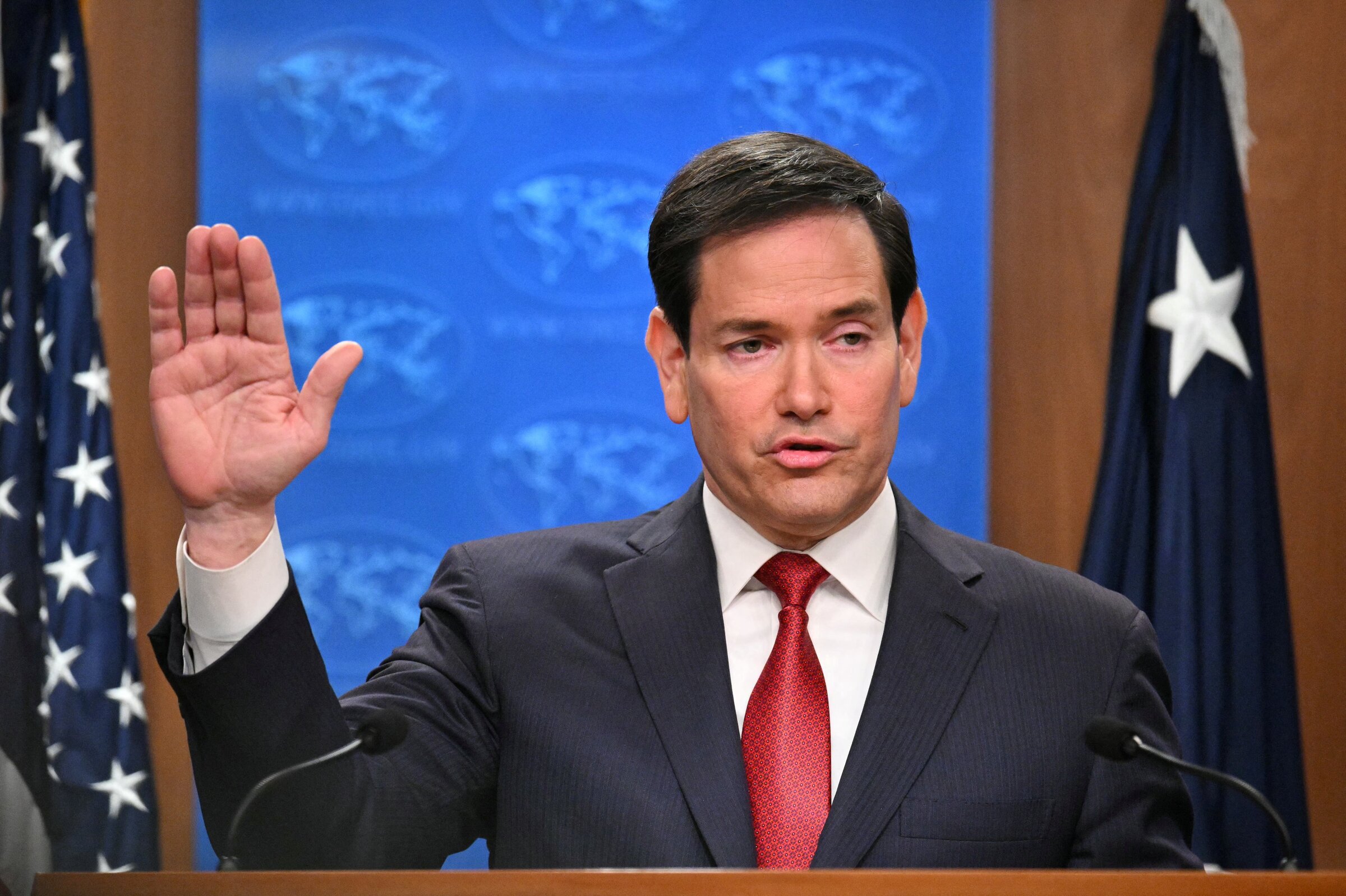 |
US Secretary of State Marco Rubio speaks in Washington on 19/12. Photo: AFP
Trump's statement about "running Venezuela" caused concern among many Democrats and a segment of Republicans, including the "America First" movement, which opposes military intervention abroad. Many observers, having witnessed the controversial "reconstruction" efforts by the US in Iraq and Afghanistan, also expressed skepticism about US involvement in Venezuela.
Secretary of State Rubio dismissed these criticisms, stating that Trump's intentions were "misunderstood." Rubio said, "The entire foreign policy establishment sees Libya, Iraq, or Afghanistan everywhere. This is not the Middle East. Our mission here is very different. This is the Western Hemisphere."
He also suggested that the US would give Maduro's subordinate staff time to govern, emphasizing that Washington would "evaluate everything based on what they do."
While not ruling out the possibility of US ground forces in Venezuela, Rubio affirmed that Washington's military presence in the region had been enhanced and was capable of intercepting drug-carrying vessels and sanctioned oil tankers.
The Venezuelan Supreme Court appointed Vice President Delcy Rodriguez as interim President after the US arrested Maduro. Venezuela's constitution stipulates that if the President is temporarily or permanently absent, the Vice President assumes leadership, and the government must organize elections within 30 days.
Trump initially praised Rodriguez, stating that she would soon cooperate with the US. However, after Rodriguez criticized the operation to arrest Maduro and his wife and showed no signs of cooperation, Trump warned that she "will pay a very steep price if she doesn't do the right thing."
Duc Trung (According to AP, WSJ, Washington Post)