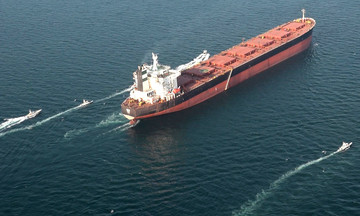
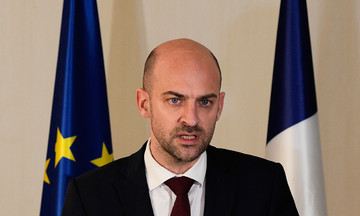
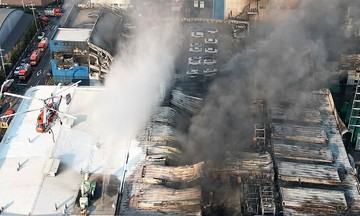
"We welcome the commitment of the countries participating in the preparatory planning work", a group of six nations comprising the UK, France, Germany, Japan, Italy, and the Netherlands stated in a joint declaration today, also "condemning in the strongest possible terms the recent Iranian attacks on unarmed commercial vessels in the Persian Gulf".
23 commercial vessels, including 10 oil tankers, have been attacked or encountered incidents in the strait of Hormuz since the Middle East conflict began. The International Maritime Organization (IMO) estimated on 18/3 that nearly 20,000 sailors and about 3,200 vessels are stranded in this waterway.
"We express deep concern about the escalating conflict. We call on Iran to immediately cease its threatening actions, mine laying, drone and missile attacks, as well as other efforts to block the strait for commercial shipping", the joint declaration stated.
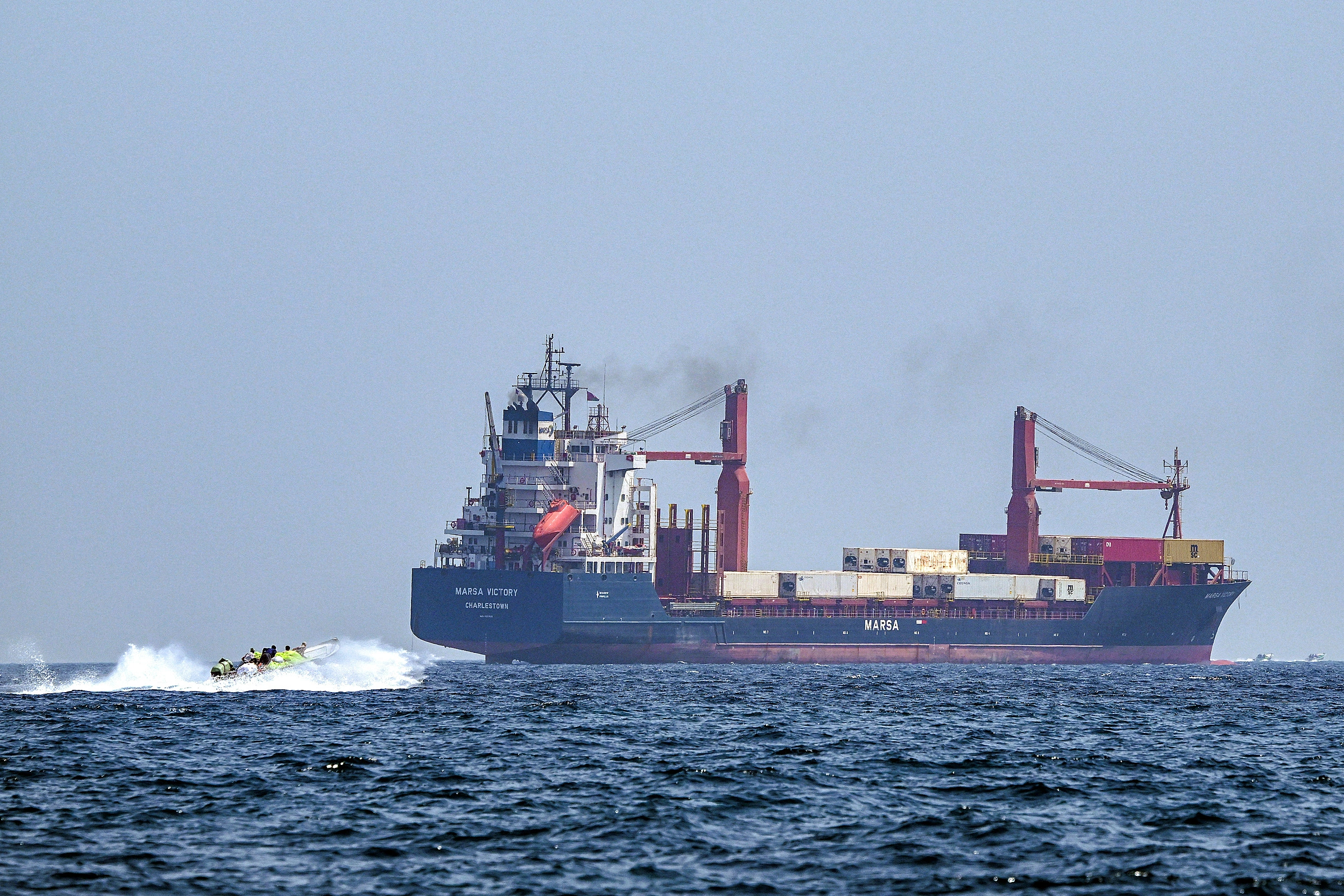 |
A container ship passing through the strait of Hormuz in june 2025. Photo: AFP |
According to the six nations, freedom of navigation is a fundamental principle of international law, including the United Nations Convention on the Law of the Sea. "The consequences of Iran's actions will affect people worldwide, especially the most vulnerable", the joint declaration added.
Iranian officials have not yet commented on the joint declaration.
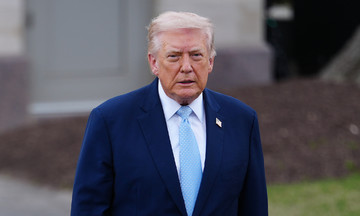
US President Donald Trump recently urged global powers and NATO to help reopen the strait of Hormuz for commercial transport, but his request was declined.
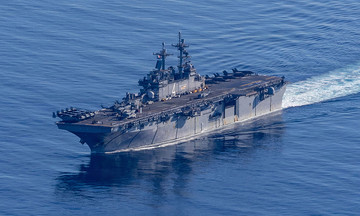
"The level of risk is so great that not many countries are willing to send warships to that dangerous area at this time. We are working closely with allies and partners on what can be done and contributed when the situation permits", a UK defense official said.
This official noted that the UK has dispatched a small team of military planners to US Central Command (CENTCOM), the agency responsible for US military operations in the Middle East, to "assist in planning and developing options for all possible scenarios in the strait of Hormuz".
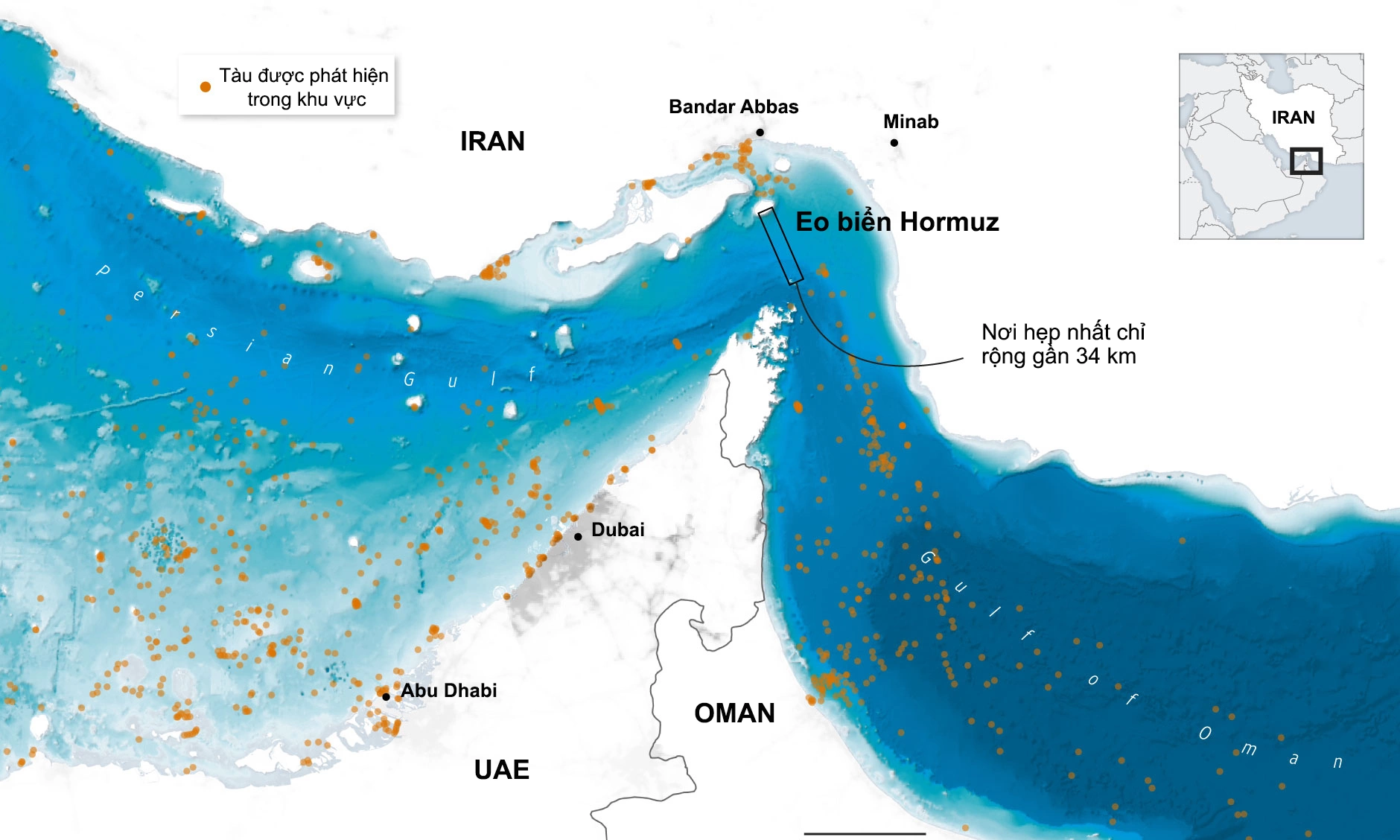 |
Location of the strait of Hormuz. Graphic: WSJ |
The strait of Hormuz, through which 20% of the world's oil and liquefied natural gas is transported, remains largely blocked by Iran, causing energy prices to escalate and raising inflation concerns. Some oil tankers have recently passed through the strait safely, seemingly receiving "special permission" from Iran, but the number is far lower than before the conflict erupted.
Iranian parliament speaker Bagher Ghalibaf said on 17/3 that maritime activity in the strait of Hormuz "will not return to its pre-conflict state". New Supreme Leader Mojtaba Khamenei also affirmed that "the leverage of blocking the strait of Hormuz must certainly be used".
Gulf and Western nations strongly criticize Tehran, while Iranian officials respond that the current situation is due to "US-Israel's illegal use of force and military aggression".
Huyen Le (According to AFP)