The US National Park Service announced on 25/11 that it will implement new fees for international visitors to national parks, effective 1/1/2026. Under the new policy, the annual pass price for international visitors will rise to USD 250, while US citizens will continue to pay USD 80. International visitors will also not receive free entry days like US citizens. Revenue generated from these fees will support the national park system, funding facility upgrades and maintenance.
An annual pass allows the buyer to visit parks multiple times and different parks, valid for 12 months. Without an annual pass, international visitors may have to pay an additional surcharge, up to USD 100, when entering popular national parks in the US.
The agency stated that the "entry fee policy prioritizes American interests" was introduced as national parks face significant pressure from severe staffing and budget cuts. Additionally, they are recovering from losses after a recent government shutdown and substantial lost revenue from not collecting fees during that period.
According to the US Department of the Interior, the fee change will affect 11 national parks, including Grand Canyon, Yellowstone, and Yosemite. Interior Secretary Doug Burgum said this change aims to ensure US taxpayers "continue to enjoy reasonable entry fees, while international visitors contribute proportionately to the maintenance and improvement of parks for future generations!"
President Donald Trump signed an executive order in July requiring parks to increase entry fees for foreign visitors. The White House also posted on social media platform X announcing the fee change, accompanied by the phrase "America First".
The US Travel Association estimated that in 2018, national parks and monuments welcomed over 14 million international visitors. Yellowstone National Park reported that in 2024, nearly 15% of visitors to the site were foreigners, a decrease from 30% in 2018.
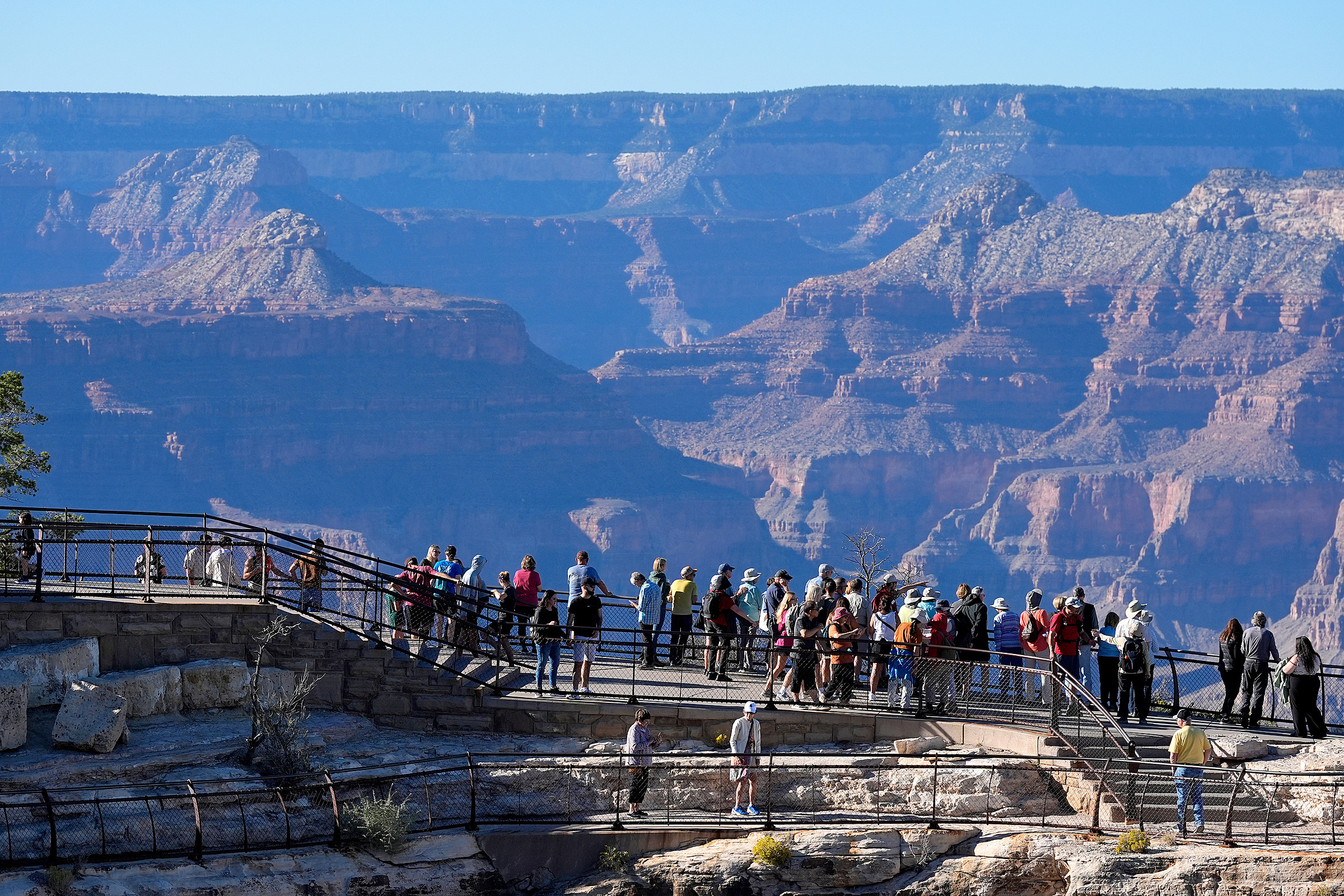 |
Visitors at Grand Canyon national park, Arizona, US on 1/10. *Photo: AP* |
Huyen Le (According to AP)