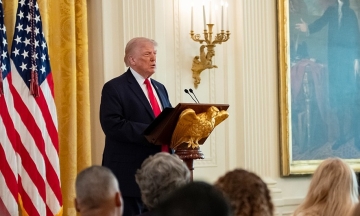
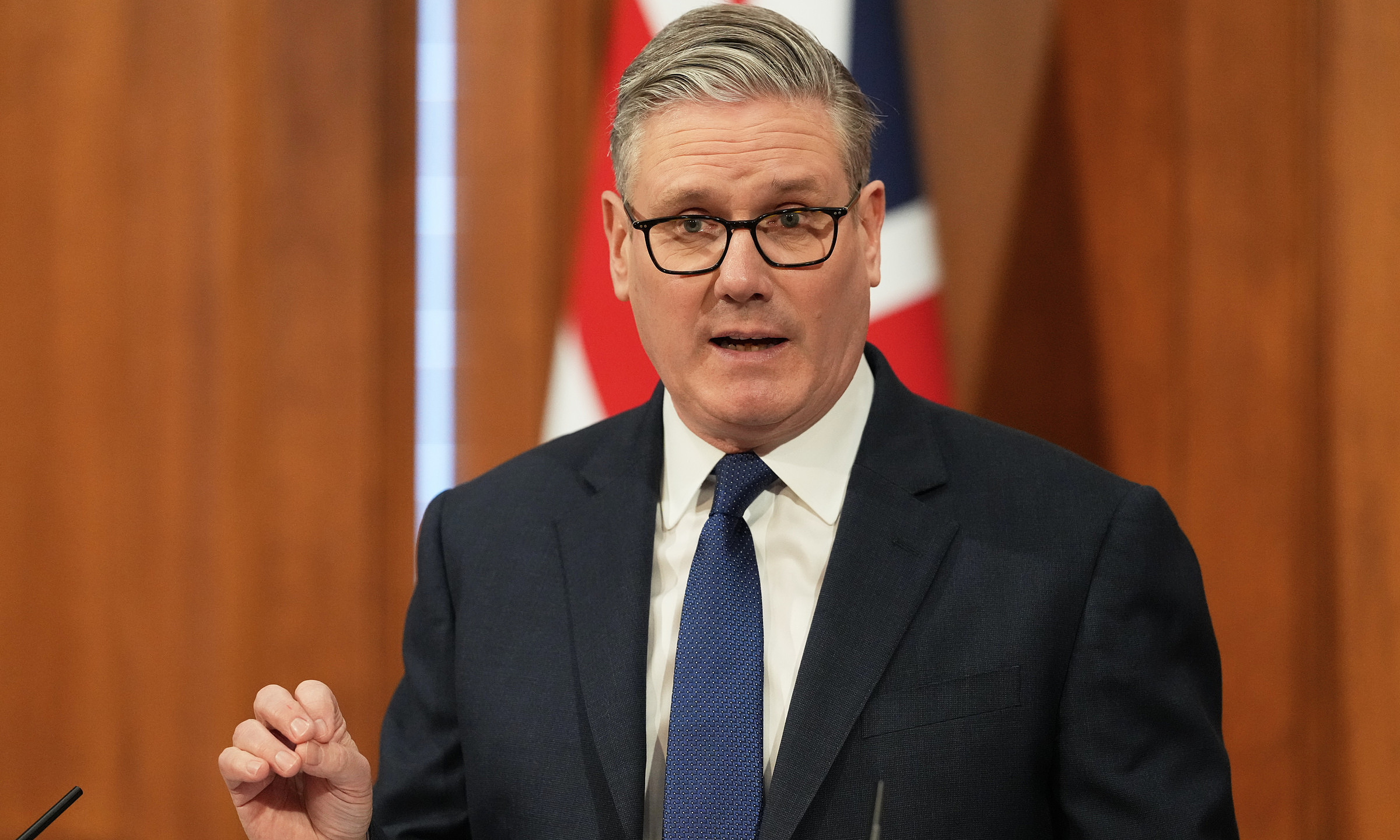
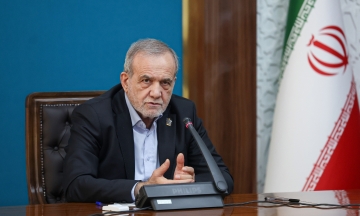
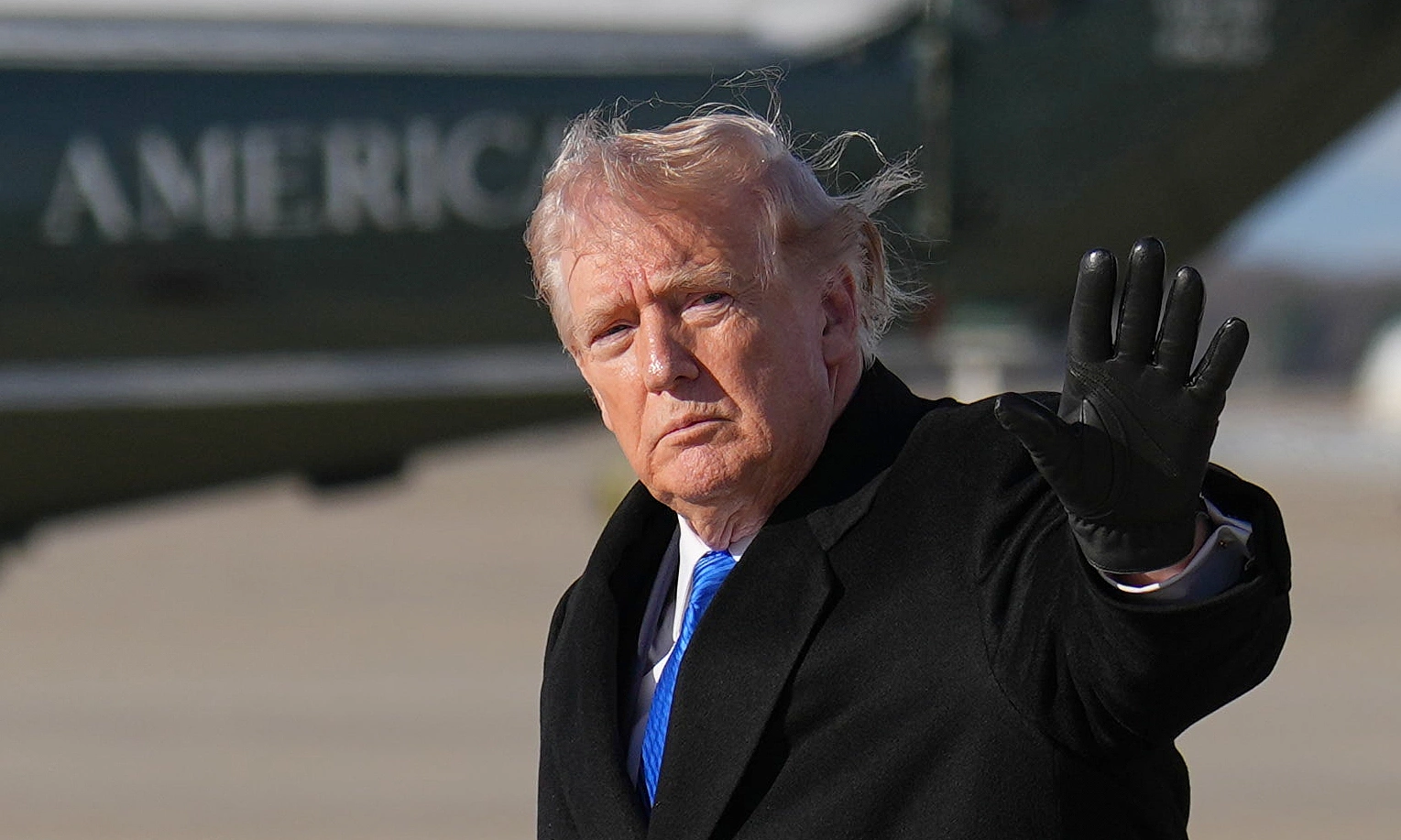
White House Press Secretary Karoline Leavitt sparked curiosity yesterday by announcing on social media platform X that US President Donald Trump would provide "important updates" on the Iran conflict in a prime-time national address at 9 p.m. on 1/4 (8 a.m. on 2/4 Hanoi time).
Leavitt offered no further details about Trump's speech, intensifying global interest as the Iran conflict approached its sixth week. Some US media outlets predicted Trump would announce a ground invasion of Iran, while others believed the President would declare victory and withdraw troops.
However, upon his television appearance, the US President made no such dramatic announcements. He asserted that the war between the US-Israel alliance and Iran was nearing its end, though he did not outline a clear withdrawal timeline. He also warned that military operations would continue to send the country "back to the Stone Age," a threat he had issued the day before.
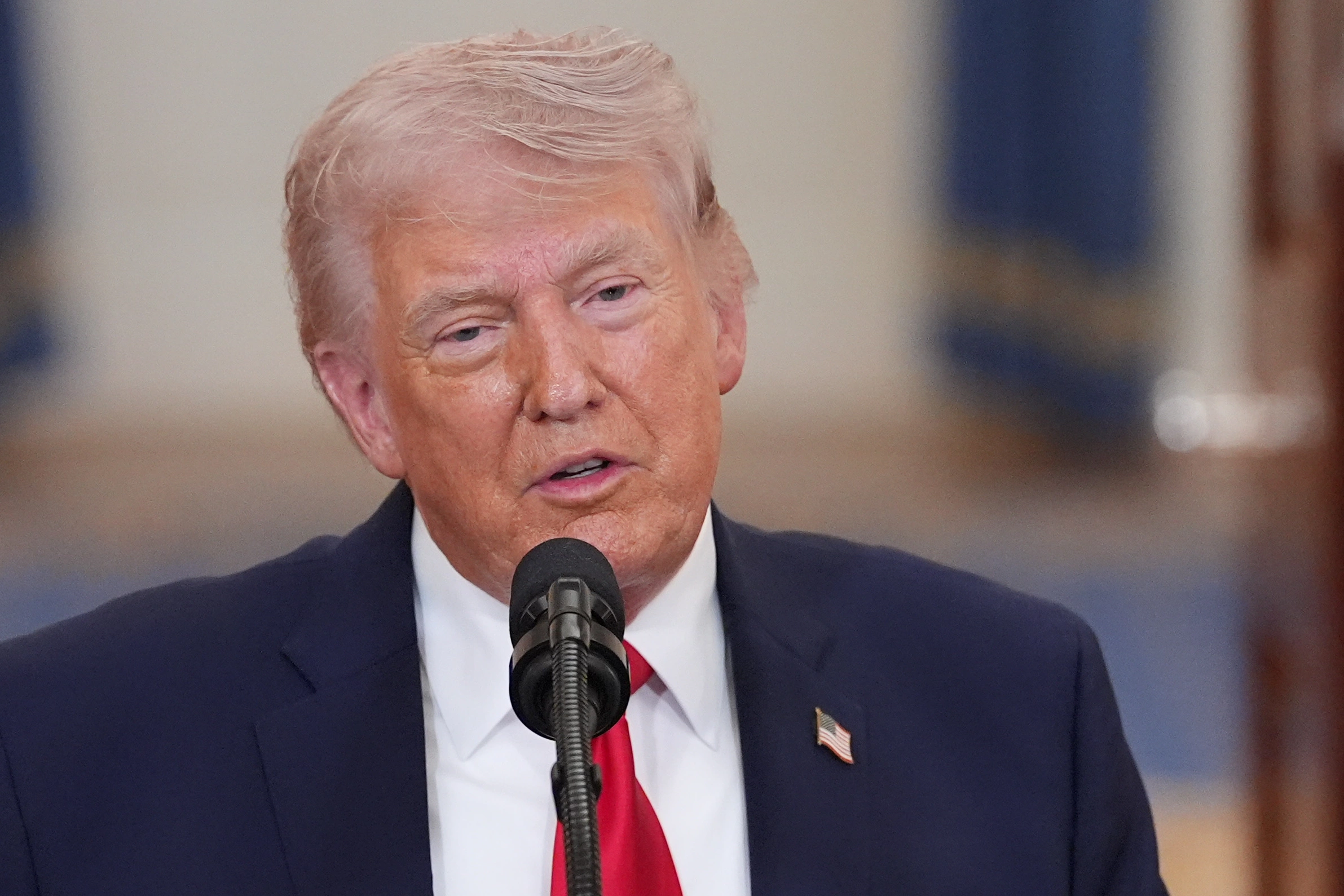 |
President Donald Trump addresses the nation from the Grand Foyer of the White House on 1/4. Photo: AP |
The President characterized the Iran campaign as a "resounding success" and reassured Americans concerned about the war, urging them to view the conflict more objectively.
Trump outlined the duration of US involvement in previous conflicts to remind the public that the Iran campaign had only just entered its second month. However, consistent with his rhetoric over the past month, he once again presented vague and contradictory information, intertwining diplomatic efforts with threats of escalating attacks on Iran.
"We will strike extremely hard in the next two to three weeks," he stated in his 19-minute speech. "If no agreement is reached, we will launch widespread and appropriate attacks on all their power plants."
President Trump demanded that Iran negotiate an end to the hostilities, just one day after suggesting to reporters at the White House that he did not need Iran to reach an agreement to end the conflict.
He dismissed the reopening of the Strait of Hormuz, a crucial global oil transit route, as an issue for other nations, not the US. Yet, the US President had previously written on social media that he would not agree to any ceasefire unless the strait was cleared. Iran had blocked oil tankers there, causing global oil and natural gas prices to surge.
"We will support, but other nations should actively protect the oil resources they heavily depend on," Trump said.
The US President announced that Iran's missile and unmanned aerial vehicle (UAV) capabilities had been "significantly limited" after over one month of conflict. This was a message the President had reiterated multiple times. However, the reality showed Iran still possessed a large arsenal and continued to strike Israel immediately after Trump's speech.
According to experts, President Trump's "important update" on the Iran war was disappointing. It resembled a belated public relations effort to garner support from American voters, as the war began to exceed the 4-5 week timeline he initially outlined.
This prime-time address offered no new answers to the question American voters cared about most: When will the war end? The President also failed to clarify his ultimate objectives for launching the campaign, such as whether he planned to deploy ground troops to seize enriched uranium or undermine Iran's control of the Strait of Hormuz.
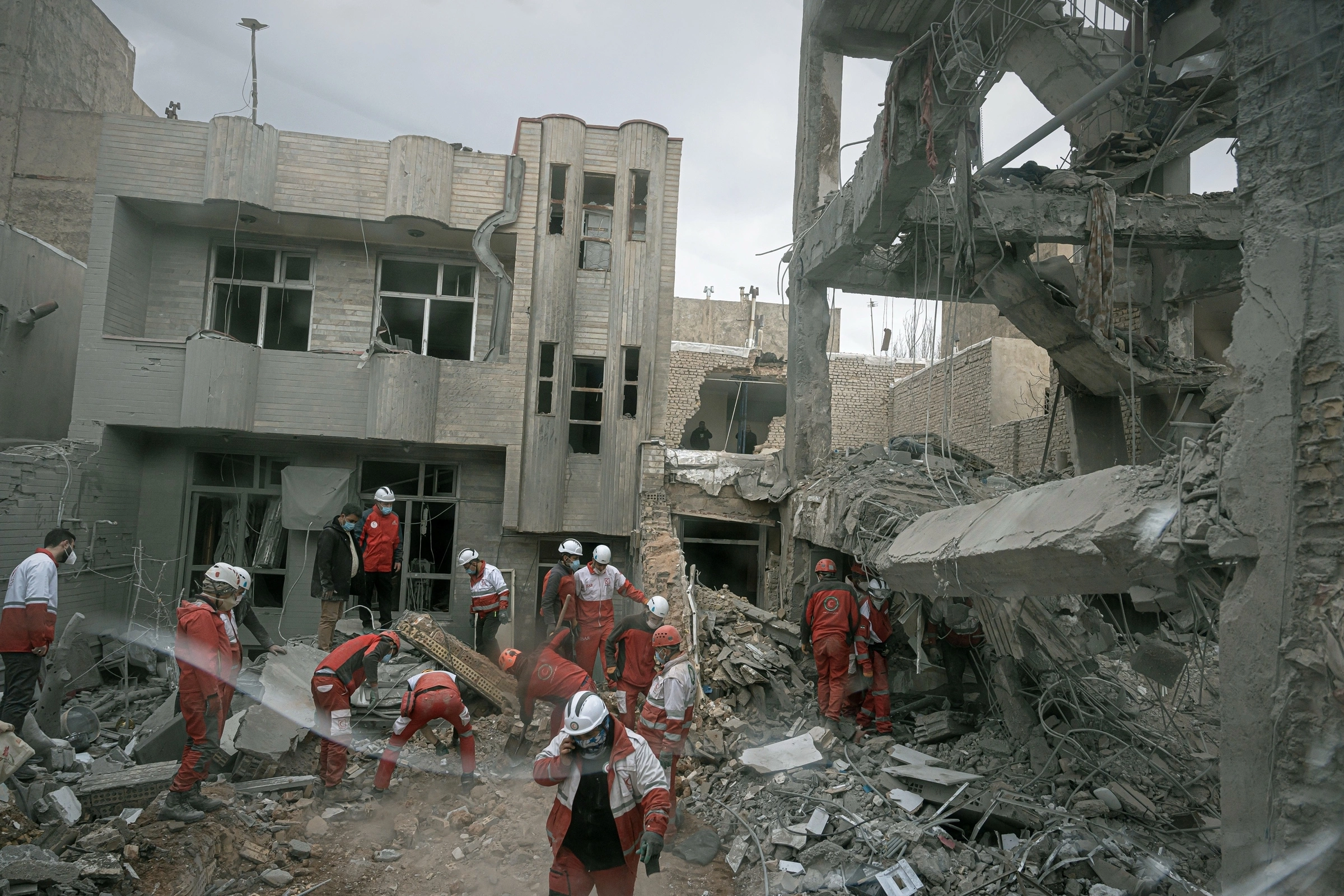 |
A residential building lies in ruins after an attack on Tabriz, Iran, on 24/3. Photo: AP |
The President provided no new optimistic signs regarding diplomatic negotiations with Iran, which he had previously claimed were progressing. Instead, his repetition of threats to attack Iranian power plants risked further expanding the war he had just urged the American public to support.
According to CNN, White House officials expressed satisfaction with how President Trump delivered the speech, stating that he met their objectives: outlining the reasons for US engagement in the war and the success of military operations to date, while reassuring Americans that the conflict was nearing its conclusion.
Moreover, the President adhered to the script, keeping the speech within the planned 20 minutes, even though the content offered no new updates for those closely following the conflict for over one month.
They hoped the President's delivery, with the gravity of a national address, would persuade more Americans to trust him at a time when polls consistently indicated public patience was waning.
Some Democratic members, including Senator Chris Coons, expressed dissatisfaction with the speech. "No clear plan, rambling content, baseless, and not serious," he wrote.
Analysts suggested that the likelihood of President Trump's speech compelling Iran to negotiate was very low, as his statements offered nothing new to them.
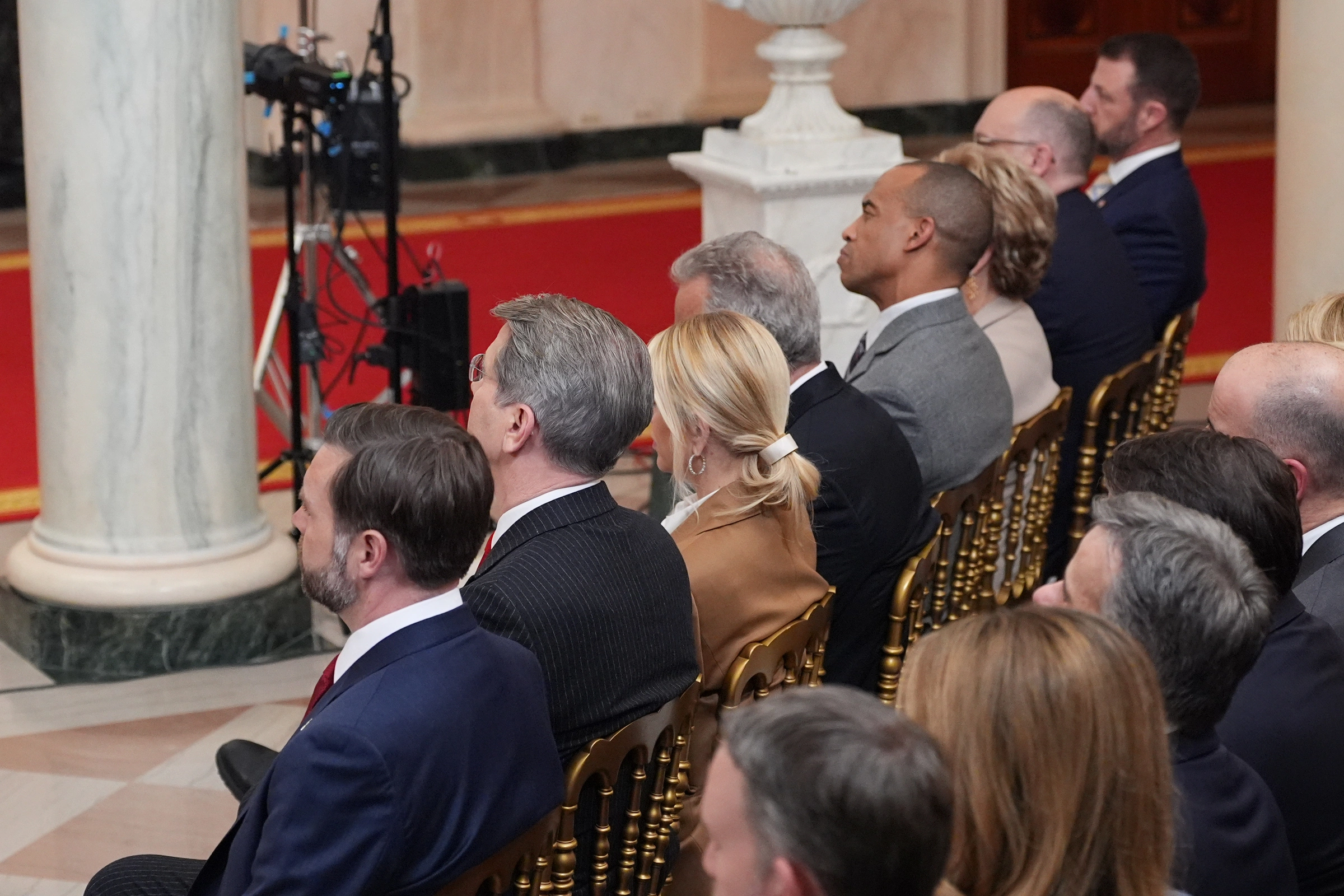 |
Some cabinet members listen to President Trump's speech at the White House on 1/4. Photo: AP |
Therefore, Iran's leadership will likely maintain its firm stance, focusing on military defense and retaliation, and reiterating that there will be no negotiations with the US. The content of President Trump's speech was insufficient to alter their position on the conflict.
Trita Parsi, Executive Vice President of the Quincy Institute, a Washington-based think tank, noted that Trump's statements were "essentially a compilation of all the posts he's put on social media over the last 30 days, almost in chronological order."
"Because this speech seemed to offer nothing new, it exposed that he doesn't actually have a plan for the conflict," Parsi added.
Seth Moulton, a former US Marine veteran and Democratic congressman, assessed that President Trump's "vague" approach to Iran had put the US military in a "dangerous" position without achieving its stated objectives.
"President Trump's speech was quite poor, showing how lost he is," Moulton remarked.
However, Republican members praised Trump's address. "The President's leadership, combined with the bravery of American soldiers, is why we sleep safer every night," Senator Lindsey Graham, a Republican, wrote on X.
Vu Hoang (According to Al Jazeera, CNN, Reuters, AFP)