On 19/3, french newspaper Le Monde reported that a public profile on the Strava running app showed a user jogging in circles on the deck of a moving ship at 10:35 on 13/3, in the mediterranean sea northwest of Cyprus.
The ship's deck was large enough for one person to run multiple laps, strongly suggesting it was an aircraft carrier. This assessment was further supported by earlier satellite images that placed France's Charles de Gaulle aircraft carrier in the same region.
Strava's near real-time updates meant the Charles de Gaulle aircraft carrier's precise location was exposed instantly, a significant risk for warship operations.
France had deployed the aircraft carrier and its escorts to the mediterranean in early march, shortly after the Iran conflict erupted. The Charles de Gaulle had been operating in the eastern mediterranean since 9/3, conducting a mission President Emmanuel Macron described as "purely defensive," aimed at supporting France's allies.
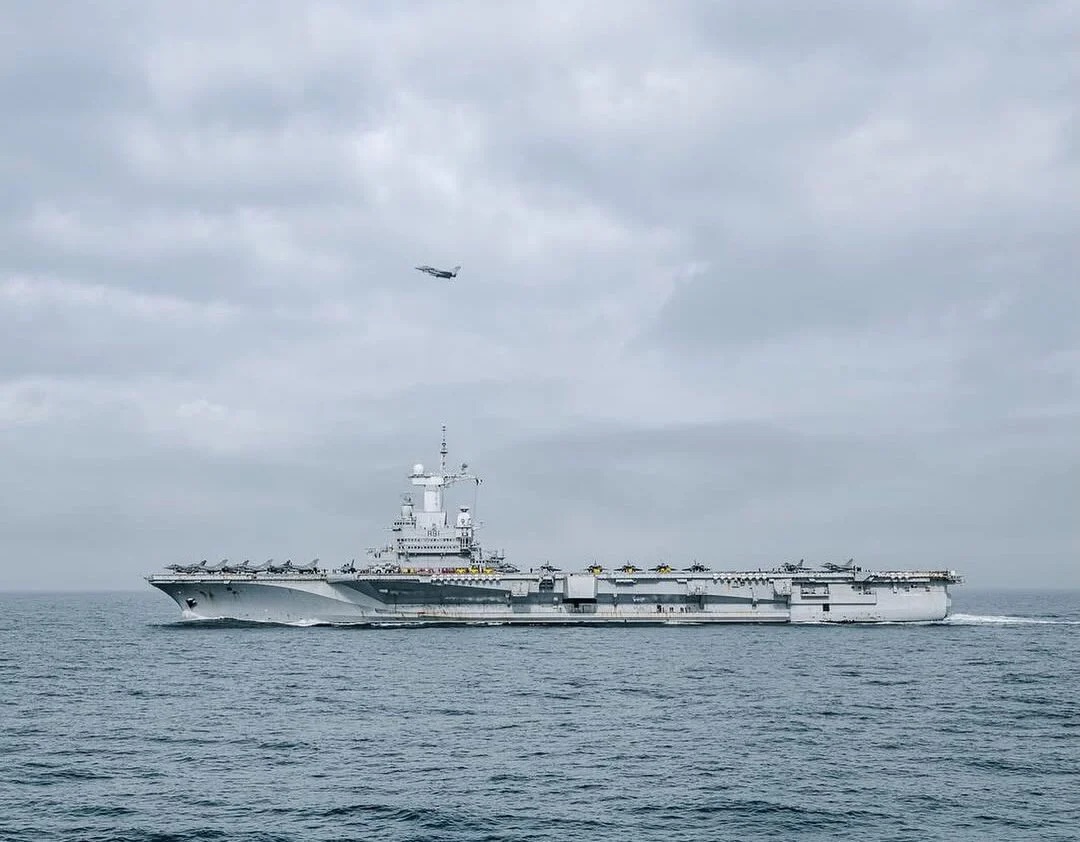 |
Charles de Gaulle aircraft carrier en route to the Mediterranean on 5/3. Photo: French Navy
Additional Strava data revealed that in late february, the sailor had also jogged in Copenhagen, denmark, after crossing a bridge from Malmo, sweden. The Charles de Gaulle was anchored in Malmo at that time.
The french armed forces announced an investigation into the incident, stating they would take appropriate action. They reiterated that naval personnel are regularly cautioned about the risk of leaking classified information through such applications.
This incident is not the first time a running application has exposed sensitive information. In 2024, Le Monde reported similar breaches when bodyguards for President Macron, then-US President Joe Biden, and Russian President Vladimir Putin inadvertently revealed their leaders' locations while on official trips.
In 2018, Strava maps also revealed the locations of US and allied military personnel in iraq, syria, and afghanistan. Although some military bases were publicly known, these maps exposed detailed movement routes outside those bases. Such information is highly dangerous, as adversaries could exploit it to plan bombings or ambushes.