The UK government is exploring the deployment of mine-hunting drones to the Strait of Hormuz, a critical maritime route. This strategy aims to secure shipping without escalating tensions by sending warships, according to recent statements from British officials.
"It is important to reopen the Strait of Hormuz. There are many ways to contribute, including deploying unmanned aerial vehicles (drones) specialized in mine clearance. All these options are being considered with our allies", UK Energy Minister Ed Miliband said on 15/3.
A UK Defense Ministry spokesperson also confirmed London is evaluating options to ensure safe passage for vessels through the Strait, specifically mentioning the use of mine-hunting drones as an alternative to warship escorts.
Last week, UK Defense Minister John Healey disclosed that Britain had already positioned several autonomous mine-hunting systems in the Middle East prior to the recent conflict escalation. He stated, "I have discussed with planners about options that can be taken with allies if action is needed."
The Royal Navy actively uses and develops various mine-clearing drone systems, including Sweep, SeaCat, MMCM, and Wilton. These advanced systems typically integrate with unmanned surface vessels, mine-sweeping equipment, and autonomous underwater vehicles to detect maritime threats.
Military analyst Michael Clarke noted, "If deployed, this could be the first time these systems are tested in a real combat environment."
Beyond mine-hunting drones, the UK is also considering deploying cost-effective interceptor drones. This would counter Iran's Shahed-type kamikaze drones, which have proven effective on the Ukraine battlefield.
However, the UK Defense Ministry clarified that the use of interceptor drones in the Middle East remains in an early review phase. The deployment of mine-hunting drones, conversely, is deemed more likely for earlier implementation. British officials are also cautious about a US proposal to send warships to the region, fearing such a move could exacerbate existing tensions.
 |
The UK's autonomous mine-hunting system during a 2018 test. Photo: UK Ministry of Defense |
Mines represent a significant threat, being among the simplest yet most devastating weapons encountered by the US Navy. They have damaged more warships than any other attack method since World War II, according to a US Naval Institute report.
These devices are essentially explosive-filled metal blocks designed to lie dormant on the seabed or drift with currents, detonating upon contact or through sophisticated sensors like magnetic, acoustic, or pressure triggers.
The Strait of Hormuz presents a particularly high risk due to its geography. At its narrowest, the strait is only about 34 km wide, with an even more restricted shipping lane. This limited maneuverability increases the likelihood of vessels encountering explosive devices.
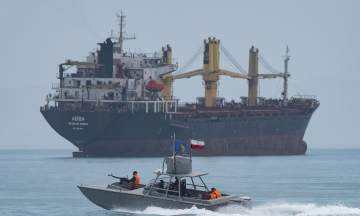
Traffic through the Strait of Hormuz has been severely impacted since Iran initiated retaliatory actions following US-Israel operations. The Marine Traffic website reports a 90% reduction in traffic during the crisis. The UK Maritime Trade Operations (UKMTO) Centre recorded 13 vessel attacks in the area over two weeks of conflict.
This disruption poses alarming consequences for the global economy, given that 20% of the world's crude oil supply transits this vital maritime artery.
Thanh Danh (Source: Sky News, Guardian)