On 8/4, a group of A-10 attack aircraft from the 107th US Air Force Squadron departed Lakenheath Air Base in England, supported by two KC-135 refueling aircraft. This squadron had arrived in England in late March and was scheduled to reach the Middle East on 3/4, but had to return to Lakenheath Air Base due to scheduling issues and diplomatic procedures for the refueling aircraft.
Photographs taken outside Lakenheath Air Base showed the US fighter jets carrying external fuel tanks under their fuselage, MXU-648 cargo pods under both wings, and an AN/AAQ-28 Litening targeting and laser designation pod on the right wing.
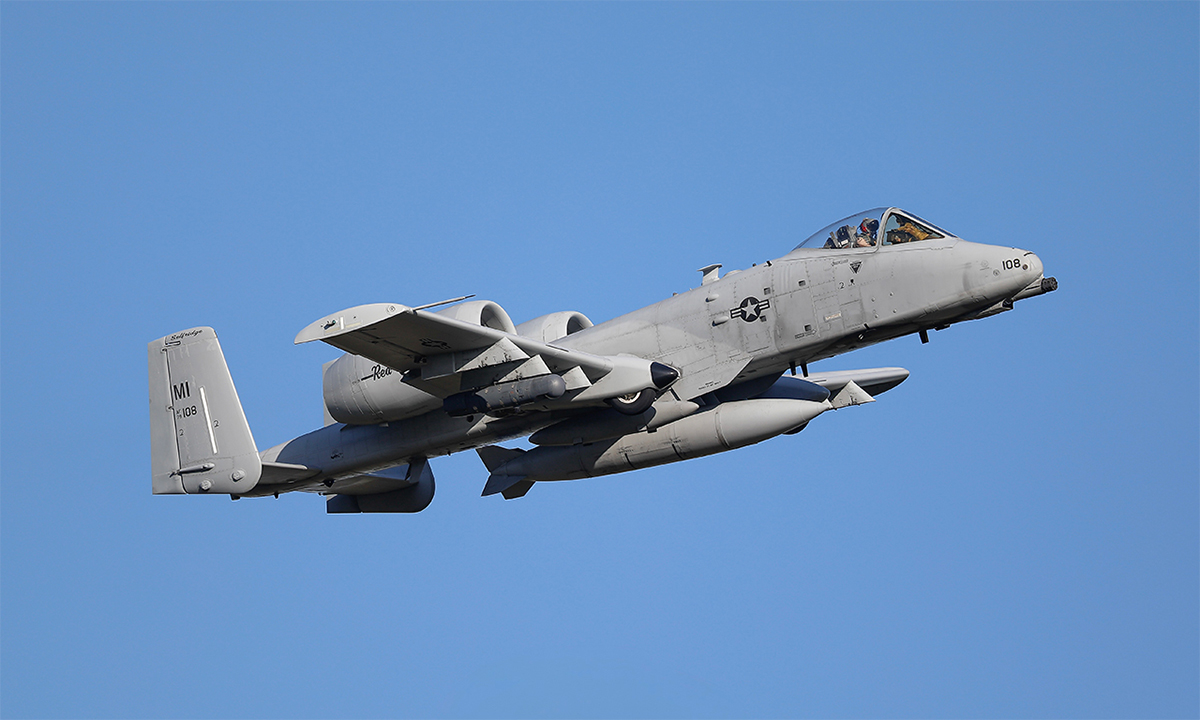 |
A-10 attack aircraft taking off from Lakenheath Air Base, England on 8/4. Photo: Stewart Jack
This troop movement occurred after President Donald Trump announced that the US and Iran had reached a two-week ceasefire agreement for discussions.
All US A-10 attack aircraft at Lakenheath have departed. The base now only hosts a few F-22 stealth fighters and F-15E heavy fighter jets. According to Kai Greet, editor of the military specialized publication Aviationist, these aircraft likely experienced technical issues and could not deploy with other units.
Greet stated, "The F-22 fighter jets at Lakenheath might return to the US instead of deploying to the Middle East. This reflects changes on the battlefield as Iran's air defense is increasingly neutralized. Iran appears to be using infrared-guided air defense missiles instead of radar, which diminishes the effectiveness of the F-22's stealth capabilities."
US A-10 attack aircraft firing at Iran-backed militia positions in Iraq in a video released on 28/3. Video: X/Not Woofers
In total, nearly 50 US aircraft stationed at Lakenheath have been deployed to the Middle East, including F-35 and F-15 squadrons.
An F-15E heavy fighter jet, shot down by Iran on 5/3, belonged to the 494th Fighter Squadron stationed at the British base and had been deployed to the Middle East since the start of hostilities. An A-10 attack aircraft was also shot down hours later while supporting search and rescue operations for US pilots.
The A-10 is an attack aircraft developed by Fairchild Republic in the early 1960s to replace the A-1 Skyraider series. It entered mass production in 1972 and was inducted into the US Air Force in 1977.
This aircraft was specifically designed for close air support missions for ground troops, prioritizing the ability to attack enemy tanks, armored vehicles, and ground forces, earning them the nickname "tank killer." A-10s can also serve as forward air control stations, coordinating other fighter jets to attack ground targets.
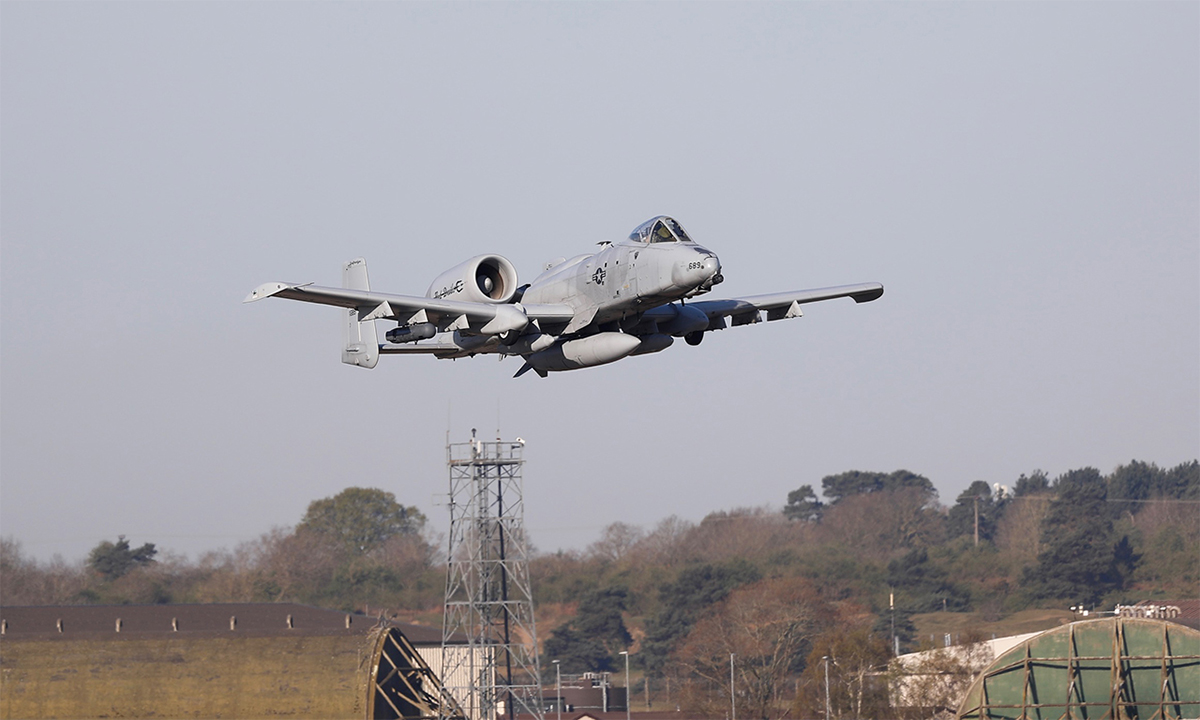 |
A-10 attack aircraft taking off from Lakenheath Air Base, England on 8/4. Photo: Stewart Jack
The A-10's strengths include its durability and high survivability. The pilot is protected by a titanium "bathtub" cockpit, capable of withstanding 23 mm cannon rounds. The aircraft's engines are mounted on the horizontal stabilizer and within the vertical stabilizers, preventing them from ingesting debris from austere runways and partially reducing their heat signature against infrared-guided shoulder-fired missiles.
However, the A-10 also has weaknesses such as slow speed, poor maneuverability, and a lack of advanced jamming and targeting systems. This means they can only maximize their advantages when the US Air Force has complete air superiority, with no threat from enemy fighter jets and air defense missile systems.
Nguyen Tien (According to AP, AFP, Aviationist)